
Table of Contents
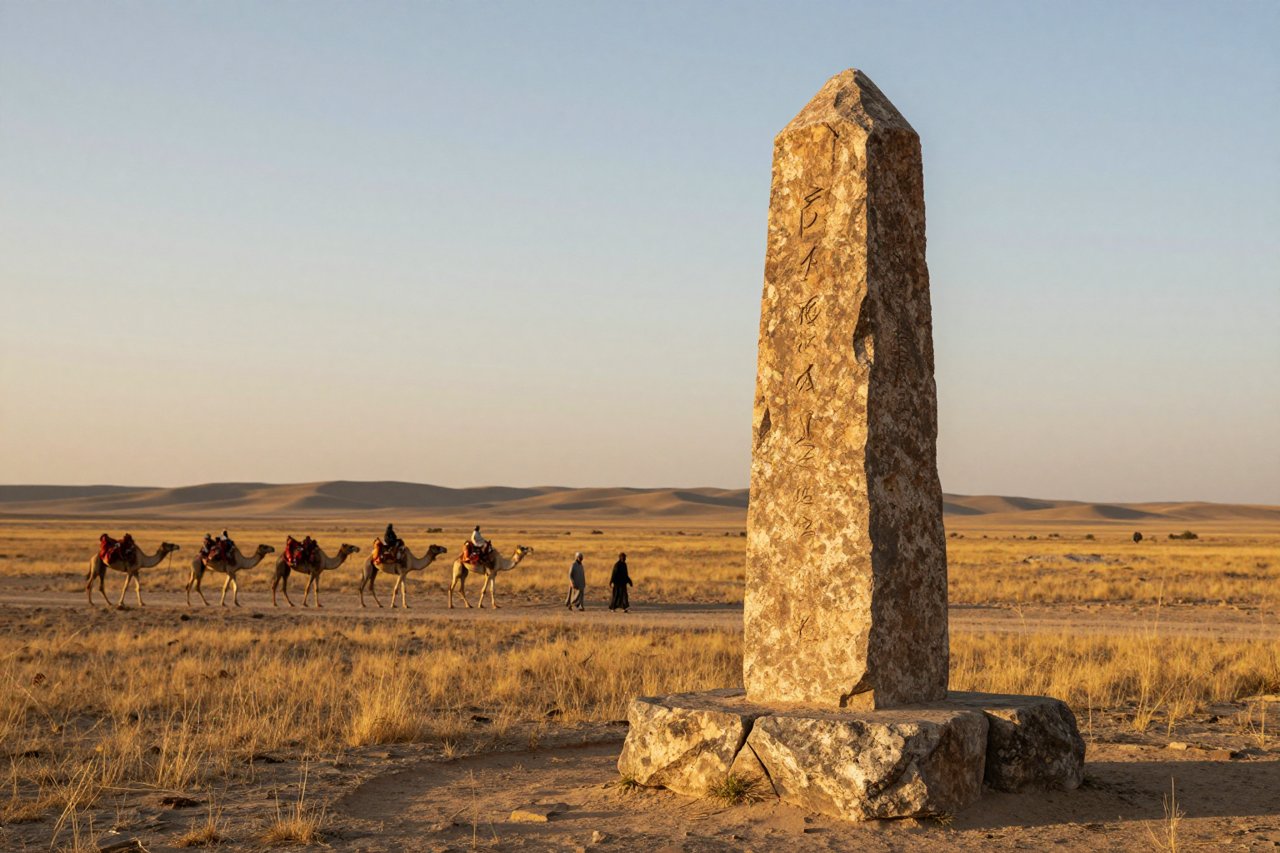
Stand in the middle of Aksum today, in the dry highlands of northern Ethiopia, and the first thing you notice is stone. Great granite obelisks, some still upright, one lying broken in three pieces where it fell in antiquity. The second thing you notice is how quiet it is. No harbour, no river port, no obvious reason for a city of that size to exist.
And yet for roughly six centuries, from around 100 to 700 CE, this inland capital sat at the centre of one of the ancient world’s most far-reaching commercial systems. The Kingdom of Aksum’s trade networks stretched from the Nile Valley to southern Arabia, from the Mediterranean to the Malabar Coast of India. Understanding how that worked means following the routes outward, from the highlands down to the sea.
A capital in the right place, but for the wrong reason
Aksum itself had no water access. It sat about 200 kilometres inland at roughly 2,100 metres above sea level. What it did have was position: close enough to the Red Sea to control the traffic, far enough away to be defensible, and sitting astride the routes that carried ivory, gold and aromatics up from the interior.
The city grew wealthy on the gap between production and demand. African goods were harvested and mined deep inland, then funnelled through Aksum and down to the coast. Imported luxuries moved the other way. Every stage of that journey generated revenue for the crown, which is why Aksumite kings were so attentive to keeping the corridors open.

Adulis: the port that carried the empire
Everything flowed through Adulis, on the Gulf of Zula near modern Massawa in Eritrea. A first-century Greek sailing manual, the Periplus of the Erythraean Sea, calls it a “fair-sized emporium” and describes a route inland to the capital that took eight days. Six hundred years later, the Egyptian merchant Cosmas Indicopleustes stopped there and saw a harbour busy with Arabian and Indian shipping.
What Adulis handled was extraordinary in both directions.
Outbound cargo
- Ivory, the empire’s signature export. Aksumite elephant tusks reached workshops in the Mediterranean and were carved into diptychs and furniture inlay.
- Aromatics — frankincense and myrrh from the Horn of Africa, burned in temples from Alexandria to Rome.
- Gold, largely from the southern interior, traded through intermediaries.
- Salt, cut into bars in the Danakil Depression and carried up into the highlands, where it was scarce and valuable.
- Slaves, exotic animals and tortoiseshell, alongside obsidian and emeralds.
Inbound cargo
Aksum imported cloth from Egypt and India, glassware from Syria and the Rhineland, Roman wine and olive oil in sealed amphorae, iron and brass for tools, silver plate for the elite, and Indian spices that had travelled the monsoon route. Archaeologists working at Adulis and Aksum have recovered fragments of all of it: Mediterranean amphora handles, Indian pottery, Roman coins, tiny glass beads.
Riding the monsoon into the Indian Ocean
The engine behind all this was a weather pattern. Sailors had learned by the first century CE to use the southwest monsoon to run east across the Arabian Sea and the northeast monsoon to come home. That turned a terrifying coastal crawl into a predictable crossing of roughly forty days between the Red Sea and the Indian coast.
Aksumite ships joined a cosmopolitan circuit. Tamil and Gujarati merchants brought pepper, cotton and gemstones westward. Arabian traders from Himyar and Hadhramaut moved frankincense and acted as middlemen. Aksumite merchants pushed east with ivory and gold. Aksumite coins have turned up in southern India, small metal witnesses to a journey of several thousand miles.
The coins tell the story
Around 270 CE, under a king named Endubis, Aksum became the first state in sub-Saharan Africa to mint its own coinage. The early issues were gold, modelled on Roman solidi in weight and style, with Greek inscriptions that shifted into Ge’ez over time. Silver and bronze followed for local use.
Minting gold requires three things: a secure gold supply, a functioning state that can guarantee weight and purity, and a market that trusts the stamp. The coins are therefore a fairly direct record of how well Aksumite trade was doing. Hoards buried in the highlands contain Roman denarii and aurei alongside local issues, which is exactly what you would expect from a trading power plugged into the Mediterranean economy.
The overland roads into Africa
The sea routes get the attention, but the inland network was just as important. Caravans left Aksum heading west toward the Nile and south into the interior, moving along routes that later maps would still show centuries afterward.
Cosmas Indicopleustes left a detailed account of the gold trade around 525 CE. Aksumite merchants travelled for weeks to reach the Sasu, a people who mined gold in the far interior. The traders never saw the mines. They set out salt, iron, and meat on the ground, withdrew, and returned to find gold in exchange. It was a silent barter system, and it worked for generations.
Northward, roads linked to Egypt and the Mediterranean. Westward, tracks reached the Nile and Meroë. These land routes gave Aksum something valuable: if the Red Sea became dangerous, goods could still move.
Power, faith and the fight for the sea lanes
Aksum’s rulers treated trade as a strategic asset, and they were willing to fight for it. King Ezana converted to Christianity around 330 CE, aligning the kingdom with the Roman world and its commercial networks. Around 350 CE he campaigned against Kush, sacking Meroë and taking control of the Nile corridor. A century and a half later, King Kaleb crossed the Red Sea in 525 CE with an army to overthrow the Himyarite king in Yemen, largely to protect Christian communities and Aksumite commercial interests there.
Control of the strait at Bab al-Mandab was worth armies. Whoever held both shores could tax, protect, or strangle the traffic between the Mediterranean and the Indian Ocean.
How the network came apart
The unravelling was gradual and had several causes. In the 570s, Sassanian Persia took Yemen from Aksum’s sphere of influence, removing the eastern anchor of the sea routes. Then, in the seventh century, the Islamic conquests reorganised Red Sea commerce around new powers and new ports, and Aksum stopped being the indispensable middleman.
Environmental pressure added to the strain. Centuries of intensive agriculture and demand for timber and charcoal had eroded the highland soils that fed the population. When the coastal revenue shrank, the political centre eventually drifted south, into the mountains of Lasta, where the Zagwe dynasty would later carve churches from solid rock.
Aksum did not vanish. In 615 CE, its king offered refuge to the followers of Muhammad, a gesture remembered in Islamic tradition. Trade continued in a diminished form. But the long era when a highland city could command the traffic of three continents had ended, and the evidence of it lies scattered in the soil: a Roman wine jar here, an Indian bead there, a gold coin stamped with a king’s face and a Greek inscription, waiting for someone to pick it up.


