
Table of Contents
Bones feel permanent. They show up on X-rays, fossilise after death, and seem about as dynamic as a chair leg. That picture is wrong. Bone is living tissue with its own blood supply and a constant turnover crew. In adults, roughly 10% of bone is replaced each year. Bone health is really about the balance between what your body tears down and what it puts back.
Understanding that balance makes the advice easier to sort. You don’t need to memorise a dozen micronutrients. You need to know what bone is made of, when it peaks, what speeds up loss, and which daily habits give the rebuilding crew the materials and signals it needs.
What Bone Is Actually Made Of
Strip away the hard reputation and bone looks like reinforced concrete. Collagen fibres form a flexible scaffold, while calcium and phosphate minerals crystallise onto it to create stiffness. Water and other proteins fill the gaps. Without mineral, bone bends too easily; without collagen, it becomes brittle. A useful science-backed guide to bone health goes deeper into the biology, but the beginner version is simple: bone is a composite material, and it needs both protein and minerals.
Cortical and trabecular bone do different jobs
The dense outer shell, cortical bone, makes up about 80% of your skeleton and handles bending and twisting. Inside, trabecular bone looks like a sponge or honeycomb. It is lighter and more metabolically active, and it is where much of the age-related change shows up. The end of a femur and the bones of the spine are rich in trabecular bone, which is why hip and vertebral fractures are common in osteoporosis.

Remodelling: the demolition and construction crews
Osteoclasts break down old bone. Osteoblasts build new bone. In young people, construction usually outpaces demolition. By the late 20s, most people reach peak bone mass, the maximum amount they will carry through adulthood. After about age 30, demolition slowly gains the upper hand. For women, the drop in oestrogen after menopause accelerates that shift. This is why bone health is not just a retirement topic. The skeleton you build at 18 is the savings account you spend at 68.
Why Bone Loss Is Often Silent
Osteoporosis is called a silent disease because it produces no symptoms until a bone breaks. A wrist fracture after a fall, a compression fracture in the spine, or a hip fracture from a minor trip can be the first sign. Height loss of more than a few centimetres, a new stoop, or sudden back pain should prompt a conversation with a clinician. Common bone health mistakes, such as skipping resistance exercise or dieting hard without enough protein, can quietly weaken your skeleton for years before a scan picks it up.
The Main Levers: Food, Movement, Vitamin D, and Habits
Bone health advice gets noisy because it mixes proven basics with expensive extras. The basics are boringly effective. Here are the levers that matter most for a beginner.
1. Calcium and protein at meals
Calcium is the mineral everyone knows, but absorption depends on company. A meal with 300 to 500 mg is easier to handle than a single 1,500 mg hit. Dairy, fortified plant milks, tofu set with calcium, sardines with bones, kale, and broccoli all contribute. Most adults need around 1,000 mg a day. Women over 50 and men over 70 often aim for 1,200 mg. Protein matters too, especially for collagen and the muscles that protect you from falls. Aim for a palm-sized portion at meals, not a token sprinkle.
2. Load-bearing movement
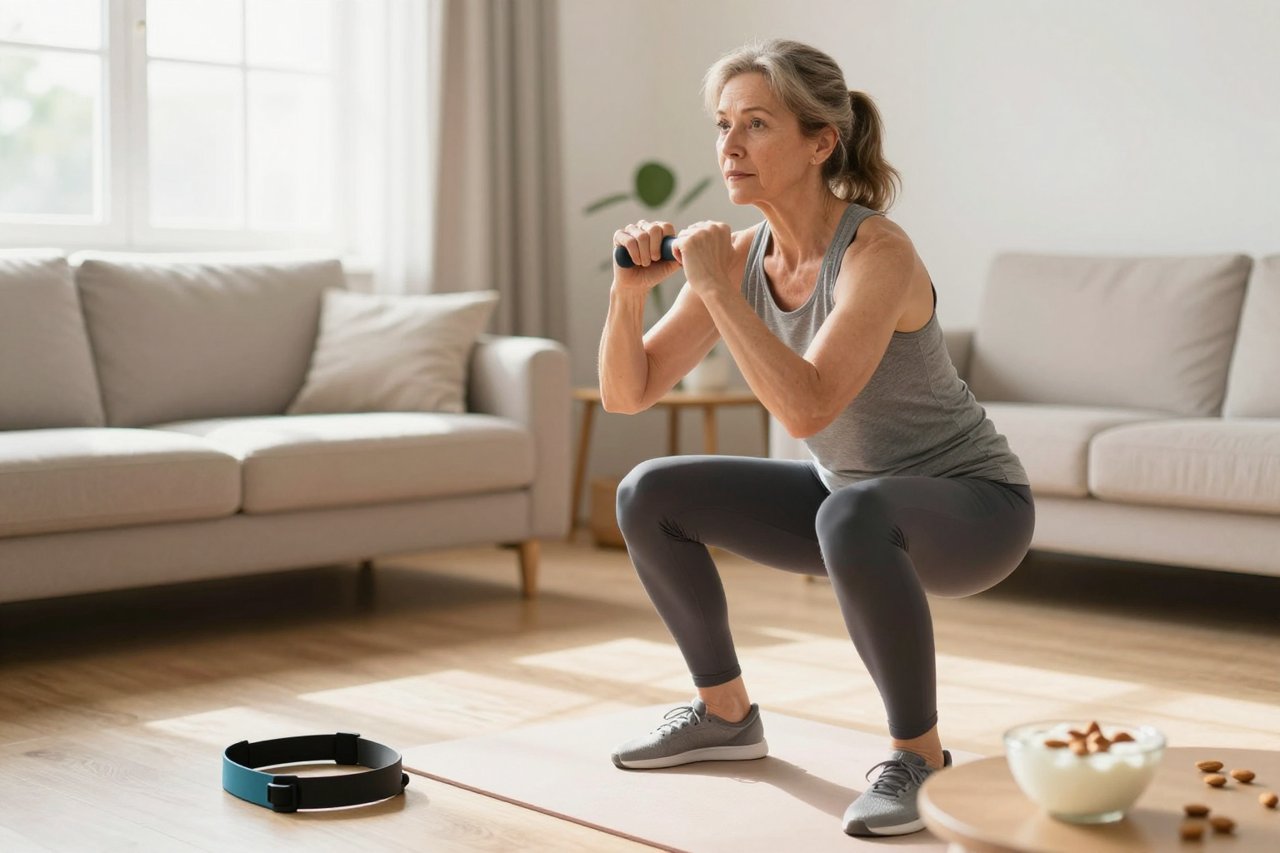
Bone responds to load. Walking, stair climbing, dancing, and brisk gardening all apply force through the skeleton. Resistance training with bands, dumbbells, or body weight adds a stronger signal. Two sessions a week is a realistic starting point. You do not need a gym: chair squats, step-ups, rows with a band, and heel drops cover a lot. A structured 12-week bone health plan can help if you want a progression rather than random workouts.
3. Vitamin D and sunlight
Vitamin D helps your body absorb calcium. Some comes from food, but oily fish, egg yolks, and fortified foods rarely supply enough on their own. Sunlight makes it in skin, though latitude, season, sunscreen, and skin tone change the amount. In winter at higher latitudes, many people need a supplement. A typical maintenance dose is 600 to 800 IU a day, but ask a clinician if you have darker skin, cover up, or rarely go outside.
4. The habits that drain bone
Smoking is directly toxic to bone cells. Heavy alcohol intake interferes with vitamin D and raises fall risk. Repeated crash diets can strip away muscle and bone. Some medications, especially long-term corticosteroids, raise fracture risk. None of this requires perfection. It requires noticing the big drains.
Supplements: Where They Fit
Supplements are not a shortcut around food and movement. They patch a gap. Calcium supplements can help if you regularly fall short; split doses and take calcium carbonate with food. Vitamin D is worth discussing for many people in winter. Megadoses are not better. Very high calcium or vitamin D can cause problems, and more is not a sign of stronger bones. The trade-offs between diet, supplements, exercise, and medication are worth understanding before you spend money on a cabinet of bottles.
What a Bone Density Scan Can and Cannot Tell You
A DEXA scan measures bone mineral density at the hip and spine. Results come back as a T-score, which compares you with a healthy young adult. A T-score between -1 and -2.5 is often called osteopenia; -2.5 or lower is in osteoporosis range. The scan is useful, but it is a snapshot. It does not measure bone quality, muscle strength, balance, or your risk of falling. Someone with osteopenia and poor balance may need more action than the number suggests.
Who should ask about scanning?
Women 65 and older and men 70 and older are common candidates. Younger postmenopausal women and men 50 to 69 with risk factors should ask. So should anyone who has broken a bone after a minor fall, lost height, or taken corticosteroids for months. Family history and early menopause matter too.
A Beginner’s Weekly Routine That Fits Real Life
Start smaller than you think. Consistency beats heroic weekends.
- Three walks: 20 to 30 minutes, with a few minutes of stairs or hills if your joints allow.
- Two strength sessions: 20 minutes of squats, step-ups, rows, calf raises, and a light carry.
- One balance practice: stand on one leg while brushing your teeth, or try heel-to-toe walking.
- Protein at each meal: eggs at breakfast, beans or chicken at lunch, fish or tofu at dinner.
- One calcium check: look at a typical day and see whether you reach roughly 1,000 mg without forcing it.
If walking hurts, swimming and cycling still help your heart and muscles, but they do not load bone much. Keep them, and add a small amount of impact or resistance work within your limits. A physiotherapist can help if you have arthritis, back pain, or a previous fracture.
Food Patterns Beat Single Nutrients
Bone health is not solved by a calcium tablet beside a poor diet. Mediterranean-style eating, with vegetables, legumes, fish, olive oil, dairy or fortified alternatives, and modest processed food, tends to support bones and the rest of the body. The longevity diet for beginners covers the broader pattern without turning dinner into a chemistry exam. You do not need to eat perfectly. You need enough total energy, enough protein, and a reliable source of calcium most days.
When to Get Help Instead of Guessing
Talk to a clinician if you have broken a bone from a standing-height fall, lost more than 4 cm (about 1.5 inches) of height, developed a curved upper back, or have sudden severe back pain. Ask about bone health if you take corticosteroids, have an eating disorder, have gone through early menopause, or have a parent who broke a hip. These details change the maths.
A good clinician will look at your fracture risk, not just a single number. They may suggest blood tests for vitamin D, calcium, or thyroid function, review medications, and discuss whether a DEXA scan or treatment is appropriate. You can start today with a walk, a protein-rich meal, and two strength sessions this week. That is not a grand plan. It is how living bone gets the message to rebuild.


