
Table of Contents
“Anti-aging foods” sounds like something invented by a supplement company, and plenty of what gets sold under that label is exactly that: ordinary ingredients with expensive packaging and a good copywriter. But the idea behind the phrase holds up. Your body is constantly tearing down and rebuilding tissue, and the food you eat supplies both the raw materials and the chemical signals that decide how well that repair job goes.
This is a starting-from-zero guide. No 40-ingredient smoothie recipes, no talk of telomere length you can’t measure at home. Just what aging actually looks like inside your cells, which foods push it in the right direction, and how to get some of them onto your plate this week.
What “aging” actually means inside your body
Aging isn’t one process. It’s several running at once, and food interacts with most of them.
Oxidation
Every time your cells make energy, they produce byproducts called free radicals that can damage DNA, proteins and cell membranes. Your body neutralises most of them with its own antioxidants, but the system isn’t perfect. Plant foods supply additional antioxidant compounds — anthocyanins in berries, lycopene in tomatoes, sulforaphane in broccoli — that mop up some of the overflow.

Chronic low-grade inflammation
Short-term inflammation heals a cut. Inflammation that smoulders for years is a different story; it’s linked to joint pain, heart disease, cognitive decline and faster skin aging. Researchers sometimes call it “inflammaging.” Diet is one of the biggest levers you control here, which is why anti-inflammatory foods for beginners overlap so heavily with anti-aging ones.
Glycation
When blood sugar runs high, glucose molecules attach themselves to proteins and form sticky compounds called AGEs (advanced glycation end products). Collagen is especially vulnerable — glycated collagen loses elasticity, which shows up as stiff skin and stiff arteries. This is the main reason sugar and refined carbs get such a bad reputation in aging research.
Cell turnover and the gut
Your gut lining replaces itself every few days. That rebuilding depends on protein, zinc, vitamin A and a healthy microbiome. A fibre-poor diet starves the bacteria that produce butyrate, the short-chain fatty acid that keeps that lining intact.
The four jobs anti-aging foods do
- Supply antioxidants and polyphenols that limit oxidative damage.
- Dampen inflammation by shifting the balance of fats and plant compounds in your diet.
- Keep blood sugar steady, which slows glycation.
- Feed gut bacteria that regulate immunity and produce protective compounds.
Almost every food that shows up in longevity research does at least one of those four things. Very few do all four. That’s why variety beats any single “superfood.”
A beginner’s shortlist
Colour is a useful shortcut
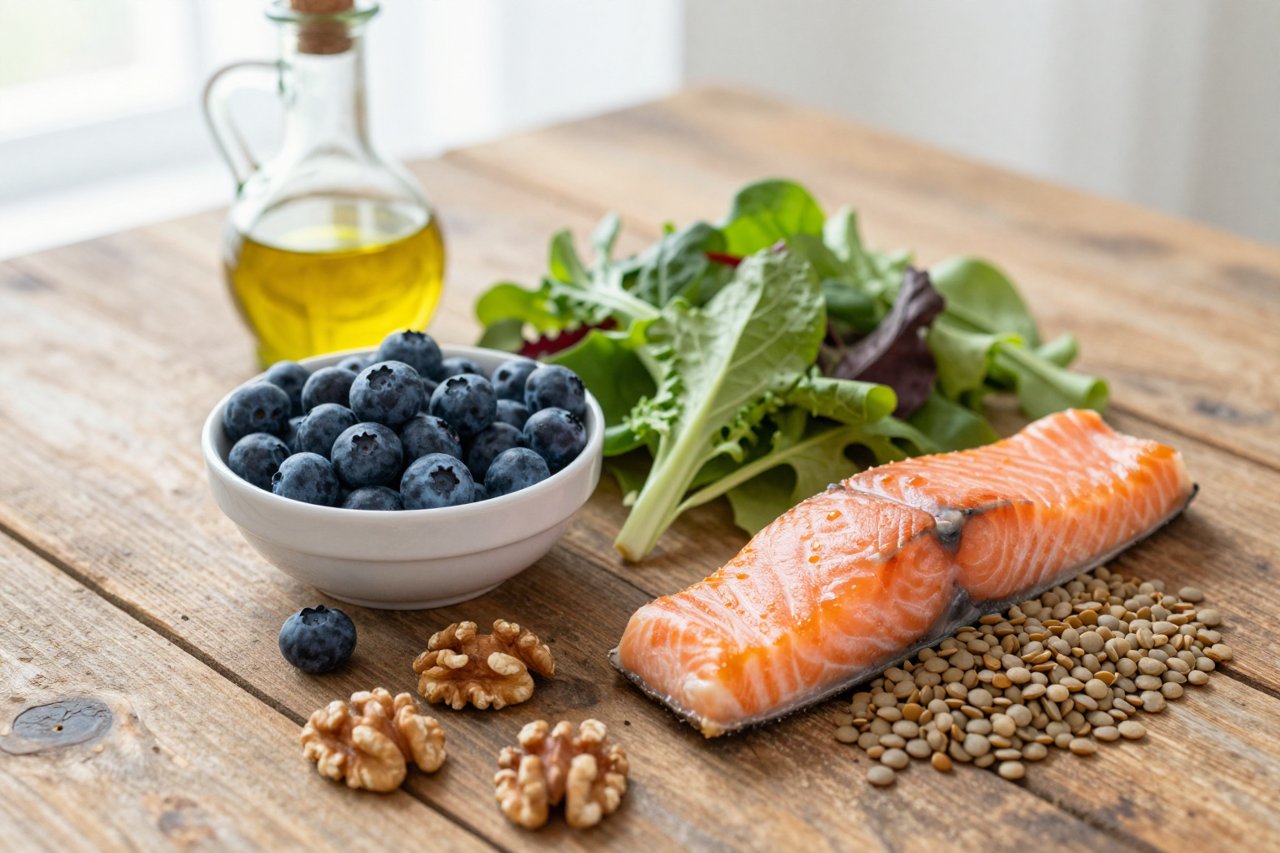
Deeply coloured plants tend to be rich in polyphenols. A cup of blueberries delivers roughly 4g of fibre plus a solid dose of anthocyanins. Cooked tomatoes give you lycopene in a form your body absorbs better than raw. Red onion, purple cabbage, dark leafy greens and carrots all earn their place for the same basic reason.
Fat from fish and plants
Two servings of oily fish a week — salmon, sardines, mackerel, herring, roughly 3 to 4 ounces each — covers omega-3 needs for most adults. If fish isn’t your thing, walnuts (about 1 ounce, or 7 whole nuts), ground flaxseed and chia seed are reasonable plant alternatives, though less efficient.
Beans and whole grains
Aiming for 25 to 30g of fibre a day is one of the least glamorous, most effective anti-aging habits available. Half a cup of cooked black beans gets you about 7g. A cup of cooked oats gets you 4g. Lentils, chickpeas, barley and farro all pull their weight.
Fermented foods
Plain yoghurt with live cultures, kefir, kimchi, sauerkraut and miso add live bacteria and the compounds they produce. Look for “live and active cultures” on the label; heat-treated products don’t count.
Olive oil and the spice shelf
Extra virgin olive oil is the most studied fat in the longevity literature, and 2 to 4 tablespoons a day is the range used in Mediterranean diet trials. Turmeric with a pinch of black pepper, garlic, ginger and green tea are cheap additions with decent evidence behind them.
What a day of eating actually looks like
Abstract lists are easy to nod at and hard to use. Here’s a concrete Saturday:
- Breakfast: plain Greek yoghurt with a handful of blueberries, a tablespoon of ground flax and a few walnuts.
- Lunch: a bowl of lentils with roasted red pepper, spinach, red onion and a generous pour of olive oil.
- Snack: an orange and a small handful of almonds.
- Dinner: salmon fillet with broccoli and sweet potato, seasoned with turmeric, garlic and black pepper.
Nothing exotic. Roughly 30g of fibre, two omega-3 sources, six or seven different plants and a low glycaemic load. That’s the whole trick.
Where supplements and fasting fit
They can fit, but they’re the wrong starting point. A resveratrol capsule doesn’t compensate for a diet built on white bread and processed meat, and the evidence for most anti-aging supplements is far thinner than the marketing suggests. If you want the honest comparison of diet, pills and intermittent fasting — including which has the strongest human data — the breakdown of superfoods vs supplements vs fasting is worth reading before you spend money.
Three habits that quietly cancel the benefits
You can eat a bowl of berries every morning and still undo most of the good. Adding antioxidant-rich food to a diet that also includes a large sugary coffee drink, deep-fried snacks and five hours of sleep is a losing trade. The glycation load from the sugar alone swamps whatever the berries contributed. Smoking, heavy alcohol use and chronic stress operate through the same inflammatory pathways you’re trying to calm.
There are more subtle traps too, like drinking green tea with every meal (the tannins can reduce iron absorption) or boiling vegetables until the water-soluble vitamins are gone. A roundup of the 7 mistakes that quietly undo the benefits covers the ones people make most often.
How to start this week without an overhaul
Pick two changes. Not ten. The most reliable first moves are adding a serving of berries or leafy greens to breakfast, and swapping one processed snack for a handful of nuts. Do that for two weeks before adding anything else — habit stacking works better than a total kitchen clear-out, which usually collapses by day nine.
Once those two feel automatic, add oily fish twice a week and start cooking with olive oil instead of a neutral vegetable oil. That’s four changes, and they cover most of the mechanistic ground described above. From there, a step-by-step plan for actually eating anti-aging foods can take you through shopping, prep and portioning without the guesswork.
One last reframe worth holding onto: anti-aging foods aren’t a category you either eat or don’t. They’re simply the foods that make your body’s repair work easier. Every meal is a small vote, and the votes accumulate over years, not days.


