
Table of Contents
Some of the best-selling objects of the past fifty years were, by any reasonable measure, ridiculous ideas. A rock in a box. A shoe with holes punched through the sides. A plastic spinner that does nothing except spin. Retail buyers passed on most of them. Focus groups wrinkled their noses. Then shoppers went ahead and bought them by the million anyway.
What follows is a look at seven genuinely strange success stories, roughly in order of how loudly people laughed at them first.
A Rock in a Box Sold 1.5 Million Units
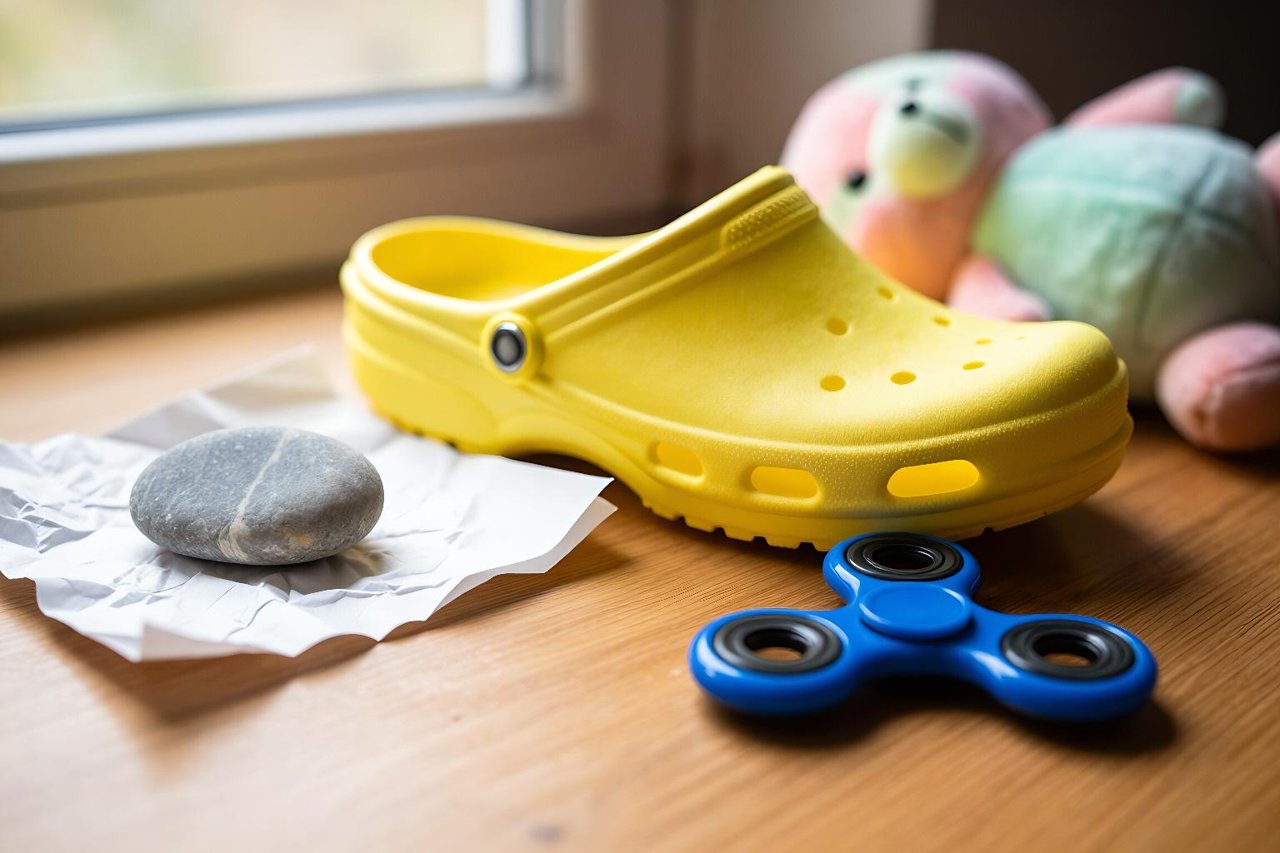
In 1975, a copywriter named Gary Dahl was complaining about his dog with friends and joked that a pet rock would be easier to look after. He turned the joke into packaging: an ordinary smooth stone from Rosarito Beach in Mexico, nestled in a cardboard carrying case with breathing holes, sold with a 32-page instruction manual covering tricks like “play dead.”
The price was $3.95. Dahl sold roughly 1.5 million of them in under six months and reportedly cleared millions of dollars in the process. What he was actually selling wasn’t a rock. It was a joke people could hand to a colleague at Christmas. The manual, the box, and the styrofoam packing were the product; the stone was a prop.

Half a century later, gag gifts still follow the same formula. Nobody buys a novelty item for the item.
Bottled Water Was Once Considered Absurd
It’s hard to explain to anyone under thirty why the idea of paying for water seemed laughable in 1970s America. Tap water was cheap and safe. Why would a person hand over money for something that arrived free through a pipe?
Perrier and Evian leaned into that absurdity and made the bottle the point. Glass, green, French, vaguely medicinal. Supermarkets slowly gave bottled water its own aisle, convenience stores put fridges of it by the till, and per-capita consumption climbed steadily for forty years. The global bottled water market is now worth somewhere around $280 billion annually.
A chunk of that growth was ordinary convenience. A larger chunk came from convincing people they were slightly dehydrated and needed to fix it with a purchase, an idea the wellness industry has since refined into a science of its own, complete with alkaline claims and electrolysis gadgets. Sell the worry first. The water is the easy part.
Crocs: The Shoe That Got Laughing Reviews and $4 Billion
Crocs debuted in 2002 at the Fort Lauderdale Boat Show with a design that looked like a gardening clog crossed with a cheese grater. Fashion writers hated them immediately. A 2010 Time piece listed them among the worst inventions of the decade. Crocs kept selling anyway, because boaters, nurses, chefs, and toddlers all noticed the same thing: they are extraordinarily comfortable and they wipe clean.
The company reported nearly $4 billion in revenue for 2023, and the shoe that fashion declared dead is now worn on red carpets, in hospital wards, and in every hostel dorm on the planet. Ask anyone who spent a year travelling with a single pair of shoes and they’ll tell you the same thing. That’s a lesson that comes up repeatedly in any honest account of travelling long-term on almost no money: nobody who has walked 20 kilometres in the wrong shoes ever cares how they looked.
The turnaround wasn’t accidental. Crocs leaned into the mockery, launched limited collaborations, and let the ugliness become the identity.
The Fidget Spinner Waited 24 Years for Its Moment
Catherine Hettinger filed a patent for a spinning toy in 1993 after watching children throw stones at police in 1980s Florida, of all things, and wondering whether a small kinetic device might calm them. Her patent lapsed in 2005 because she couldn’t justify the $400 renewal fee.
Twelve years later, in 2017, plastic spinners ended up in the top ten toys of the year. YouTube videos did the work no toy fair could: kids watched other kids flick a three-pronged disc between their fingers, then pestered a parent in a petrol station queue. Schools banned them. Bans made them more desirable. Within months the market was saturated with cheap copies and it collapsed as fast as it arrived.
Hettinger, it should be noted, didn’t make her fortune. That’s worth remembering the next time a company announces a viral product as if virality and profit are the same thing.
The Stanley Quencher Was Almost Discontinued
Here’s the detail most people miss about the 40-ounce tumbler that became a status symbol: Stanley nearly killed it. The Quencher existed for years as a forgotten line in a catalogue belonging to a company founded in 1913 for making insulated steel bottles for workmen. By 2016, the company had quietly considered discontinuing the cup.
Enter three women in Utah running a shopping blog called The Buy Guide, who loved the tumbler and ordered 5,000 units to resell. The order was big enough to get attention. Stanley brought in a new president from Crocs (the two stories connect), and the brand started releasing limited colour drops and Starbucks collabs. Stanley’s revenue reached a reported $750 million in 2023, and a video of a car destroyed by fire with an intact, ice-filled Quencher sitting in the wreckage that November did more than most advertising campaigns manage in a decade.
The pattern here is worth studying if you sell anything at all. Stanley didn’t invent thirst or insulation. It built scarcity, colourways, and a community of people who photograph their cups on kitchen counters.
Squishmallows Became a Collecting Habit
Launched in 2017 by Kelly Toys, a subsidiary of Jazwares, Squishmallows were cheap, round, and sold in places like Walgreens and Five Below with almost no marketing budget. Each one has a name and a short bio on the tag. That was about it.
Collectors did the rest. TikTok turned finding a rare one into a treasure hunt, and “squish hunting” clips generated billions of views. The brand passed 100 million units sold, and a plush you could pick up for $12 became something adults displayed on shelves and resold at markups.
Wherever collectors gather, photography follows. The listings that actually sell are the ones lit properly and edited cleanly, which is why anyone taking resale seriously should look at the photo editing software worth installing before pointing a phone at a shelf.
Labubu Turned Plastic Figures Into an Asset Class
The strangest success story of the past two years is a toothy, fur-trimmed creature designed by Hong Kong artist Kasing Lung and produced by Chinese company Pop Mart as part of its The Monsters series. The figures are sold in sealed blind boxes for the price of a takeaway meal. You don’t know which one you’re getting.
When celebrities started clipping them onto designer handbags in 2024, secondary market prices went vertical. Limited colourways regularly resell for many times retail, and Pop Mart’s revenue more than doubled year on year as the craze spread from Shanghai to London to Los Angeles. Queueing for a launch became a social event.
This is the part that annual prediction lists reliably miss. You can read through every serious technology trends report for 2025 and find AI agents, edge computing, and nothing at all about teenagers paying four figures for a plush keychain.
Where the Next Unlikely Hit Is Probably Hiding
Four traits keep showing up across all seven of these products, and none of them require a genius inventor.
- Comfort beats taste. Crocs, Stanley cups, and Squishmallows all won on how they feel, not how they look in a catalogue.
- Cheap enough to be an impulse. Blind boxes, spinners, and a $3.95 rock all sit below the threshold where a shopper stops to think.
- Built-in collecting. Colourways, names, and series numbers give buyers a reason to come back for a second and a twelfth.
- Documented by its own fans. Every one of these products spread through video made by customers, not advertising made by brands.
If you want to guess what’s next, ignore the polished startup pitch decks and watch what people film themselves unboxing at 11pm. The likeliest candidates right now are the boring ones: grip trainers, posture gadgets, adult sticker books, cheap thermal cups in a colour nobody has released yet, and anything sold blind. Weird, slightly ugly, and priced low enough that nobody needs to justify it. That’s been the recipe since 1975, and it hasn’t stopped working.


