
Table of Contents
Every giant company looks inevitable in hindsight. The polished logos, the global offices, the press releases. Then you trace the story back far enough and find something else: an air mattress on a living room floor, a car trunk full of running shoes, a door used as a desk. The top 7 famous brands with surprisingly humble beginnings did not start with perfect conditions. They started with a small problem, a tight budget, and a willingness to do things that did not scale.
Here are seven origin stories worth knowing. Each one is a reminder that the first version of a business is rarely the polished version.
Airbnb: Three Air Mattresses and a Box of Cereal
In 2007, Brian Chesky and Joe Gebbia were struggling to pay rent in San Francisco. A design conference was coming to town and hotels were booked solid. They inflated three air mattresses in their apartment and hosted guests for $80 each. The name? AirBed & Breakfast.
The early days were scrappy. Investors turned them down. To keep the lights on, they designed and sold ‘Obama O’s’ and ‘Cap’n McCain’s’ cereal boxes at $40 a pop during the 2008 election. The stunt raised about $30,000. They also flew to New York, knocked on doors, and photographed listings themselves. No growth team. No algorithm. Just founders doing the unglamorous work.

Nike: A Car Trunk and a Waffle Iron
In 1964, Phil Knight and University of Oregon track coach Bill Bowerman launched Blue Ribbon Sports. Knight sold Onitsuka Tiger running shoes out of the trunk of his Plymouth Valiant at track meets. Bowerman kept tinkering with footwear in his workshop.
One morning in 1971, he poured rubber into his wife’s waffle iron. The result was a grippy sole pattern that became the foundation of the Nike Waffle Trainer. The company became Nike in 1971. The first employees worked in a small office and warehouse, packing shoes by hand. Not exactly the swoosh-on-every-billboard image people know now.
Amazon: A Garage, a Door, and a Bell That Rang With Every Sale
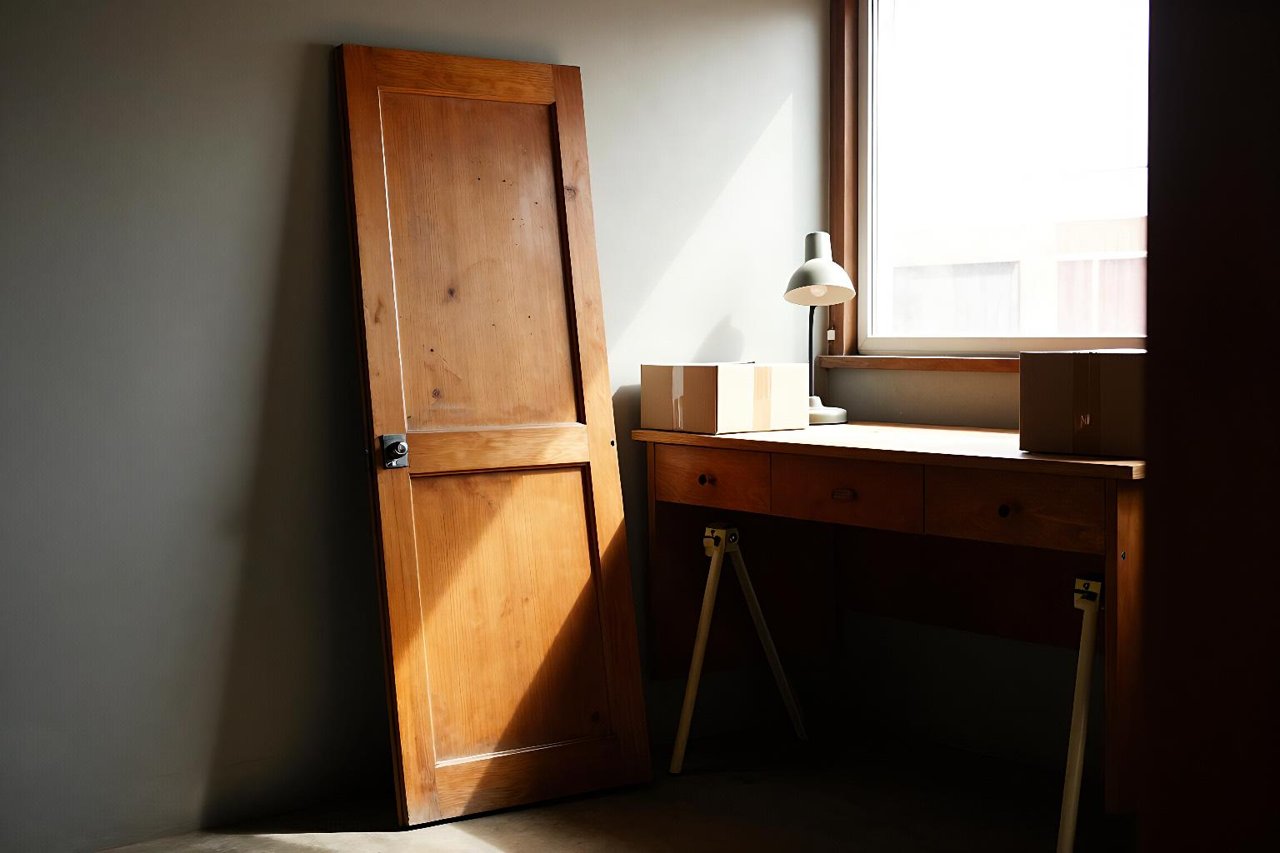
Jeff Bezos left a hedge fund job in 1994, drove across the country, and set up Amazon in a garage in Bellevue, Washington. The first catalog was books. The first desk was a wooden door attached to a frame. The team was tiny.
Early on, a bell rang in the office every time an order came in. It was a simple way to celebrate a sale and keep score. Within a few years, the bell would have been ringing nonstop. Amazon went public in 1997. The garage is a useful reminder that the company did not start with warehouses, drones, or cloud computing. It started with a small online bookstore and a cheap door.
Apple: Two Steves, a Garage, and a Hand-Built Computer
In 1976, Steve Jobs and Steve Wozniak built the Apple I in the garage of Jobs’ parents’ house in Los Altos, California. Wozniak designed the circuit board. Jobs handled the hustle. To fund the first batch, Jobs sold his Volkswagen van and Wozniak sold his HP calculator.
The first order came from a local computer store, the Byte Shop: 50 machines, assembled by hand. The garage is now a historic site. At the time, it was just a workshop with a lot of parts and not much cash. Apple’s rise from there is the stuff of business legend, but the starting point was two friends making a computer they wanted to use.
Coca-Cola: A Pharmacy Syrup Sold for Five Cents
In 1886, Atlanta pharmacist John Pemberton stirred up a caramel-colored syrup in his backyard. It was originally sold as a patent medicine. At Jacob’s Pharmacy, the syrup was mixed with carbonated water and sold for five cents a glass.
The first year was not a blockbuster. Sales averaged around nine drinks per day. Pemberton sold portions of the business to investors, and Asa Candler eventually took control. Candler pushed sampling and advertising hard. The product that became a global icon started as a fountain drink at a drugstore counter, made by a man who was not trying to build a beverage empire.
Zappos: Buying Shoes at Retail and Shipping Them Himself
In 1999, Nick Swinmurn started Zappos without a warehouse or inventory. The early model was almost absurdly simple. He went to local shoe stores, took photos of the shoes, and listed them online. When someone placed an order, he bought the pair at retail and shipped it to the customer.
The margins were thin and the work was manual. Tony Hsieh and his investment firm backed the company, and Hsieh later became CEO. Zappos nearly ran out of money more than once. It sold to Amazon in 2009 for about $1.2 billion. The customer-service culture that made Zappos famous was built on a first version that was far more hands-on than a typical e-commerce site.
LEGO: A Wooden Toy Workshop That Caught Fire
In 1932, Danish carpenter Ole Kirk Christiansen began making wooden toys in his workshop in Billund. The name LEGO came from the Danish phrase ‘leg godt,’ which means ‘play well.’
The early years were tough. In 1942, a fire destroyed the workshop and inventory. Christiansen rebuilt. He invested in a plastic injection molding machine in 1947, and the company began experimenting with plastic bricks. The modern LEGO brick design was patented in 1958. The toy that now sells in more than 130 countries started as a small family carpentry business making wooden animals and trucks.
What Founders Can Take From These Famous Brands With Humble Beginnings
The pattern is not about luck. It is about doing something small, close to the customer, with the resources on hand. Each of these brands could have waited for better conditions. They did not.
Five moves that still work
- Sell before you build. Zappos listed shoes it did not own and bought them only after a customer ordered.
- Treat the first customers like your only customers. Airbnb’s founders photographed listings in person and stayed close to the people paying them.
- Use constraints as a filter. Apple’s garage and Amazon’s door desk kept costs low and focus high.
- Test with your own hands. Bowerman’s waffle iron was a workshop experiment, not a focus group.
- Keep the early feedback loop short. The Amazon bell made every sale visible, and every quiet hour impossible to ignore.
If you are building something now, the first version is supposed to look rough. The brands above did not start with scale. They started with a move small enough to try that day. That is still how many of the best businesses begin.


