
Table of Contents
A bottle of aloe gel sits in a lot of bathroom cabinets, usually bought after one bad afternoon in the sun. It’s cheap, it feels wonderful going on hot skin, and it has a reputation that suggests it can handle almost anything. The honest version is narrower and more useful: aloe vera is genuinely good at a handful of jobs, mediocre at others, and occasionally irritating in ways the label won’t warn you about.
What’s actually inside an aloe leaf
An aloe leaf is roughly 99% water, which explains most of what the gel does and a fair amount of what it doesn’t. The remaining fraction is a mix of polysaccharides (acemannan and glucomannan are the two most studied), glycoproteins, traces of vitamins and minerals, and small amounts of salicylates.
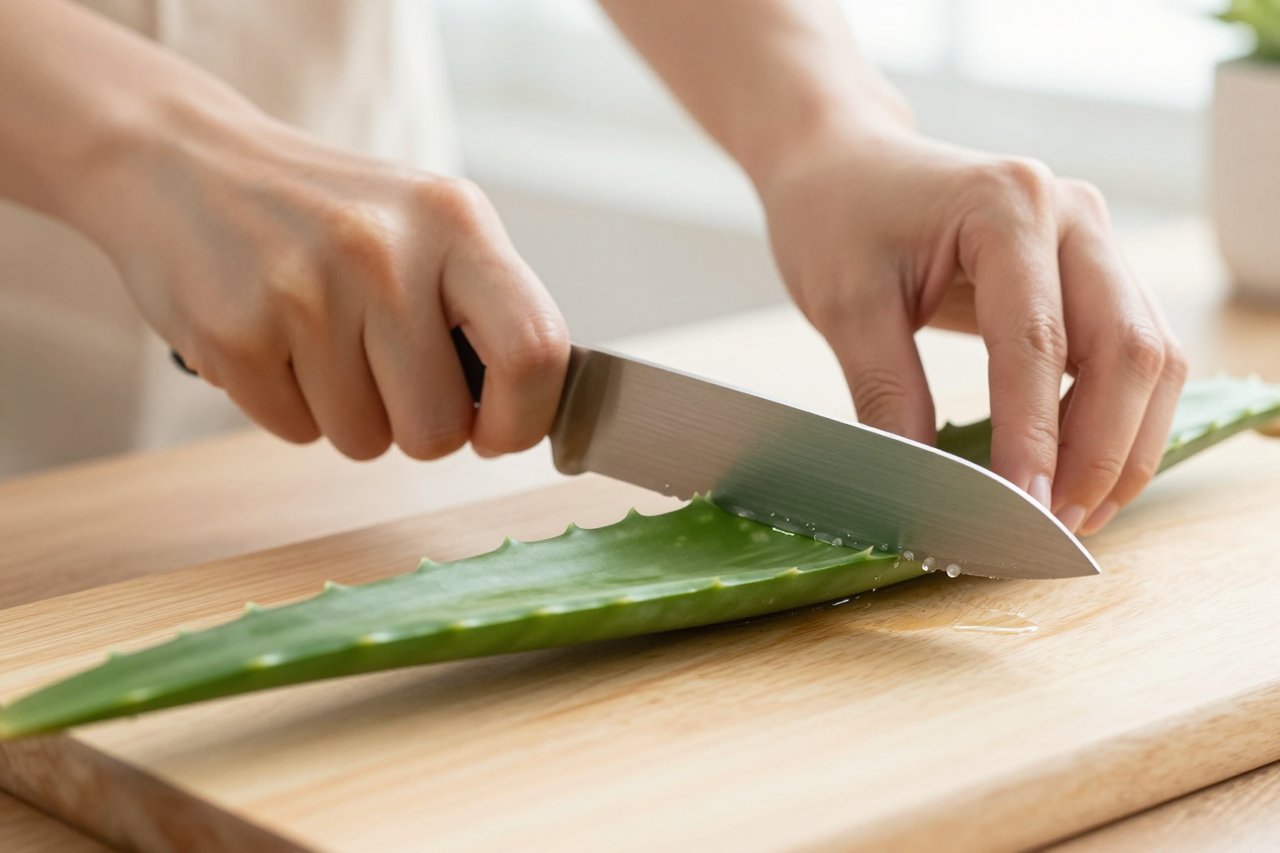
The part that matters for skincare is the inner fillet, the clear jelly you scoop out with a spoon. Directly under the green rind sits a yellow sap called latex, and that is a different substance with different behaviour. It contains aloin and aloe-emodin, anthraquinones that taste bitter, act as laxatives, and were removed from over-the-counter laxative products by the FDA in 2002 over safety concerns. Whole-leaf aloe products include that sap unless the manufacturer filters or decolourises it out.
So “aloe” on a label can mean two quite different raw materials. That’s worth remembering the next time a product stings.

Where aloe vera genuinely helps
Sunburn and post-procedure skin
This is aloe’s home turf. The gel is a humectant, it cools on contact, and it forms a light film that keeps a damaged surface from drying out and cracking. A Cochrane review of wound treatments found that aloe may shorten healing time in partial-thickness burns, though the authors rated the underlying evidence as poor quality. The practical takeaway holds: it makes a burn feel considerably better and keeps the surface moist for the first 24 to 48 hours, which is exactly what you want.
The same logic applies after laser sessions, microneedling, or a rough waxing appointment, as long as the skin isn’t broken or weeping.
Hydration, layered rather than worn alone
Aloe binds water to the surface of the skin. Applied to slightly damp skin and followed with something that seals, it plumps up fine dehydration lines within minutes. That’s a modest effect, but a real one.
Oily and easily congested skin
Anyone who finds traditional creams suffocating will get on well with a plain aloe gel as their hydrating step. It sinks in fast, leaves no residue, and layers under sunscreen without pilling. Be realistic about the acne claims, though. There is a small amount of research on aloe for inflammatory acne, most of it low quality, and nothing that puts it in the same league as benzoyl peroxide or adapalene.
Razor burn and everyday redness
A thin layer after shaving or on wind-chapped cheeks takes the heat out of mild irritation. It won’t fix a flare of rosacea, but it’s a pleasant, low-risk buffer while you wait for actual treatment to work.
Where aloe vera falls short
It is not a moisturiser
Moisturising happens in two stages: humectants pull water toward the skin, then emollients and occlusives hold it there. Aloe does the first job and none of the second. On dry skin in February, a layer of aloe alone can leave you feeling tighter ten minutes later because the water it attracted is evaporating straight off. Put a cream, a balm, or three drops of squalane over the top and the effect lasts.
The anti-ageing claims run ahead of the data
You’ll see aloe marketed as collagen-boosting and firming. There’s no convincing human evidence it stimulates collagen or reverses photoageing. It’s a soothing hydrator, not a retinoid, and no amount of aloe will substitute for daily sunscreen.
Allergy is uncommon but not imaginary
Aloe sensitivity affects a small minority of people, and it’s more likely in anyone with existing eczema or a history of plant allergies. Symptoms tend to be itching, redness, or a bumpy rash appearing hours after application. Patch test on the inner forearm, leave it 48 hours, and don’t test on your face first.
Fresh gel spoils quickly
A cut leaf is a water-rich environment with no preservative in it. Keep the wrapped leaf or scraped gel in the fridge and use it within about a week. Freezing spoonfuls in an ice cube tray gets you three months.
It offers no meaningful sun protection
No credible SPF value, and no substitute for the real thing. People who rely on aloe instead of sunscreen after a burn tend to end up with a second one.
“98% aloe” is a marketing number
A very high aloe percentage sounds impressive and often means there was barely room in the formula for anything else, including the ingredients that would make it work better. A 60% aloe gel with glycerin, panthenol, and a decent preservative can outperform a 99% one.
Reading an aloe label without getting fooled
- Check the INCI name. “Aloe barbadensis leaf juice” is the gel. “Aloe barbadensis leaf extract” or a powder is usually far more dilute once reconstituted.
- Look for the word decolourised. It signals the irritating yellow latex has been stripped out.
- Watch for alcohol denat near the top. It makes the gel feel cooling and lightweight, then dries the skin out.
- Question bright green colour. Real aloe gel is clear to pale straw. Vivid green usually means added dye.
- Scan for fragrance and essential oils. Lavender and citrus oils are common in aloe products and are a frequent cause of contact reactions.
- Confirm the preservative system. Anything water-based and sold at room temperature needs one, and “preservative-free aloe gel” in a tub is a red flag.
Getting the most from it
Use aloe as the watery, soothing layer in a routine, not as the whole routine. Cleanse, apply aloe to damp skin, then seal with something containing ceramides, shea butter, or squalane. For sunburn, apply every couple of hours and keep the area out of the sun entirely for a few days.
Skip it on deep or blistering burns, open wounds, and anything that looks infected. Those need a doctor, not a plant. If a rash appears within 24 hours of using a new aloe product, stop, rinse with cool water, and give it a week before trying anything else unfamiliar. And if you’re buying the cheap gel from a pharmacy shelf, read the back of the tube once. It’s the fastest way to find out whether you’re getting aloe or a green-tinted alcohol gel with a picture of a leaf on the front.


