
Table of Contents
Greece has roughly 6,000 islands and islets, and about 227 of them have permanent residents. That number is the problem. Any list of the best islands to visit in Greece is really an argument about what you want from a holiday, because the island that suits a family with two teenagers is rarely the one that suits a couple looking for empty coves and long lunches.
So this is a shortlist built around character rather than rankings. Some are famous for good reason, others are quietly better than their reputations suggest, and a couple are worth visiting precisely because nobody has built a boutique hotel on them yet.
Crete: the island that does everything
At 260 kilometres long and over 8,300 square kilometres in area, Crete is less an island than a small country with a coastline. You could spend a fortnight here and never repeat a beach. The west gives you Balos lagoon and Elafonisi’s pink-tinged sand, both reachable by boat or a slow, winding drive. The south coast around Sfakia is wilder, with pebbled coves backed by cliffs and tavernas that serve whatever came off the boat that morning.
Inland, the Samaria Gorge runs 16 kilometres from the Omalos plateau down to Agia Roumeli, and it’s genuinely tough on the knees in the last hour. Heraklion’s archaeological museum holds the Minoan collection, including the Phaistos Disc, and Knossos is 20 minutes outside town. Crete works for families, hikers, history obsessives and people who just want to eat well for a week.

Santorini: still worth it, with conditions
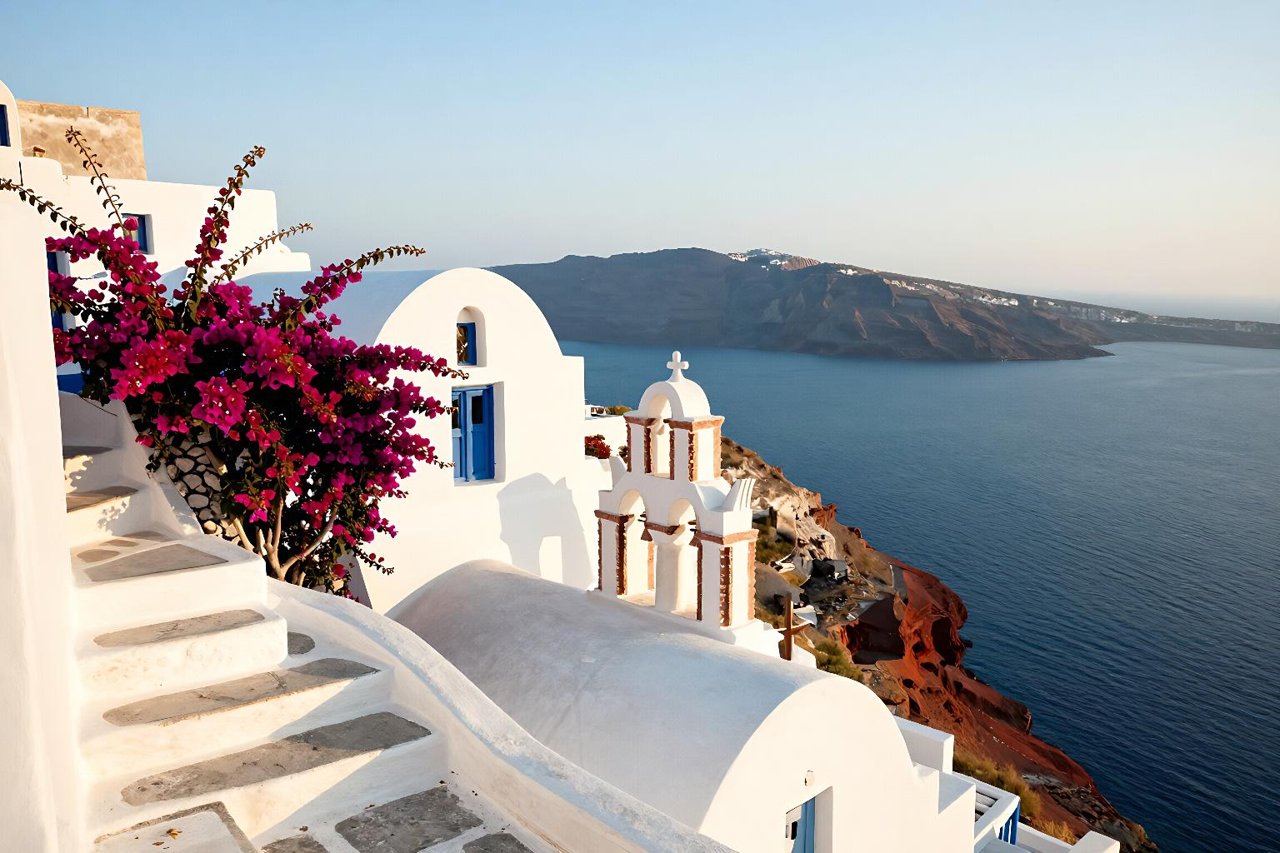
The caldera view from Oia and Imerovigli is one of the few sights in Europe that lives up to the photographs. The problem is everyone else knows that too. On a peak summer day, several thousand cruise passengers come ashore between roughly 9am and 3pm, and the narrow lanes of Oia become a slow shuffle.
Two fixes work. Stay on the island rather than visiting on a day trip, and base yourself in Pyrgos or Megalochori, both inland and both far calmer. Then do the caldera walk early, before 8am, when the light is soft and the paths are yours.
The island’s other draw is the archaeology. Akrotiri is a Bronze Age town buried by volcanic ash around 1600 BC, preserved well enough that you can make out streets, pottery jars and upper floors. It’s covered by a modern roof, so it works even on a hot afternoon. Unsurprisingly, Santorini also turns up near the top of most lists of the best islands for a romantic getaway, though the romance costs more here than almost anywhere else in the Aegean.
Naxos: the Cyclades without the crush
Naxos is the largest island in the Cyclades and somehow escapes the crowds that swallow Mykonos and Santorini. The main town, Chora, has a 6th-century BC marble gateway called the Portara sitting on its own islet, reachable by a causeway that gets busy at sunset and empty by nine.
The west coast beaches, Agios Prokopios and Plaka in particular, run for kilometres with fine sand and shallow entry. Further inland, Mount Zas rises to 1,004 metres and the hike up takes about three hours return, passing a cave said to be Zeus’s childhood hiding place. Villages like Halki and Apiranthos have marble-paved streets and family-run tavernas that have barely changed in decades.
If clear water is the priority, the beaches on the western side hold their own against the showpieces in round-ups of the best beaches with crystal-clear water, and you won’t be sharing them with a tour group at 4pm.
Milos: geology, caves and 70-plus beaches
Milos is what happens when a volcanic island decides to show off. Sarakiniko is a stretch of bone-white rock formations that look borrowed from another planet, and Kleftiko, on the southwest coast, is a cluster of sea stacks and caves reachable only by boat. The island claims over 70 beaches, and the numbers hold up when you start driving.
The strangest sight is the abandoned sulphur mine at Thiorichia, where rusting machinery sits above a beach of red and yellow pebbles. Milos also has a working fishing culture in Adamas and Pollonia, so the food is better and cheaper than its looks suggest. For anyone chasing empty sand, the tactics in this guide to the best secluded beaches in the world apply nicely here: go early, go by boat, or walk 20 minutes past the car park.
Corfu and Kefalonia: the green Ionian
The Ionian islands look nothing like the Cyclades. Rainfall is higher, so Corfu is thick with cypress and olive groves, and its old town is a UNESCO site of Venetian alleys and arcaded squares that feels closer to Italy than to Athens. Paleokastritsa on the west coast has six bays and a monastery on the headland above them.
Kefalonia is the quieter sibling. Myrtos beach, a crescent of white pebble between two cliffs, is the photograph everyone brings home, but the Melissani cave near Sami is the better story: a collapsed cavern where you drift across a turquoise lake in a rowing boat with a guide. Both islands are big enough to hire a car, which matters, because the best swimming is rarely where the bus stops.
The small islands worth the extra ferry
- Folegandros: 32 square kilometres of cliffs, a Chora built on the edge of a 200-metre drop, and beaches you reach by boat taxi from the port.
- Amorgos: home to the 11th-century Monastery of Hozoviotissa, wedged into a cliff face, plus some of the clearest water in the Aegean for diving.
- Sifnos: low-key, excellent for walkers, with the 15th-century Castro settlement and a reputation for the best cooking in the Cyclades.
- Ios: written off as a party island, but Mylopotas is a genuinely good beach and the hilltop Chora is one of the prettiest in Greece once the bars close.
- Zakynthos: touristy around Laganas, but Navagio and the Loggerhead turtle nesting bays in the marine park justify the trip. Underwater, the island’s caves and drop-offs make it a solid base, and there’s more inspiration in this pick of beaches for scuba diving, from shore entries to shipwrecks.
Getting between the islands without losing a day
Ferries are the thing that catches people out. Piraeus and Rafina are the main mainland ports, and Rafina is closer to the airport, which saves an hour if you’re arriving and sailing the same day. Conventional ferries are slower but cheaper and far more reliable in wind. High-speed catamarans cut crossing times roughly in half but get cancelled when the meltemi wind picks up in July and August, so leave a buffer day before your flight home.
Book the popular routes a few weeks ahead in high season, particularly anything involving Santorini or Mykonos. If you’re travelling with a car, check that the vessel takes vehicles, because many high-speed services don’t.
Timing matters more than most guides admit. May, June, September and October give you sea temperatures of 22 to 25°C, open tavernas and a fraction of the August traffic. August is wonderful if you love crowds, and brutal if you don’t.
One last thing worth knowing: island hopping is easy to over-plan. Two islands in a week beats four, because every ferry eats half a day once you count packing, port transfers and waiting. If you want a wider shortlist that includes the mainland, from the Meteora monasteries to the Peloponnese, this guide to the best places to visit in Greece covers ground the ferries can’t reach.


