
Table of Contents
Four islands carry almost every first-time Hawaii visitor, and each one asks something different of you. Oahu hands you the postcard and the traffic. Maui hands you a road trip. The Big Island hands you an active volcano and a sky full of stars. Kauai hands you a coastline you can’t reach by car.
Picking wrong won’t ruin a trip, but it will shape it. Someone who wants quiet beaches and a book will be miserable in Waikiki on a Saturday night, and someone who wants sushi at midnight will be bored stiff in Hanalei by 9pm. Here’s how the four main islands actually compare, with the details that matter when you’re booking flights, hotels and a rental car for seven to ten days.
Oahu: the easiest first landing
Honolulu’s Daniel K. Inouye International Airport is the main gateway to the state, so most first-timers land here whether they plan to or not. Oahu is also the island where you can skip the rental car entirely for the first few days. Waikiki is walkable, and TheBus will get you to Diamond Head, Pearl Harbor and Chinatown for $3 a ride.
The island packs a lot into a small space. You can hike Diamond Head’s 1.6-mile summit trail in the morning (reservations and a $5 entry fee per person are now required for non-residents), tour the USS Arizona Memorial at Pearl Harbor in the afternoon, then eat garlic shrimp from a truck in Kahuku on the North Shore before dark. That’s a genuinely great day, and it’s about 40 miles of driving.

Where Oahu wins
- Range of accommodation. Hostels, mid-range Waikiki hotels and North Shore rentals all exist. Maui and Kauai are far more resort-heavy and expensive.
- Food. Plate lunch, poke, shave ice, James Beard-nominated restaurants, and a real local food scene instead of just hotel dining.
- Families. Waikiki’s protected swimming area, the Honolulu Zoo, the Waikiki Aquarium and Dole Plantation are all easy wins with kids.
- History. Pearl Harbor, the Bishop Museum and Iolani Palace are the best cultural sites in the state.
The trade-off is crowds. Waikiki is dense, Kalakaua Avenue is a slow crawl at sunset, and the North Shore’s famous surf breaks draw a crowd in winter. Book Hanauma Bay well ahead if you want to snorkel there; it caps daily entry and closes on some weekdays.
Maui: the classic honeymoon island
Maui sits in the middle ground between Oahu’s bustle and Kauai’s stillness, and it’s the island most people picture when they picture Hawaii. Kaanapali and Wailea deliver big resort beaches. Lahaina, rebuilding after the August 2023 fires, remains the historic town most visitors pass through, so check current conditions and be respectful of what the community has been through.
Two experiences define a first Maui trip. The first is watching sunrise from the summit of Haleakala at 10,023 feet, where temperatures hover near freezing and you need a reservation through the national park service. The second is the Road to Hana: roughly 620 curves, 59 bridges (most of them one lane), and a full day if you stop for waterfalls, banana bread and the black sand at Wai’anapanapa State Park.
Where Maui wins
- Beach quality. Ka’anapali, Napili Bay, Makena and Wailea are consistently ranked among the best beaches in the country.
- Snorkelling. Molokini crater and Honolua Bay are exceptional, and boat trips leave from Maalaea and Lahaina harbours.
- Whale watching. Between roughly December and April, humpbacks fill the Au’au Channel. You can often see them from shore.
Maui is not a budget island. Expect $400-plus a night at the nicer resorts, a rental car booked months out, and restaurant prices that add up fast. It’s also the island most reliant on that car; public transport is limited and the good stuff is spread along the coasts.
The Big Island: for volcano chasers and stargazers
The Island of Hawaii is bigger than all the other islands combined, and that fact should drive your whole plan. Driving from Kona to Hilo takes about two hours without stops. A loop of the island is a full day in the car. First-timers who book three nights here usually spend one of them driving.
What you get for the distance is variety nothing else in the state matches. Hawaii Volcanoes National Park sits on an active volcano, Kilauea, with crater rim trails, lava tubes and sulphur banks. If an eruption is underway, the park becomes the best free show in the Pacific. Mauna Kea’s visitor station at 9,200 feet offers some of the clearest night skies on earth. Down at sea level you’ll find Punalu’u’s black sand beach, green sea turtles hauled out at Kaloko-Honokohau, and manta ray night snorkels off Kona that put you within arm’s length of 12-foot wingspans.
Coffee is a legitimate reason to come, too. The Kona coffee belt runs about 20 miles along the slopes above Kailua-Kona, and small farms offer tastings without the crowds you’d find on a resort beach.
Kauai: quiet, dramatic, and not for everyone
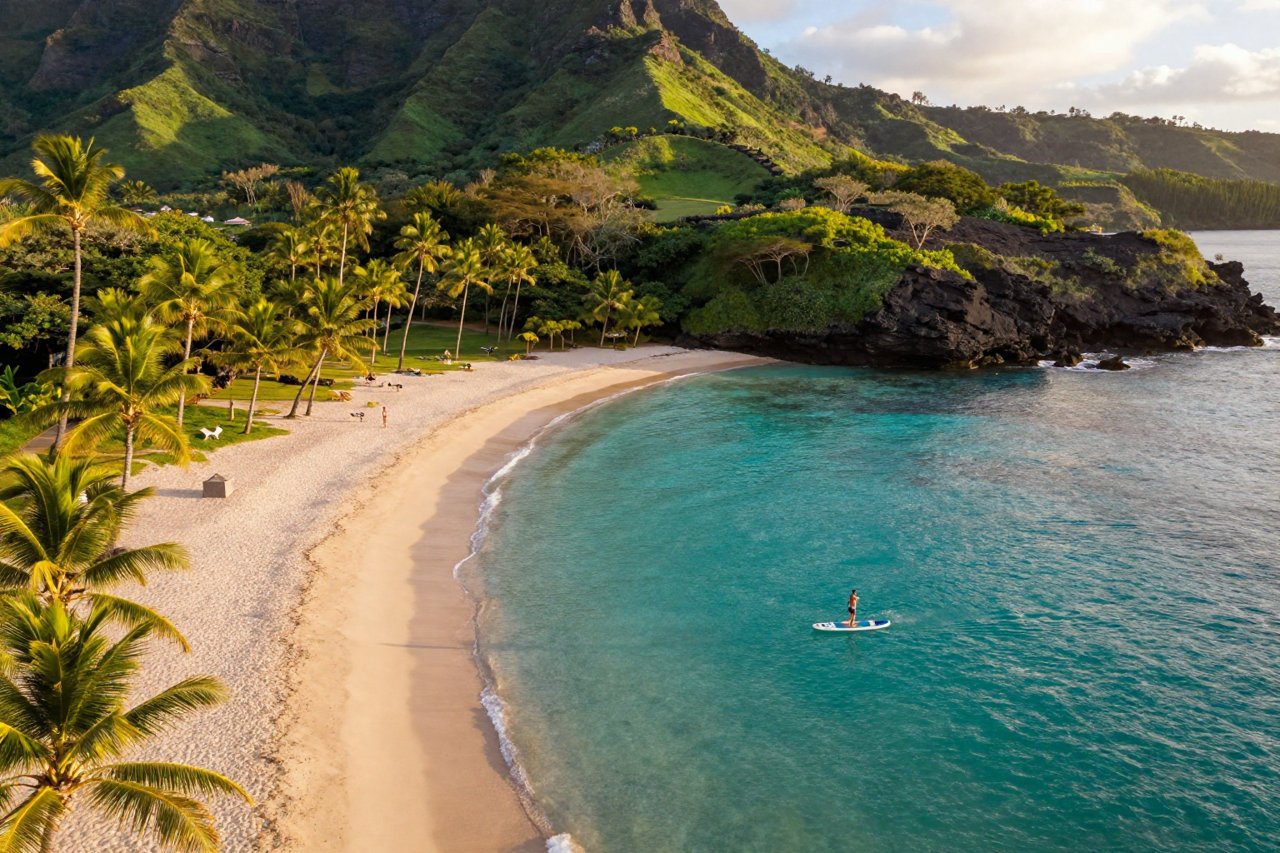
Kauai is the oldest of the main islands and the wettest, which is why it looks the way it does. Waimea Canyon runs 10 miles long and up to 3,000 feet deep, and Mark Twain’s “Grand Canyon of the Pacific” label undersells it. The Na Pali Coast, with its fluted green cliffs, has no road access at all: you see it by boat, by helicopter, or on the 11-mile Kalalau Trail, whose first two miles to Hanakapiai Beach are enough for most day hikers.
It’s also the island where things close early, resorts are limited and nightlife barely exists. If your ideal Hawaii day ends with a cocktail at a busy beach bar, Kauai will feel too sleepy. If it ends with a plate of fish and a dark sky full of stars, it’s perfect.
Which island fits your trip?
A quick way to narrow it down, based on what most first-timers actually want:
- Five days, first trip, want it easy: Oahu. Fly in, stay in Waikiki, see the North Shore, don’t rent a car for the whole stay.
- Honeymoon or anniversary: Maui. Resorts, beaches, one big Road to Hana day.
- Geology, hiking, dark skies: the Big Island, with at least four nights.
- Nature and no crowds: Kauai, ideally paired with a boat trip along Na Pali.
- Tight budget: Oahu, where hostel and mid-range options actually exist.
- Travelling with young kids: Oahu or Maui, skipping the Big Island’s long drives.
If you’re still torn between two, this honest guide to choosing the perfect Hawaiian island breaks down the trade-offs island by island in more detail.
How long to stay, and whether to island-hop
Three nights is the practical minimum for any island; anything less and you spend half of it at an airport. Seven days on one island is a relaxed, genuinely enjoyable trip. Ten days gives you room for two islands.
Interisland flights run 30 to 45 minutes and typically cost $60 to $120 each way, though booking two to three months ahead and travelling with carry-on only keeps that at the low end. Factor in the airport time: a mid-morning flight from Maui to Kauai will still cost you half a day once you’ve dropped the car, cleared security and picked up the next rental.
Two islands in ten days works. Three islands in ten days is a packing-and-unpacking exercise with some beach in between. If you only have a week, pick one and go deeper; the comparison of the best Hawaiian island options is worth reading before you lock in flights.
Details first-timers get wrong
Rental cars. On Maui, Kauai and the Big Island, a car isn’t optional. Book it at the same time as your flights; inventory gets thin in summer and over the holidays, and last-minute prices double. On Oahu you can often save money by renting only for the days you leave Waikiki.
Reservations you can’t wing. Haleakala sunrise, Diamond Head summit, Hanauma Bay, the USS Arizona Memorial and Wai’anapanapa all require advance bookings. Some release slots 30 days out at a specific local time, so set an alarm.
Sunscreen rules. Hawaii bans sunscreens containing oxybenzone and octinoxate. Buy reef-safe before you fly or expect to pay a premium at the ABC Store.
Ocean safety. Hawaii’s shorebreak is not a swimming pool. Winter swells on north-facing shores can close beaches entirely, and snorkelling alone at unfamiliar spots is how people get into trouble. Check the daily report and swim near lifeguards.
Driving distances. Speed limits are mostly 25 to 45 mph and roads wind. A 30-mile drive can take an hour. Plan fewer stops than you think you need, especially on the Road to Hana.
A first-trip plan that actually works
If you want a single recommendation: fly into Honolulu, spend four nights on Oahu with a rental car for two of those days, then take a 40-minute flight to Maui for four more nights based in Ka’anapali or Kihei. You get the history and food of Oahu, the beaches and road trip of Maui, and only one airport transfer. Save the Big Island and Kauai for a second visit, when you’ll know exactly what you want from them and can give each one the time it deserves.


