
Table of Contents
The first time you brush a bare forearm against a nettle patch, you learn two things fast: the sting is real, and the plant grows with alarming enthusiasm along footpaths, hedgerows, and the shaded edge of almost any garden. What takes longer to appreciate is that the same leaf, once blanched or dried, is one of the more genuinely useful things you can put in a teapot.
Stinging nettle (Urtica dioica) has been eaten as a spring vegetable in Europe for centuries, long before anyone started putting it in capsules. Here’s what the leaf brings nutritionally, how to brew it so it tastes like something you’d choose rather than endure, and how to tell a decent nettle product from a jar of dusty green sawdust.
What Nettle Leaf Actually Contains
Weight for weight, fresh spring nettle leaf is hard to beat among wild greens. Analyses put vitamin K somewhere around 400 to 500 micrograms per 100 grams, with a solid showing of beta-carotene, vitamin C, and a mineral profile loaded with calcium, magnesium, and iron. Exact figures swing widely depending on soil, harvest timing, and whether you’re testing leaf or stem, so treat any single number with a raised eyebrow.
The protein content catches people off guard. Fresh nettle runs roughly 3 to 5 grams per 100 grams. Dry it and you remove most of the water, so the same weight of dried leaf lands closer to 20 to 30 grams of protein, spread across a reasonable range of essential amino acids. That density is the reason nettle powder turns up in smoothies aimed at people who want greens without a salad bowl.

- Vitamins: K, C, and beta-carotene (which the body converts to vitamin A)
- Minerals: calcium, magnesium, iron, potassium, traces of zinc
- Protein: 3 to 5 g per 100 g fresh, heavily concentrated in dried leaf
- Polyphenols: quercetin, kaempferol, chlorogenic and caffeic acids
- Fibre: around 6 to 7 g per 100 g fresh
One caveat worth stating plainly: vitamin C degrades quickly after picking. A bag of fresh nettle left on a warm counter overnight loses a meaningful share of it. Low-temperature drying protects minerals and polyphenols nicely but does little for ascorbic acid, so if vitamin C is what you’re after, eat the leaf fresh and soon.
Brewing Nettle Tea That Doesn’t Taste Like Pond Water
Nettle tea has a reputation problem, and it’s mostly self-inflicted. People pack a mug with a fistful of leaf, pour boiling water straight from the kettle, and leave it steeping for fifteen minutes. The result is bitter, grassy, and faintly marine. Three small adjustments fix it.
Start with the right ratio
One to two level teaspoons of dried cut leaf per 250 ml cup is plenty. That’s roughly 1.5 to 3 grams. Use water just off the boil, around 90 to 95°C, and steep for five to seven minutes. Cover the cup while it steeps. Nettle’s aromatics are volatile, and an open mug lets the more pleasant notes escape into the kitchen. Strain and drink it warm, or chill it overnight for a summer drink that tastes faintly of spinach and hay in the best possible way.
Cold infusion for the minerals
If you want the mineral side of nettle leaf rather than a quick hot cup, cold water is the better solvent. Put 10 grams of dried leaf in a litre of room-temperature filtered water, leave it on the counter for six to eight hours, then strain. The brew comes out softer, less bitter, and noticeably silkier on the tongue. Refrigerate and finish within three days.
What a daily cup actually feels like
Nettle is a mild diuretic, so you’ll notice more trips to the bathroom before you notice much else. Hay fever sufferers often report relief from drinking nettle tea through allergy season, and freeze-dried nettle capsules have a small amount of clinical research behind them, though the evidence is thin and mixed. Anyone promising a dramatic transformation from a teabag is selling something.
Fresh, Dried, Powdered, or Tincture
Each format has a job. Fresh leaf is a vegetable, best blanched for 60 seconds to neutralise the sting and then treated like spinach: wilted with garlic, folded into soup, layered into a pie in place of some of the spinach. Dried cut leaf is the all-rounder for tea and the cheapest way to buy nettle by weight. Powder is convenient for smoothies but oxidises faster because so much surface area is exposed to air. Tinctures and glycerites are for people who want a concentrated dose without the taste, and they’re the easiest format to make badly.
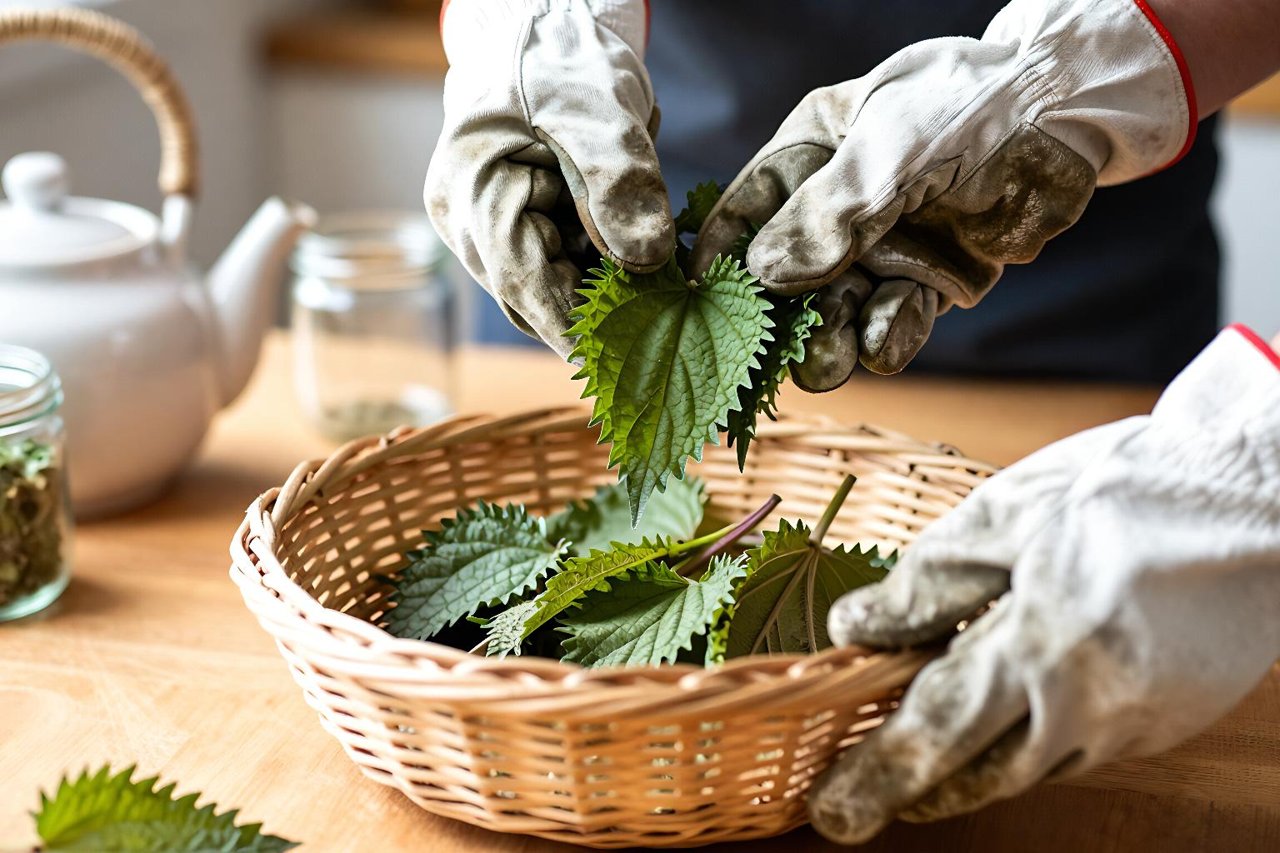
Handling fresh nettle requires gloves, and the sting survives contact with thin fabric. Blanching, drying, or cooking destroys the formic acid and histamine that cause the burn, so a dried leaf is completely safe to touch with bare hands.
Reading Nettle Herbal Products Like a Buyer, Not a Believer
The supplement aisle is where nettle leaf gets vague. A few things separate a good jar from a bad one.
- Leaf versus stem. Nettle stalks are woody and cheap. Good suppliers sell “cut and sifted leaf” and say so. If the label just says “nettle” with no plant part, assume you’re paying for stem.
- Colour and smell. Fresh dried leaf is a dull olive green with a faint hay-and-seaweed scent. Brown, dusty, or odourless leaf has been sitting in a warehouse for years.
- Origin and harvest date. Nettle is harvested in spring before flowering. A supplier who can’t tell you the year of harvest isn’t tracking quality.
- Extract ratios. A tincture labelled 1:5 means one part herb to five parts liquid, which is a standard maceration, not a concentration. Dried extract ratios like 4:1 or 10:1 mean the herb has been concentrated, so the dose on the label matters more.
Organic certification is worth paying for here. Nettle is a hungry plant that pulls nutrients, and contaminants, straight from the soil, and it’s frequently wild-harvested from roadside verges where exhaust residue settles on the leaves.
Growing and Picking Your Own
Nettle is nearly impossible to kill once established, which makes it either a blessing or a lifelong regret depending on your garden. Harvest the top two or three leaf pairs from spring plants before they flower, cutting just above a node so the plant pushes out new growth. You’ll get three or four good cuts between April and June. Wear gloves and long sleeves, and pick from ground you know hasn’t been sprayed or walked on by dogs.
For tea, dry the leaf in a single layer somewhere warm and dark with decent airflow, or use a dehydrator at 40°C. It’s ready when a leaf crumbles rather than bends. Store it in a sealed glass jar away from light and it will hold up for about a year.
The Safety Side Nobody Puts on the Box
Nettle is generally well tolerated, but it isn’t inert. Because it acts as a diuretic, it can compound the effect of prescription water tablets and shift potassium levels if you’re already on diuretics. It may also influence blood pressure and blood sugar, which matters if you’re medicated for either. Anyone with kidney disease or a history of fluid retention should talk to a doctor before making it a daily habit rather than an occasional cup.
Pregnancy is the other area to handle with care. Nettle has a long folk history of use in late pregnancy, and it also has a documented reputation for stimulating uterine contractions. That contradiction is exactly why the decision belongs with a midwife or doctor rather than a blog post or a tea box. Keep total intake modest, avoid concentrated extracts unless a practitioner has signed off, and if you’re on blood thinners, note that nettle’s vitamin K content can interfere with them.
For most people, one or two cups a day of a well-sourced leaf is a cheap, pleasant, genuinely nutritious habit. Buy from a supplier who names the plant part and the harvest year, brew it at the right temperature, and nettle stops being a novelty and starts earning its shelf space.


