
Table of Contents
What Is Arthritis, and Why Does Food Matter?
Arthritis isn’t a single condition. It’s an umbrella term for more than 100 diseases that affect joints. The two you hear about most are osteoarthritis (the wear-and-tear kind) and rheumatoid arthritis (an autoimmune disease where the immune system attacks the joint lining). What they share is inflammation—a biological process that’s supposed to heal you but can turn destructive when it never switches off.
That’s where food comes in. Your diet doesn’t cause arthritis, and it can’t cure it. But certain foods can dial inflammation up or down. Over time, those choices influence how much pain and stiffness you feel. Think of it as one lever you can control, alongside medication, movement, and sleep.
For a more detailed roadmap, this practical guide to eating for joint relief covers the topic in depth.
The Anti-Inflammatory Basics: Three Nutrients to Know
You don’t need a degree in nutrition to eat for arthritis. Start with these three categories:

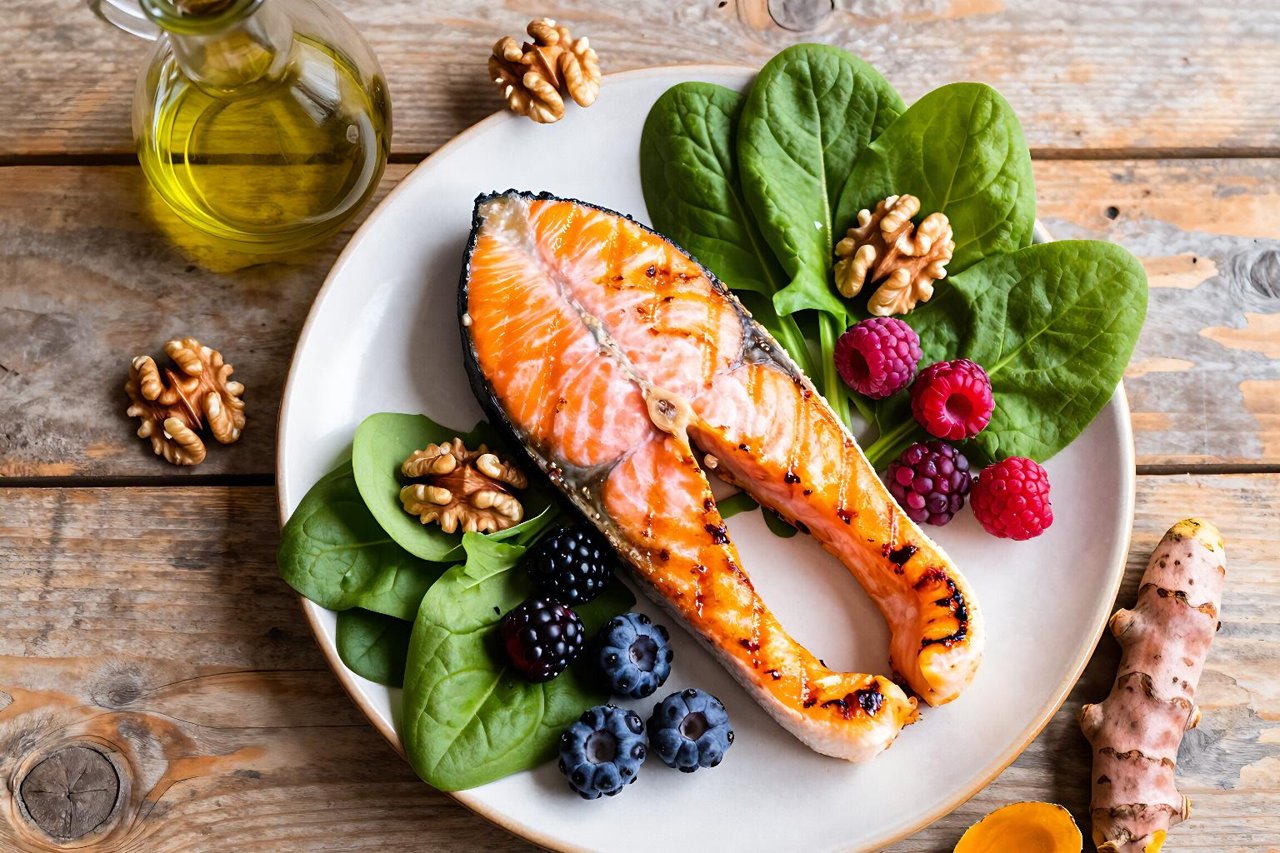
- Omega-3 fatty acids – These healthy fats help your body produce less of the chemicals that drive joint inflammation. You’ll find them in fatty fish (salmon, sardines, mackerel), walnuts, flaxseeds, and chia seeds.
- Antioxidants – Vitamins C and E, selenium, and plant compounds like anthocyanins and curcumin neutralize free radicals that can trigger inflammation. Colorful fruits, vegetables, nuts, and spices are packed with them.
- Fiber – Fiber feeds beneficial gut bacteria, which in turn help regulate inflammation throughout your body. Whole grains, beans, lentils, fruits, and vegetables are your best sources.
Foods That Earn a Regular Spot on Your Plate
Here are the standouts, with real numbers to make it concrete:
Fatty Fish
Salmon, mackerel, sardines, and anchovies are rich in EPA and DHA, two omega-3s your body uses directly. A 3-ounce serving of wild salmon delivers about 1.5 grams of omega-3s. Aim for two to three servings a week.
Berries
Strawberries, blueberries, raspberries, and blackberries are loaded with anthocyanins—the pigments that give them their color. One cup of blueberries provides 4 grams of fiber and a hefty dose of antioxidants. Fresh or frozen, both work.
Leafy Greens and Cruciferous Veggies
Spinach, kale, Swiss chard, broccoli, and Brussels sprouts supply vitamin K, calcium, and sulforaphane. Sulforaphane, found in broccoli, may help block the inflammatory pathways that worsen arthritis.
Nuts and Seeds
Walnuts are the omega-3 champion among nuts: one ounce (about 14 halves) gives you 2.5 grams of ALA. Almonds, chia seeds, and flaxseeds are also worth keeping on hand.
Olive Oil
Extra virgin olive oil contains oleocanthal, a compound that mimics the anti-inflammatory effect of ibuprofen—on a much smaller scale. Use it as your go-to fat for cooking and dressing.
Whole Grains and Legumes
Oats, brown rice, quinoa, beans, lentils, and chickpeas deliver fiber and plant protein. They also help you stay full, which makes it easier to maintain a healthy weight—important because extra pounds add stress to joints.
Spices
Turmeric (thanks to curcumin) and ginger have both shown promise for reducing joint pain in small studies. Add them to soups, stews, rice, or tea. A little black pepper with turmeric boosts absorption.
For a deeper list of inflammation-fighting foods, see this guide to anti-inflammatory foods that tame chronic inflammation.
Foods That Can Fan the Flames
Just as some foods calm inflammation, others stoke it. You don’t have to eliminate them forever, but cutting back can make a difference:
- Sugary drinks and refined carbs – Soda, sweet tea, white bread, and pastries spike blood sugar, which can increase inflammatory markers.
- Processed meats – Bacon, sausage, and hot dogs contain compounds that promote inflammation.
- Excess omega-6 fats – Found in corn, soy, and sunflower oils, plus many packaged snacks. You need some omega-6, but most people get far more than they need relative to omega-3.
- Alcohol – Can trigger flares, especially in rheumatoid arthritis. If you drink, keep it moderate.
- Nightshades (maybe) – Tomatoes, potatoes, peppers, and eggplant are healthy for most people. A minority report joint pain after eating them. If you suspect a link, try removing them for two weeks and see how you feel.
If you’re wondering which common missteps might be holding you back, this list of 8 mistakes that quietly sabotage your joints is eye-opening.
Putting It Together: A Beginner’s Plate
Forget counting every gram. Use the plate method: fill half your plate with non-starchy vegetables, a quarter with lean protein (fish, beans, chicken, tofu), and a quarter with whole grains. Add a drizzle of olive oil and a sprinkle of herbs.
A sample day might look like this: breakfast is oatmeal with berries and walnuts; lunch is a big salad with chickpeas, spinach, and olive oil vinaigrette; dinner is grilled salmon with roasted broccoli and quinoa. Snacks could be Greek yogurt with flaxseeds or an apple with almond butter.
If you’d like a structured way to start, a 10-day step-by-step plan that actually reduces stiffness can help you build habits without feeling overwhelmed.
Which Diet Pattern Is Best?
Mediterranean, vegan, keto—everyone has an opinion. The Mediterranean diet has the most evidence for reducing inflammation and improving arthritis symptoms. It emphasizes fish, olive oil, vegetables, fruits, whole grains, and legumes. A well-planned vegan diet can also work, as long as you get enough omega-3s, vitamin B12, and iron. Keto is popular, but research on arthritis is thin, and a poorly constructed keto diet high in processed fats could make inflammation worse.
For a side-by-side comparison, see how Mediterranean, vegan, and keto stack up for arthritis.
Small Swaps, Big Wins
You don’t need a radical overhaul. Try these swaps:
- Sparkling water with lime instead of soda.
- Whole grain bread instead of white.
- Olive oil instead of butter for sautéing.
- A handful of nuts instead of chips.
- Grilled fish or beans instead of processed meat.
Each swap nudges your diet in a more anti-inflammatory direction. Stack enough of them, and you’ve changed your pattern without feeling deprived.
What to Expect and When
Diet changes aren’t a light switch. Most people notice improvements in joint pain and stiffness after four to twelve weeks of consistent eating. Keep a simple journal—write down what you eat and how your joints feel each day. That helps you spot triggers and see progress you might otherwise miss.
Remember that food works alongside medical treatment, not instead of it. Talk to your doctor or a registered dietitian before making big changes, especially if you have other health conditions.
Start With One Meal
Tonight, try adding a cup of spinach to your pasta sauce, or swap your usual side of white rice for quinoa. One small change is easier to repeat than a perfect plan you abandon by Thursday. Your joints will thank you.


