
Table of Contents
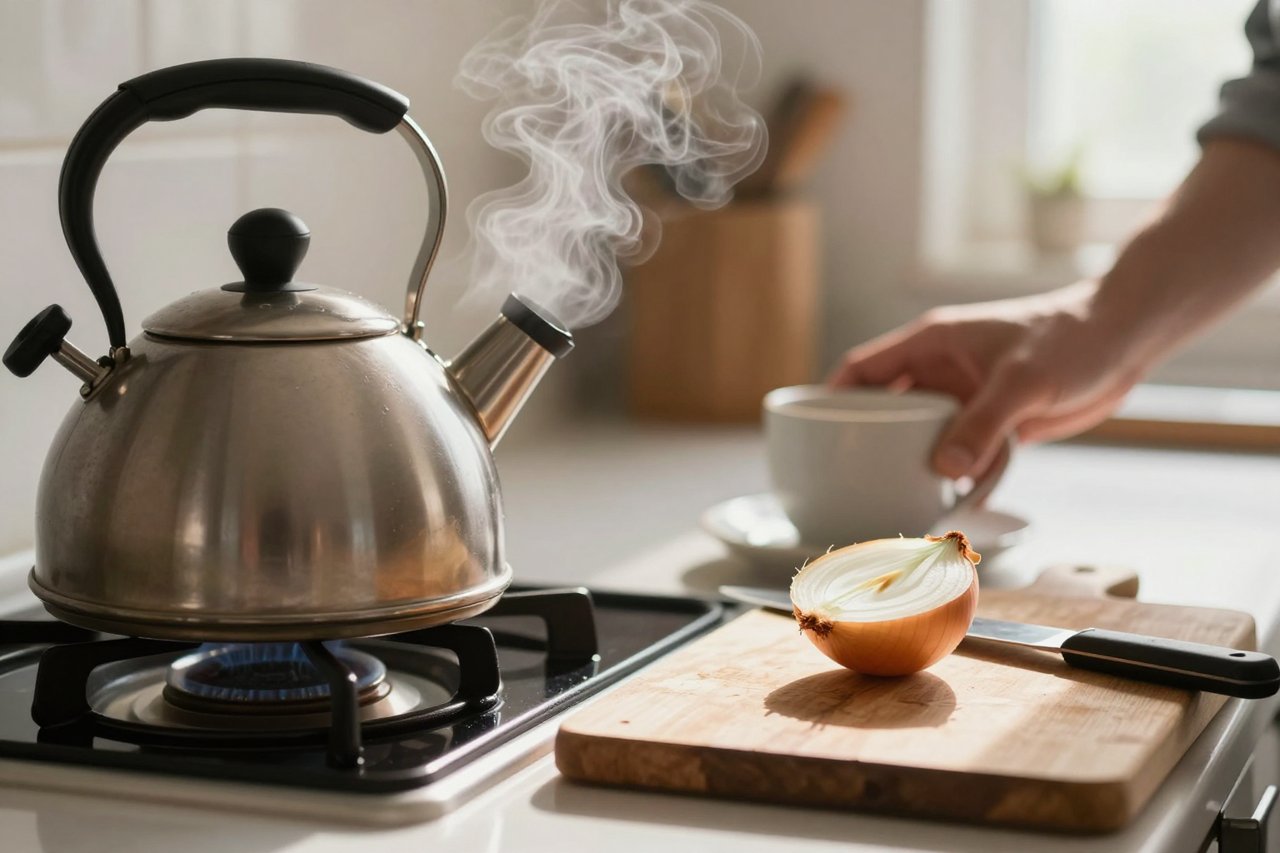
A kettle clicks off at 6:52. A toothbrush scrapes. Someone hunts for a missing shoe while the microwave hums. None of it feels remarkable, yet almost every object in that morning carries an odd story: a wartime accident, a patent dispute, a rodent with a better memory than yours.
Everyday life and surprising facts sit much closer together than most of us notice. Start looking and the ordinary stuff turns out to be the strangest stuff.
The Morning Runs on Accidents and Bimetallic Strips
The automatic kettle is a fine place to start, because it does something clever with no electronics at all. Inside the switch sits a bimetallic strip: two metals bonded together that expand at different rates when heated. Steam travels down a small tube, hits that strip, bends it, trips the catch, and cuts the power. Your kettle has been quietly doing physics since the mid-1950s.
Those first twenty minutes are not really you
Sleep researchers call it sleep inertia. For roughly 15 to 30 minutes after waking, your reaction times can be measurably worse than they were at midnight. That is why a 7 a.m. decision about what to wear feels harder than a 7 p.m. decision about a mortgage. Clothes laid out the night before beat willpower at dawn, every single time.

Caffeine casts a five-hour shadow
Caffeine’s half-life in a healthy adult runs about five hours. A 3 p.m. mug still leaves roughly a quarter of its caffeine in your system at 1 a.m., which explains a lot of 2 a.m. ceiling-staring. Nobody needs sainthood here, just arithmetic: if sleep matters tomorrow, the last coffee belongs before lunch.
Your Kitchen Is a Chemistry Lab With Poor Signage
Onions make you cry through a chain reaction. Cut the cells and an enzyme called alliinase mixes with sulfur compounds, producing a gas that drifts up and meets the water in your eyes. Tiny amounts of sulfuric acid, essentially. Chilling an onion for 15 minutes slows the enzyme, and a genuinely sharp knife does more than any pair of sunglasses.
Non-stick pans came from a lab accident. In 1938 a DuPont chemist named Roy Plunkett opened a cylinder of refrigerant gas and found a waxy white powder inside instead. That powder became PTFE, better known as Teflon. It spent years inside military hardware before anyone thought to put it on a frying pan.
The microwave has a similar origin. Percy Spencer, working on radar equipment in 1945, noticed a chocolate bar softening in his pocket near a magnetron. His first test subject was a bag of popcorn. Every office lunch since owes him something.
Flavour follows the same rules. Salt pulls water out of vegetables and concentrates what’s left, which is why a jar of homemade jalapeño salt turns a plain fried egg into something you’d pay for, using two ingredients and an afternoon.
The Neighbours Doing Unpaid Work Outside
Squirrels are the landscapers of every street, and they never send an invoice. One grey squirrel buries thousands of nuts in a season and recovers most of them using smell, landmarks and what looks like genuine spatial memory. The ones it forgets grow into trees. Studies suggest squirrels can find 85% of the nuts they hide, which is a better retrieval rate than most of us manage with car keys.
The ground beneath your feet is just as busy. A healthy garden soil can hold over a million earthworms per acre, and a 2022 study estimated 20 quadrillion ants alive on Earth at any moment. Twenty thousand trillion insects, quietly aerating soil and clearing carcasses while we argue about bin day.
Objects Older Than Your Grandparents
Sliced bread went on sale in 1928, from a machine built by a Missouri man named Otto Rohwedder after bakers told him it was impossible. The phrase “the greatest thing since sliced bread” didn’t appear until later, and it was originally a compliment aimed at the bread itself.
High heels were cavalry equipment first. Persian horsemen wore them to lock their feet into stirrups, and European aristocrats copied the look to signal that they never needed to walk anywhere. The everyday items in your house carry centuries of that kind of sideways history, and if you enjoy it, there’s a whole stash of the craziest history facts you never learned in school worth an evening.
The Quiet Cost of Small Conveniences
Subscription pricing is designed to be forgotten. One widely cited survey found that consumers estimated their monthly subscription spend at about $86 while the actual figure was closer to $219. The gap isn’t stupidity; it’s the business model. Free trials convert precisely because cancellation requires effort, and effort is exactly what nobody has on a Tuesday.
A useful annual ritual: open your bank statement, list every recurring charge, and ask what each one did for you last month. Most survive. A few are paying rent in your budget for nothing. The same logic applies to upgrades, and if you’re weighing one right now, this breakdown of whether a paid plan is actually worth it in 2026 is a sensible place to start.
Adjustments That Pay for Themselves by Thursday
Small structural changes beat big intentions. None of these take more than a few minutes to set up, and each one deletes a decision you’d otherwise make badly at 7 a.m.
- Put the phone on a charger outside the bedroom. It removes the 12-minute scroll that eats your morning before your feet touch the floor.
- Hang a donation bag inside the front door. Anything you haven’t worn since last winter goes in it on the way past. No wardrobe overhaul required.
- Chill the onion while you chop the first vegetable. Fifteen minutes in the fridge, noticeably fewer tears.
- Write tomorrow’s three tasks on a scrap of paper before bed. Three, not ten. A list you can finish is a list you’ll trust again tomorrow.
- Keep a duplicate key and a spare charger in one drawer you can name. Panic has terrible search skills.
Notice what these have in common: they move the difficulty to a moment when you have energy, so the tired version of you gets an easier job. That’s the real payoff of paying attention to ordinary life. The kettle is fascinating, the squirrel is a cartographer, the pan came from a mistake. But the practical version of all this curiosity is a day that runs a little smoother, because you noticed which parts of it were working against you.


