
Table of Contents
Black licorice divides people into two camps: the ones who savour it and the ones who spit it out. Behind that love-it-or-hate-it flavour sits one of the most thoroughly documented medicinal plants in human history, and a safety profile that deserves far more attention than it usually gets.
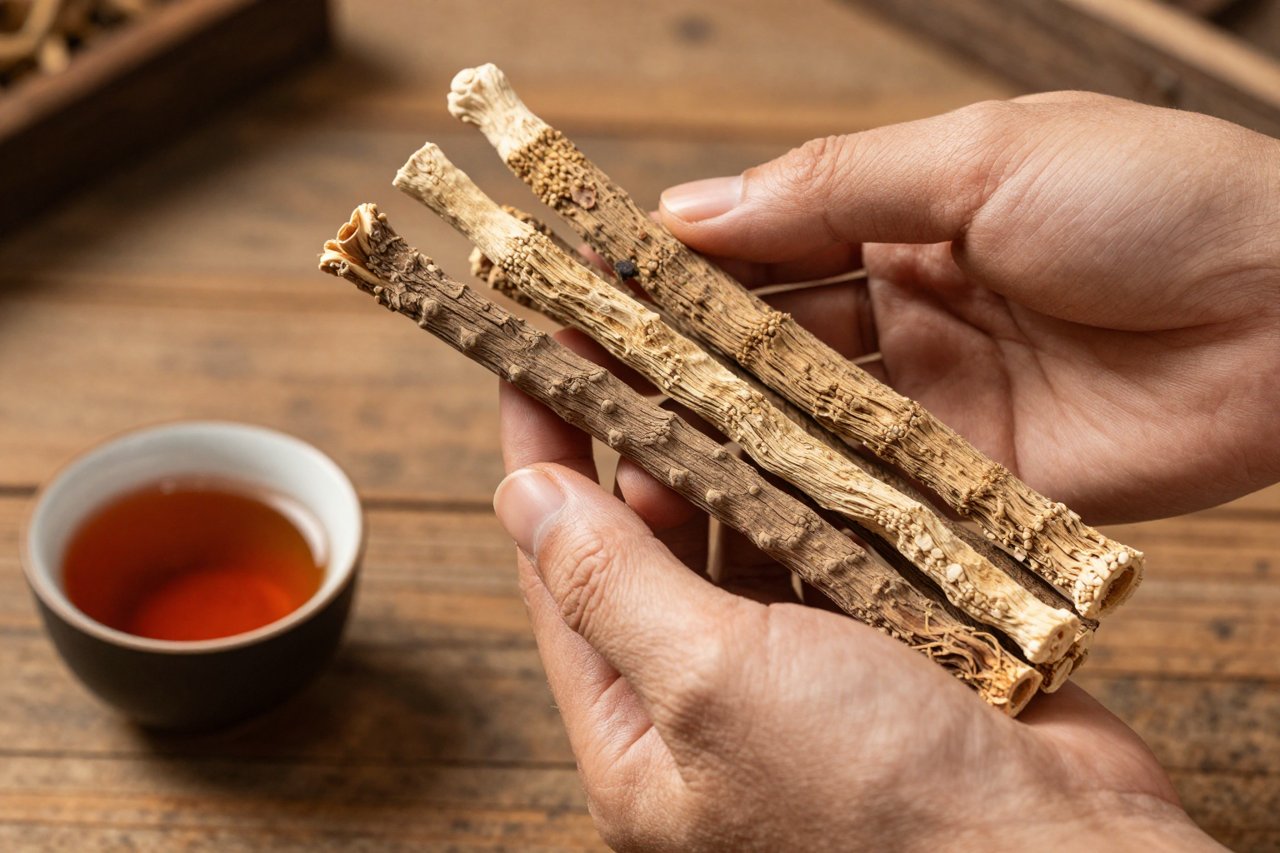
Licorice root (Glycyrrhiza glabra) now turns up in throat lozenges, digestive teas, adrenal supplements, herbal blends for menopause, vape liquid, and the confectionery aisles of northern Europe. Many people assume that because it grew out of the ground, it can’t hurt them. That assumption has put people in hospital with dangerously low potassium and blood pressure spikes.
Getting the balance right means understanding both halves of the story: what licorice has legitimately been used for over two millennia, and why regulators now print warnings on the packaging.
A Herb With an Unusually Long Paper Trail
Licorice appears in the Shennong Bencao Jing, the Chinese materia medica compiled around 200 AD, where it is called gan cao — roughly “sweet herb.” Chinese practitioners ranked it among the most important herbs in the cabinet, partly because it was believed to harmonise the other ingredients in a formula rather than dominate them.

Ayurvedic medicine knew it as yashtimadhu, or “sweet stick,” prescribed for hoarseness, ulcers, and wasting. Egyptian, Greek, and Roman physicians used it too; Roman soldiers reportedly chewed the root to stave off thirst on long marches, and the modern word descends from the Latin liquiritia via an older Greek term. North American nations used their own local species, Glycyrrhiza lepidota, for similar purposes.
By the nineteenth century, licorice had moved from apothecary jars into factories. It flavoured cough syrups, chewing tobacco, porter, and stout — and it is still used to mask the bitterness of medicines today.
The Compound Doing All the Work
Most of licorice’s activity traces back to glycyrrhizin (also called glycyrrhizic acid), a triterpenoid saponin that makes up roughly 2–9% of the dried root by weight. It is around 50 times sweeter than sucrose, which is why a small amount of root can sweeten an entire pot of tea.
In the gut, glycyrrhizin is converted into glycyrrhetinic acid, and that metabolite is where the pharmacology gets interesting — and where the trouble starts. The root also contains flavonoids such as liquiritin and glabridin, which contribute anti-inflammatory and antioxidant effects.
Here’s the key point: the same molecule that soothes a sore throat is the one that can raise your blood pressure. There’s no way to separate the two benefits unless you remove the glycyrrhizin entirely, which is exactly what deglycyrrhizinated licorice (DGL) products do.
Traditional Uses and What They Were Getting At
Sore throats, coughs, and hoarseness
Licorice is a classic demulcent — it forms a soothing film over irritated mucous membranes. A 2009 randomised trial found that patients who gargled with a licorice solution before surgery had significantly less post-operative sore throat than those given sugar water. Most herbal throat lozenges still lean on it for good reason.
Stomach complaints and ulcers
This is the best-studied traditional indication. Licorice appears to increase mucus production in the stomach lining and support prostaglandin activity. Carbenoxolone, a synthetic derivative, was a licensed ulcer drug in Britain for decades. Modern products usually use DGL, since the goal is to keep the mucosal benefit without the blood pressure risk.
“Adrenal fatigue” and stress support
Licorice inhibits an enzyme called 11β-hydroxysteroid dehydrogenase type 2, which normally converts active cortisol into inactive cortisone in the kidneys. Block that enzyme and cortisol lingers longer. This is the mechanism behind licorice’s reputation as an adrenal tonic — and, inconveniently, it’s the exact same mechanism that causes sodium retention and potassium loss.
Skin and pigmentation
Glabridin has attracted interest in cosmetic research for its effect on tyrosinase, the enzyme involved in melanin production. You’ll find licorice extract listed on plenty of serums aimed at melasma and dark spots.
Where the Safety Concerns Come From
High intakes of glycyrrhizin produce what clinicians call pseudoaldosteronism. The body holds onto sodium, loses potassium, and retains fluid. The practical results are swollen ankles, headaches, muscle cramps, fatigue, and rising blood pressure. In severe cases, low potassium can trigger irregular heart rhythms; there are published reports of people hospitalised with rhabdomyolysis after heavy licorice consumption.
In 2017 the US Food and Drug Administration issued a warning after a 54-year-old man died following a habit of eating a bag and a half of black licorice daily for a couple of weeks. He had collapsed at a fast-food restaurant. That’s an extreme case, but it shows how quickly electrolytes can shift.
The generally cited threshold is 100 mg of glycyrrhizin per day for a healthy adult, a limit set by European food safety advisers. Dried root typically contains 40–80 mg of glycyrrhizin per gram, so a gram or two of root in a tea is comfortably inside that range. Concentrated extracts, chewy candies, and daily long-term use are where people overshoot.
Who Should Skip It Entirely
- People with high blood pressure, especially anyone on medication — licorice works against several common antihypertensives.
- Anyone with heart disease or a history of arrhythmia, given the potassium connection.
- People with kidney disease, who clear glycyrrhetinic acid more slowly.
- Anyone already low in potassium or taking potassium-depleting diuretics.
- Pregnant women — a Finnish cohort study linked heavy consumption (over 500 mg of glycyrrhizin a week) to shorter pregnancies and later cognitive differences in children.
- People taking digoxin, since low potassium raises the risk of toxicity.
Other interactions worth flagging: corticosteroids (additive effects), warfarin (case reports of altered INR), and some blood pressure drugs including ACE inhibitors and calcium channel blockers. If you take prescription medication daily, ask a pharmacist before adding licorice to your routine.
Using It Without Overdoing It
For occasional use — a few days of tea for a scratchy throat, or a lozenge when a cold hits — whole licorice root is generally fine for healthy adults. Traditional herbalists often cap continuous use at four to six weeks, then take a break.
If you want the digestive benefits longer term, choose DGL, which has the glycyrrhizin stripped out (usually below 1–2%). It tastes milder, works well as a chewable before meals, and doesn’t carry the same cardiovascular caveats.
Watch for the early warning signs if you’re using whole root regularly: puffy ankles, unexplained headaches, unusual tiredness, or cramps in your legs. Stop and get your blood pressure and potassium checked.
Reading the Label Before You Buy
Most supplements list the milligrams of root powder or extract but say nothing about glycyrrhizin content, which makes dose estimation guesswork. Look for a standardised extract percentage if the brand provides one, and treat “licorice root extract 450 mg” in a capsule very differently from a teaspoon of shredded root in a teapot.
One last confusion to clear up: a great deal of licorice-flavoured candy contains no licorice at all. Plenty of it is flavoured with aniseed or synthetic anethole, which taste similar but have none of the glycyrrhizin. Salted Dutch and Scandinavian varieties, on the other hand, often use real root extract and can deliver a genuinely significant dose in a small handful. Check the ingredients list for Glycyrrhiza glabra extract rather than “natural flavouring” if you’re monitoring your intake — and if the packet carries a warning about blood pressure, believe it.


