
Table of Contents
Put a 2025 flagship next to a 2019 flagship and most people struggle to name three real differences. The camera bump is bigger. The screen curves less. That is the tell: the rectangular slab has been refined about as far as pocket sizes and physics allow.
The interesting work has moved elsewhere. Phones now ship with silicon-carbon batteries past 7,000mAh, chips that run language models without touching a server, and satellite links that work where there is no cell tower for fifty miles. Those are the first signals of where smartphone technology is heading, and the pace is speeding up rather than settling down.
Displays That Fold, Roll, Then Stop Being Rectangles
Folding phones have stopped being a curiosity. Huawei’s Mate XT crams a 10.2-inch panel into a device that measures 3.6mm at its thinnest point when unfolded. Samsung’s seventh-generation book-style Fold closed the thickness gap with ordinary flagships. Both companies have shown rollable prototypes that motor the display out sideways instead of adding a second hinge, which kills the crease problem outright.
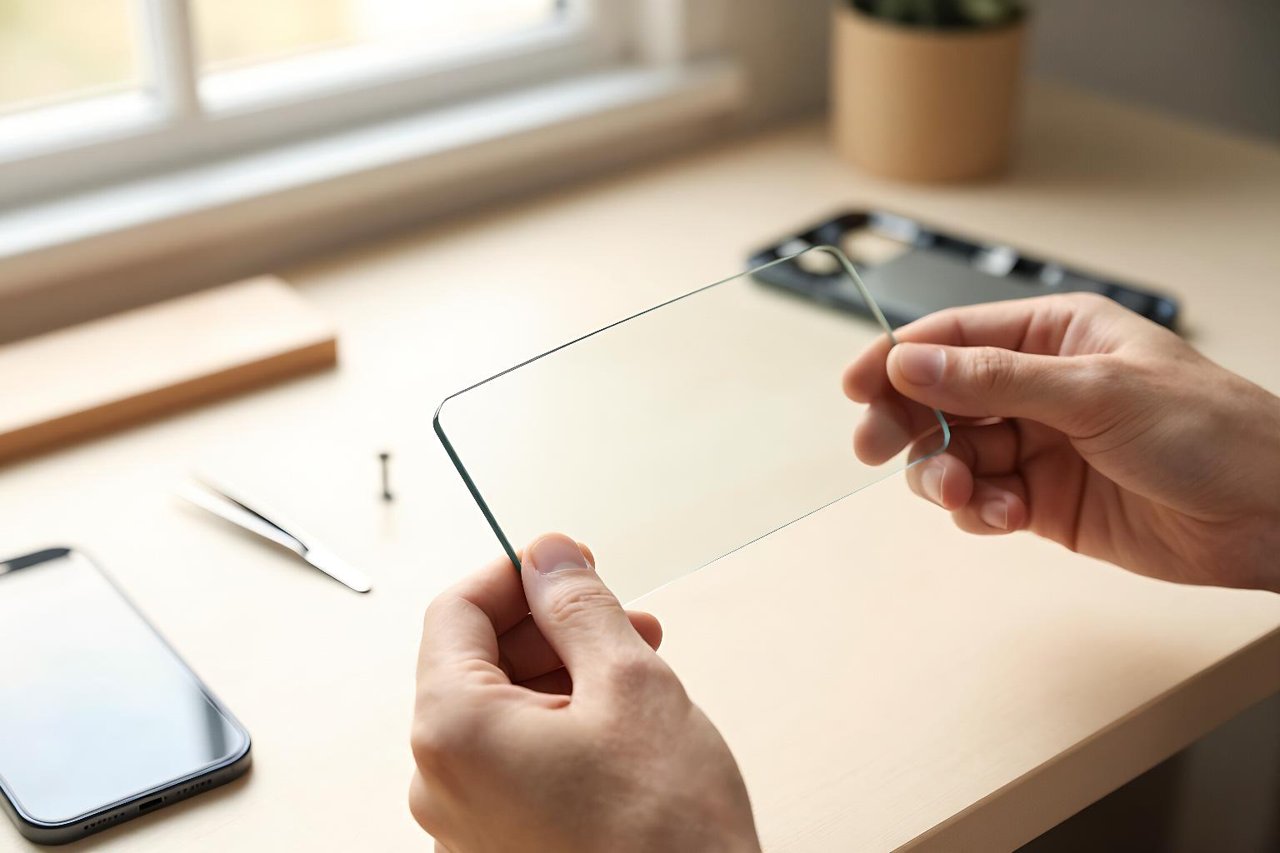
The glass-only phone
Follow that engineering line far enough and you get a device that is almost entirely display. Under-display cameras are already shipping from ZTE and Red Magic; the image quality is mediocre today, and that is a sensor problem, not a physics wall. Once the camera disappears, so does the notch, the punch-hole and the bezel.

Transparent OLED is the wilder endgame. You have seen it in showroom cabinets and museum installations. A phone built around it would overlay directions or subtitles onto the street in front of you without a headset. That is a decade out and depends more on battery density and optics than on the panel itself.
AI Stops Being an App and Becomes the Plumbing
The marketing around on-device AI has been loud and mostly vague. The hardware underneath it is not. Current flagship chipsets push tens of trillions of operations per second through their neural engines, and flagship phones now ship with 12GB to 16GB of RAM largely to hold compressed language models in memory.
Local first, cloud second
That shift matters for privacy and for latency. Summarising a voice note, translating a menu through the camera, or scrubbing a photo library happens on the handset in under a second because nothing leaves the device. Cloud models still handle the heavy reasoning, but the default moves local as smaller models get better. The same hardware stack is already leaking into medicine, including measuring pain with a phone-based app instead of a subjective 1-to-10 scale.
Agents rather than chatbots
The next step is a phone that acts. Instead of asking an assistant a question, you hand it a task: cancel that subscription, rebook the flight, split this bill. Apple’s App Intents framework and Google’s Gemini extensions are the earliest scaffolding for exactly that, and both hinge on the operating system having permission to touch other apps. The limiting factor will be trust, not silicon. This is the same pattern of incremental capability stacking that IEEE Spectrum’s roundup of 2025’s biggest consumer tech stories tracked across the year.
Batteries Get Their First Real Chemistry Upgrade in a Decade
Lithium-ion cells with graphite anodes have been stuck near the same energy density since roughly 2015. Silicon-carbon anodes broke the logjam. Chinese manufacturers got there first, and phones with 6,000mAh to 7,300mAh cells in bodies under 9mm thick are now normal in Asia. Realme has shown a 15,000mAh concept device. Wired charging has climbed past 120W in several models, which refills a large cell in under half an hour.
Regulation is pushing from another direction. Under EU rules taking effect in February 2027, batteries in consumer electronics must be replaceable by end users with commonly available tools. Expect glued-in cells to become a design liability rather than a cost saving.
Satellite Coverage Becomes a Default Feature
Emergency SOS via satellite went from Apple exclusive in 2022 to a baseline expectation. T-Mobile’s Starlink service now handles ordinary text messages in dead zones, and AST SpaceMobile is testing direct links to unmodified handsets with partners including Vodafone and AT&T. The realistic near-term picture is messaging, then slow data, then voice in emergencies. Nobody is streaming video from a mountain ridge in 2027, but the dead-zone problem quietly stops being a problem.
Repair Scores Start Selling Phones
EU ecodesign rules that kicked in during June 2025 require seven years of spare parts availability and batteries rated for 800 cycles at 80% capacity. Apple, Samsung and Google have all expanded self-repair programmes in response. Fairphone built its entire brand on this ground and now has company. A phone you keep for six years is a genuinely different product from one you replace every 24 months, and the marketing is starting to reflect it.
Health Sensors Cross Into Diagnostics
Wrist-based blood pressure, sleep apnoea detection and hypertension notifications already carry regulatory clearance in several markets. The prize everyone is chasing is non-invasive glucose monitoring, which would transform life for people with diabetes and make a fortune for whoever gets there first. The bottleneck is clinical validation, not sensor hardware, so expect slow, uneven rollouts with country-by-country approvals.
The Counter-Trend Is Real
Not everyone wants more capability. A visible slice of younger users has been deliberately downgrading to basic handsets to escape notification loops, and that trend shapes how the mainstream devices get designed too. There is a solid case behind why some people are ditching smartphones for dumbphones and flip phones, and the software response, more aggressive focus modes and per-app time limits, is already in every major operating system.
Who Actually Builds the Next Decade
Component breakthroughs still tend to come from long-established labs and then get commercialised by whoever can scale them fastest. The transistor came out of Bell Labs in 1947; the Bell Labs innovations honoured by IEEE read like a list of everything inside your current phone. What has changed is the speed of the handoff, and the different roadmaps that Fortune 500 incumbents and startups follow now overlap inside a single product cycle.
What to Watch Between Now and 2030
- Rollable retail devices. Watch for a mainstream manufacturer shipping a motorised expandable display rather than another concept video.
- Portless designs. eSIM is already standard in the US; dropping the USB-C port is the obvious next step, with EU charger rules as the main obstacle.
- 24-hour local AI. An assistant that runs entirely on-device and never needs a connection would be a genuine change in how the phone is used.
- Battery swap-back. EU replaceability rules will likely produce a wave of phones with screws and tabs instead of adhesive.
- Satellite data plans. The moment carriers sell a data allowance that follows you off-grid, roaming as a concept starts to change.
The most likely 2030 phone is not a radical new object. It is a thinner, tougher, longer-lasting slab with a screen that extends when you need it, an assistant that runs offline, and a repair manual in the box. Boring in the best sense, and a real step up from what is in your pocket right now.


