
Table of Contents
A bottle of echinacea costs £9 at one shop and £34 at another. Both have gold foil on the cap and the word “premium” somewhere in the copy. Only one of them tells you which part of the plant was used, how strong the extract is, and which batch it came from. That gap is where most supplement money gets wasted.
Evaluating herbal products is not mystical. It comes down to a handful of checkable details, a bit of label literacy, and a willingness to walk away from anything that refuses to be specific.
Read the back label like a specification sheet
Front-of-pack is advertising. The back panel is where a serious manufacturer shows their work. Turn the bottle over and look for these:
- Latin binomial: Matricaria chamomilla rather than just “chamomile,” because several plants share that common name and they are not interchangeable.
- Plant part: root, leaf, flower, rhizome. This single word often explains a price difference of three times.
- Extract ratio or strength: something like 4:1, 10:1, or a stated percentage of a marker compound.
- Full amounts per dose: not just a total for a “blend.”
- Batch or lot number: the thread that lets a company trace a complaint back to a specific production run.
- Manufacturer name and address: a real, findable one, not a PO box in a country with no oversight.
If three or four of those are missing, the product might still be fine. You just have no way of knowing, and that is its own kind of answer.

Species and plant part carry more weight than the marketing
Take echinacea. The root of Echinacea purpurea and the aerial parts of Echinacea angustifolia behave differently enough that researchers treat them as separate ingredients. A label that says only “echinacea” is hiding information you need.
The same applies to turmeric (rhizome, and ideally with a stated curcuminoid content), ginkgo (leaf, not seed), and milk thistle (seed, standardised to silymarin). Good producers name these things because it costs them nothing and it reassures the buyer. The practical guide to traditional herbs and botanical ingredients is a useful reference here, particularly on why preparation method changes what you actually absorb.
Extract ratios and marker compounds, decoded
What a ratio actually means
A 4:1 extract means four parts of dried raw herb went in to produce one part of finished powder. A 10:1 is more concentrated still. This is why a 500mg capsule of 10:1 extract is not the same as 500mg of plain ground leaf, even though the numbers on the front look identical.
Tinctures work differently, usually at a 1:2 or 1:5 ratio in alcohol or glycerine. Comparing a tincture to a capsule by millilitres or milligrams is meaningless; you have to compare the raw herb equivalent.
Marker compounds are a floor, not a ceiling
Standardisation to a marker like 5% withanolides in ashwagandha or 0.3% hypericin in St John’s wort guarantees a minimum, not the whole picture. A plant contains dozens of compounds that may act together. Still, a stated percentage tells you the manufacturer tested the incoming raw material, which is more than most cheap brands can claim. For an example of how extract type changes use, the piece on chamomile tea, extracts and traditional applications shows the difference between an infusion and a concentrated extract clearly.
Third-party testing: what those seals are worth
In-house testing is better than nothing, but it is the manufacturer marking their own homework. Independent verification is the stronger signal.
USP Verified and NSF Certified both involve facility audits and random product testing for identity, potency, heavy metals, and microbial contamination. ConsumerLab runs a subscription-based testing programme and publishes results. None of these are cheap to obtain, which is part of why they mean something.
You can also simply email a company and ask for a certificate of analysis for the batch you bought. Reputable brands keep these on file and will send one. A vague reply, or silence, tells you plenty. The same principle drives serious testing programmes in other categories, as the team behind years of tested protein powders found when they compared label claims against lab results.
Freshness counts, and herbal products age badly
Dried plant material loses volatile oils, and volatile oils are often the active part. A bottle with two years left before expiry but a harvest date of four years ago is not fresh stock.
Check for a harvest or manufacture date alongside the best-before. Store products away from heat and light, keep lids tight, and ignore the kitchen windowsill. Glass is preferable to plastic for anything containing essential oils.
A two-minute check at home
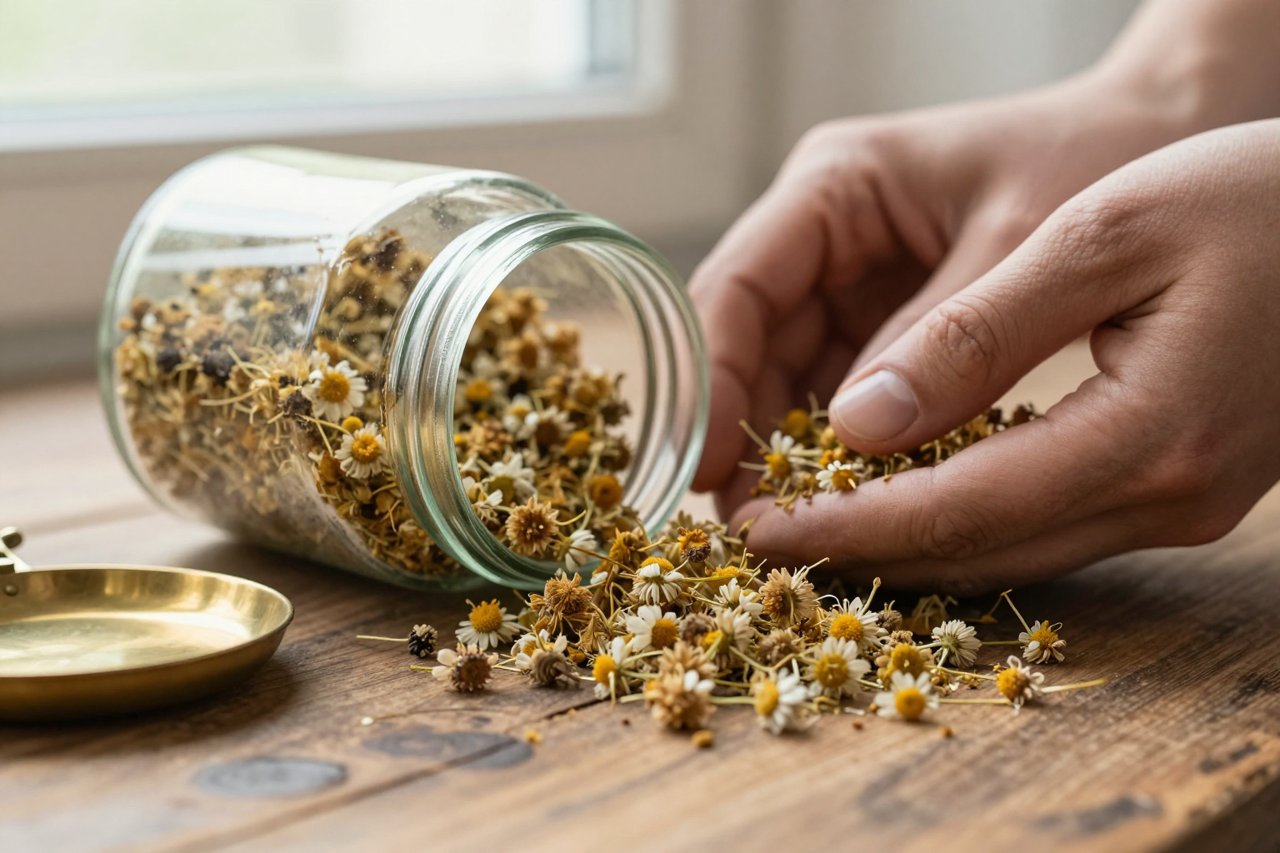
Smell it. Chamomile should smell sweet and hay-like; if it smells dusty or of nothing at all, the aromatics are gone. Open a capsule and look at the powder: uniform colour and a clean, characteristic scent are good signs. Grey or clumped powder, or a smell of damp cardboard, is not.
Red flags that justify walking away
Some claims are so far outside what a botanical can plausibly do that they tell you the company is selling hope rather than herb.
- Specific disease claims, like curing diabetes or shrinking tumours. In most markets this is illegal for a supplement, and it signals either ignorance or contempt for the rules.
- “Proprietary blend” listed as a single weight, hiding how much of each herb is inside.
- Testimonials with no batch numbers, no dates, and no way to verify anything.
- Pressure tactics, countdown timers, or a business model built on recruiting sellers rather than repeat customers. There is a readable breakdown of that distinction in separating network marketing hype from real business opportunity.
- Dosing that looks absurdly generous, like 5,000% of a nutrient the body simply excretes.
Waste in this category rarely comes from buying one bad bottle. It comes from patterns, and the roundup of eight habits that quietly waste money on vitamins covers several that apply directly to herbs.
Price is information, not a verdict
Cheap is not automatically bad, and expensive is not automatically potent. Do the arithmetic instead. Divide the total price by the grams of actual extract, not the grams of powder in the capsule. A 60-capsule bottle at £30 sounds steep until you work out that it delivers 90g of 10:1 extract, compared with a £12 bottle that delivers 30g of plain leaf.
Fillers like rice flour or maltodextrin are usually a sign of a low-concentration product rather than a hazard. Silicon dioxide and magnesium stearate are normal flow agents at the amounts used.
Build a shortlist and keep notes
The most practical approach is to stop shopping from scratch every time. Pick two or three brands that publish batch numbers, answer emails, and state their extract ratios clearly. Buy the smallest size first, record the batch, and note what you actually noticed over four to six weeks. That small habit, repeated, gives you a personal reference file that no review site can match, because it is based on your body, your dose, and your batch.
After that, evaluating a new product takes about ninety seconds. You check the species, the plant part, the extract strength, the batch number, and whether anyone independent has looked at it. If all five hold up, it is probably worth trying. If two are missing, put it back on the shelf.


