
Table of Contents
In 1750, the coach from London to Edinburgh took roughly ten days, weather permitting. By 1836 the Royal Mail coach had cut that to about 45 hours. By the 1850s, a train did the same journey in twelve. Three generations, one road, and the whole idea of distance had been rewritten.
That pattern repeats across the history of transportation. Somebody builds a better way to move things, and everything downstream shifts with it: where people live, what they eat, who they marry, how cities are shaped, what a working day looks like. Transport is rarely the headline. It’s the thing under the headline.
Before the Wheel: Feet, Rafts and Animal Power
For tens of thousands of years, humans simply walked. That wasn’t as limiting as it sounds. People crossed from Asia to Australia around 60,000 years ago, which required building watercraft capable of open-sea crossings, so the earliest transport technology we know of is probably a raft, not a wheel.
Domestication came next. Donkeys were being harnessed in Egypt by about 3000 BCE, and horses on the Eurasian steppe shortly after. Pack animals could carry roughly four to five times what a person could, which turned trade from a local affair into something regional.

The wheel arrived in Mesopotamia around 3500 BCE, but the first versions were solid wooden discs used for pottery, not carts. Solid wheels on vehicles need flat ground, and flat ground barely existed. It took the spoked wheel, around 2000 BCE, plus chariots and eventually the Roman road network, to make wheeled transport genuinely worth the trouble. Rome built roughly 80,000 km of paved highways, and some of the engineering assumptions in those roads survived for two millennia. If you enjoy tracing those kinds of leaps, this piece on inventions that changed the world forever puts the wheel in some interesting company.
Sail, Coach and Canal: Moving Things Before Engines
Wind as an engine
Ships were the original long-haul freight system. Polynesian navigators were crossing thousands of kilometres of open Pacific using stars, swells and bird patterns while most of Europe was still hugging the coastline. Arab dhows rode the monsoon winds between East Africa and India on a schedule so reliable that traders planned their lives around it. By the 1700s, Dutch and British merchant fleets had turned oceanic shipping into an industry with insurance, timetables and shareholders.
Roads and the horse economy
On land, the turnpike boom of 18th-century Britain professionalised road-building. Toll roads meant revenue, revenue meant maintenance, and maintenance meant speed. The mail coach system, launched in 1784, ran to published timetables with armed guards and relay stations every dozen or so miles. It was, in effect, the first scheduled public transport network.
Canals and the cost of coal
The Bridgewater Canal, opened in 1761 to move coal from the Duke of Bridgewater’s mines into Manchester, famously halved the price of coal in the city almost overnight. That single result explains the canal mania that followed.
Steam: The Machine That Broke Distance
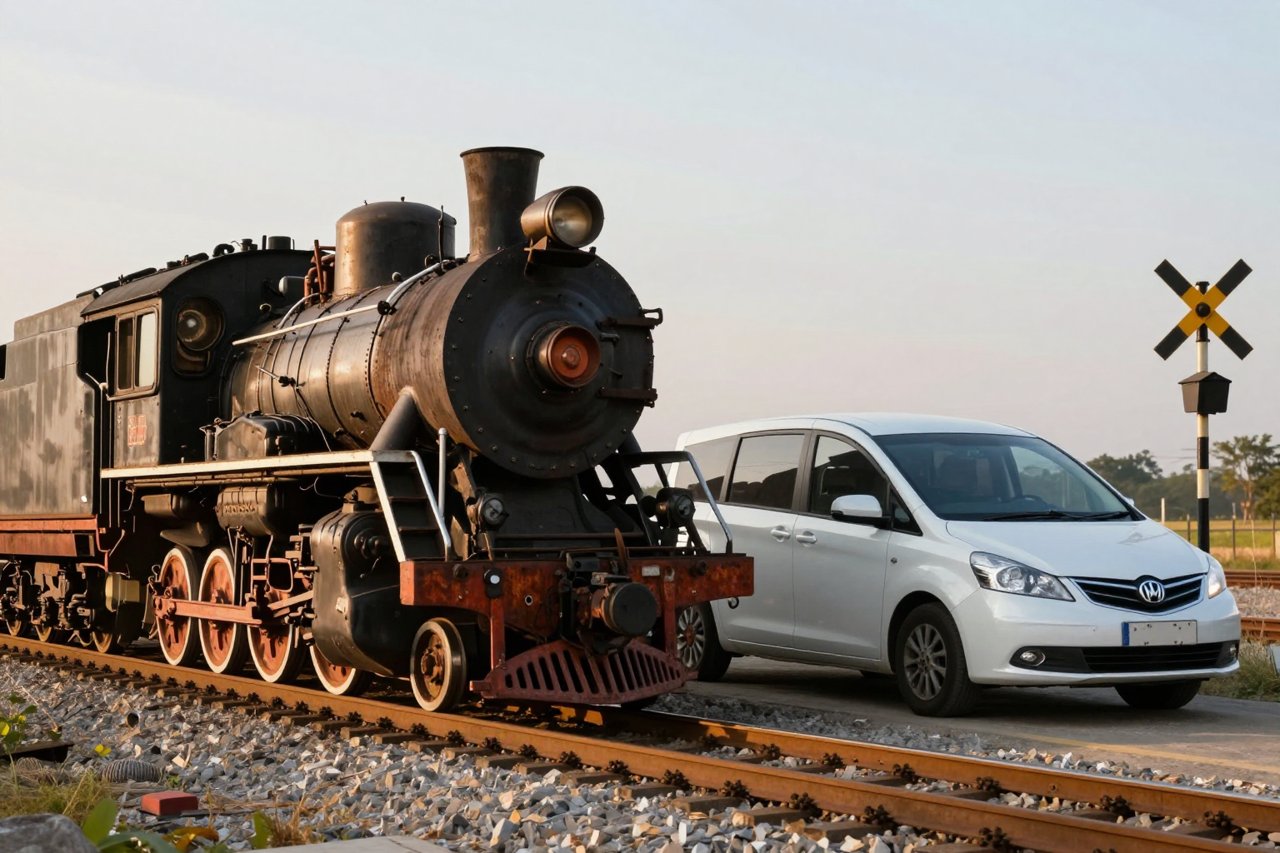
Richard Trevithick put a steam engine on rails in 1804. Twenty-five years later, Stephenson’s Rocket hit 36 mph at the Rainhill Trials, a speed doctors seriously argued might be harmful to the human body. The Liverpool and Manchester Railway opened in 1830 and did something no road had done before: it moved goods and people on a fixed schedule regardless of weather, darkness or the mood of a horse.
Railways reshaped everything they touched. Towns that got a station grew; towns that didn’t, withered. Fresh milk, cheap newspapers, standardised time zones and commuter suburbs all came out of the same technology. Cities built underground lines to escape their own traffic, starting with the Metropolitan Railway in London in 1863, which was steam-powered and, by all accounts, deeply unpleasant to ride.
At sea, steam freed ships from the wind. The Suez Canal, finished in 1869, and the Panama Canal, opened in 1914, cut weeks off major routes and rearranged global trade in the process.
The Bicycle, the Motor Car and Personal Freedom
The safety bicycle of 1885 is underrated. With two equal wheels and a chain drive, it gave ordinary people affordable personal transport for the first time in history, and it did more for women’s independence than almost any other object of the era. It also created the political demand for paved roads, which the car industry then inherited.
Cars came along at almost the same moment. Karl Benz patented his Motorwagen in 1886, but the early market was wide open. In 1900, roughly 40% of American automobiles were steam-powered, about 38% were electric, and only around 22% ran on petrol. Electric cars were quiet, clean and popular with city drivers, right up until they weren’t.
Then Henry Ford’s assembly line arrived in 1913 and cut Model T production time from about 12.5 hours per car to 93 minutes. The price fell from $850 in 1908 to around $260 by 1925. Within two decades, the petrol car had gone from one option among three to the default, and the world started building itself around it: drive-ins, suburbs, motorways, parking minimums.
Wings, Jets and the Shrinking Atlantic
The Wright brothers flew for 12 seconds and about 120 feet on 17 December 1903. Sixty-five years later, a Boeing 747 was carrying 350 people across oceans. In between came the first nonstop transatlantic flight in 1919, the jet-powered de Havilland Comet in 1952, and the Boeing 707 in 1958, which made cheap transatlantic travel a realistic prospect for people who weren’t wealthy.
Concorde flew passengers at twice the speed of sound from 1976 to 2003, crossing the Atlantic in under three and a half hours. It was a technical triumph and an economic dead end, killed by fuel costs, noise restrictions and a crash in 2000. The lesson stuck: the future of aviation turned out to be cheap and frequent rather than fast.
The Hidden Networks: Containers, Pipes and Cables
The box that ate the docks
In April 1956, a trucking entrepreneur named Malcom McLean loaded 58 standard steel boxes onto a converted tanker called the Ideal X and sailed from Newark to Houston. Container shipping cut the cost of loading a ship by something like 95%, and it destroyed the old dock labour economy as thoroughly as it rebuilt global trade. Almost everything you own spent time inside one of those boxes.
Pipelines: transport without vehicles
Not all transport moves on wheels or wings. The first practical oil pipeline, a 6-mile, 2-inch iron line, was laid at Titusville, Pennsylvania in 1865. Today, the Trans-Alaska Pipeline runs 800 miles across permafrost and earthquake zones, moving up to two million barrels a day. It’s the least visible transport infrastructure we have, and the most consequential when something goes wrong. These accounts of the deadliest pipeline accidents show how much force is quietly running under the ground.
Electric Motors, Sensors and the Next Fifty Years
The strangest thing about the current era is how much of it is a rerun. Electric vehicles are back, after a century in the wilderness, and the reasons are the same as in 1900: quiet, cheap to run, mechanically simple. Norway now sells more electric cars than petrol and diesel combined, and battery costs have fallen roughly 90% since 2010.
Autonomy is the genuinely new part. Waymo’s robotaxis in Phoenix and San Francisco are completing hundreds of thousands of paid rides, driving on public roads with no one in the driver’s seat. The systems behind them are trained on enormous datasets and refine their behaviour from every mile driven, which is why the technology is improving faster than its regulators can respond. If you want a sense of how quickly these systems are already reshaping ordinary life, this piece on how AI is already changing your life is a good place to start.
Elsewhere, China operates more than 40,000 km of high-speed rail, roughly two-thirds of the world’s total. Cargo ships are testing wind-assist sails and methanol fuel. Electric vertical take-off aircraft are stuck somewhere between a promising prototype and a certification nightmare.
What hasn’t changed is the underlying arithmetic. Every transport revolution has been a bet that moving something faster or cheaper would pay for the infrastructure it required. Roman roads, canals, railways, motorways and container ports all won that bet. The ones that lost are mostly forgotten, which is worth remembering the next time someone promises to reinvent the way we get around.


