
A long-standing chemistry challenge has been solved with the synthesis of a five-atom silicon aromatic ring. The breakthrough validates decades of theory and points toward new industrially relevant compounds.
Major scientific advances rarely happen quickly, and this discovery is a clear example of that slow but steady progress.
After nearly fifty years of theoretical discussion and repeated experimental efforts by researchers around the world, a team at Saarland University has finally succeeded. David Scheschkewitz, Professor of General and Inorganic Chemistry, worked alongside his doctoral student Ankur and Bernd Morgenstern from the university’s X-Ray Diffraction Service Center to achieve the breakthrough. Their results have now been published in the prestigious journal Science.
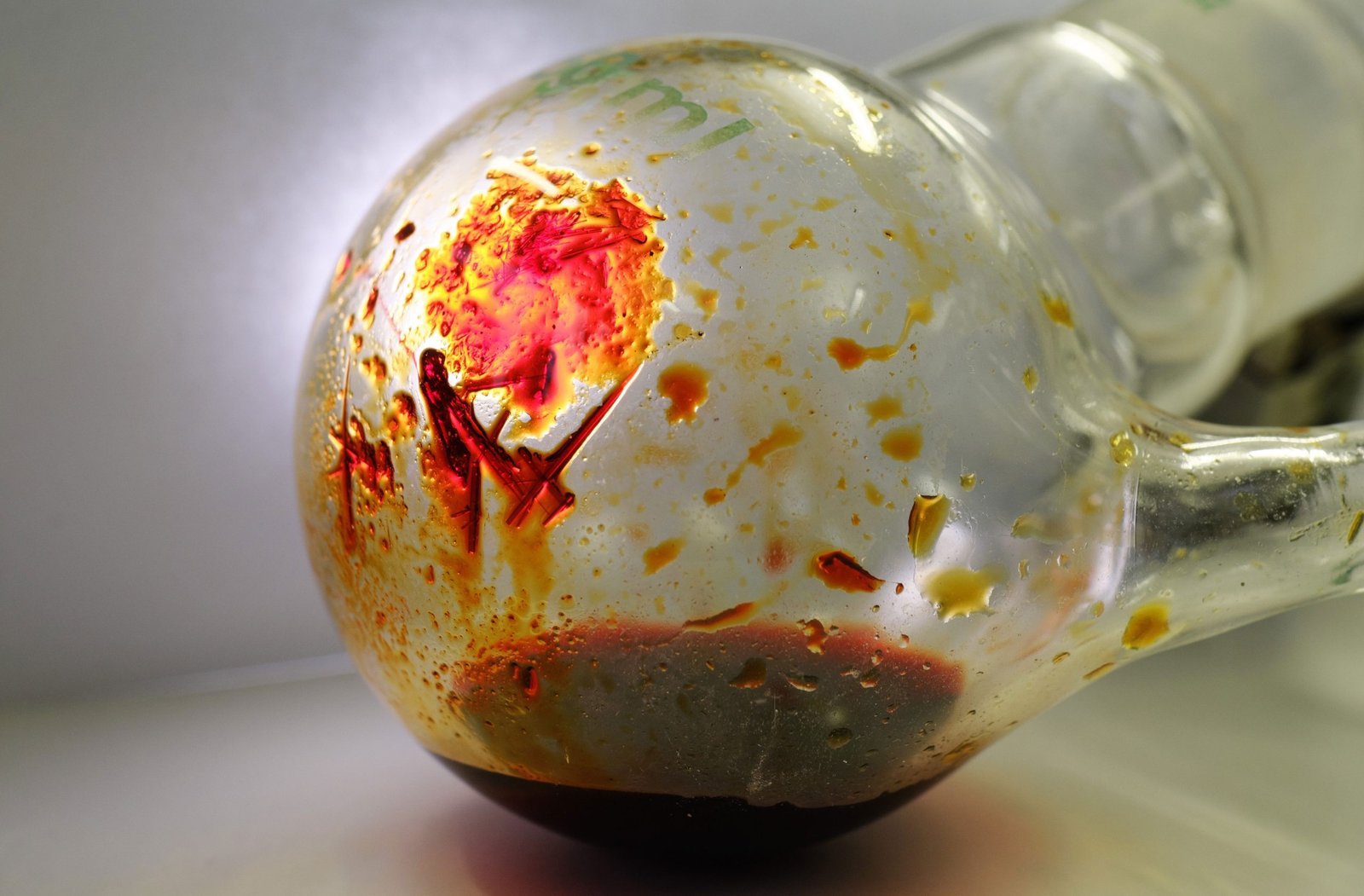
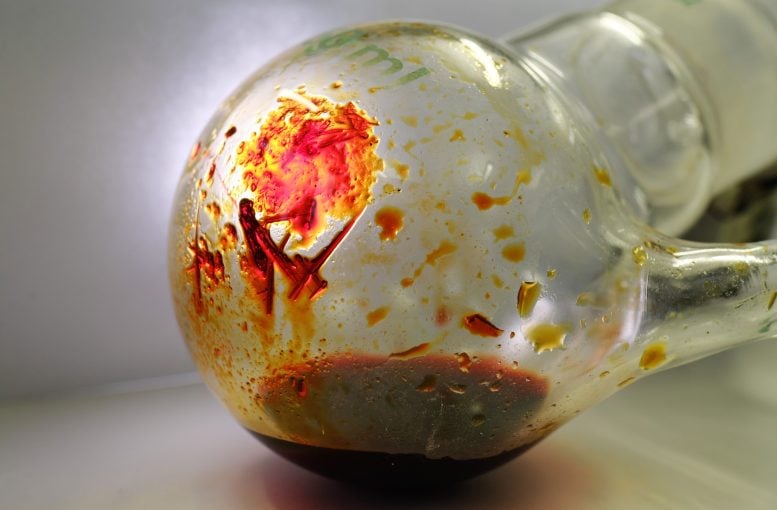
So what exactly did the researchers accomplish? They successfully synthesized a compound known as pentasilacyclopentadienide. While experts in the field may immediately recognize the importance of this result, many readers might reasonably ask what makes it special. At its core, the work involved replacing the carbon atoms in an aromatic compound, a group of molecules known for their exceptional stability, with silicon atoms.
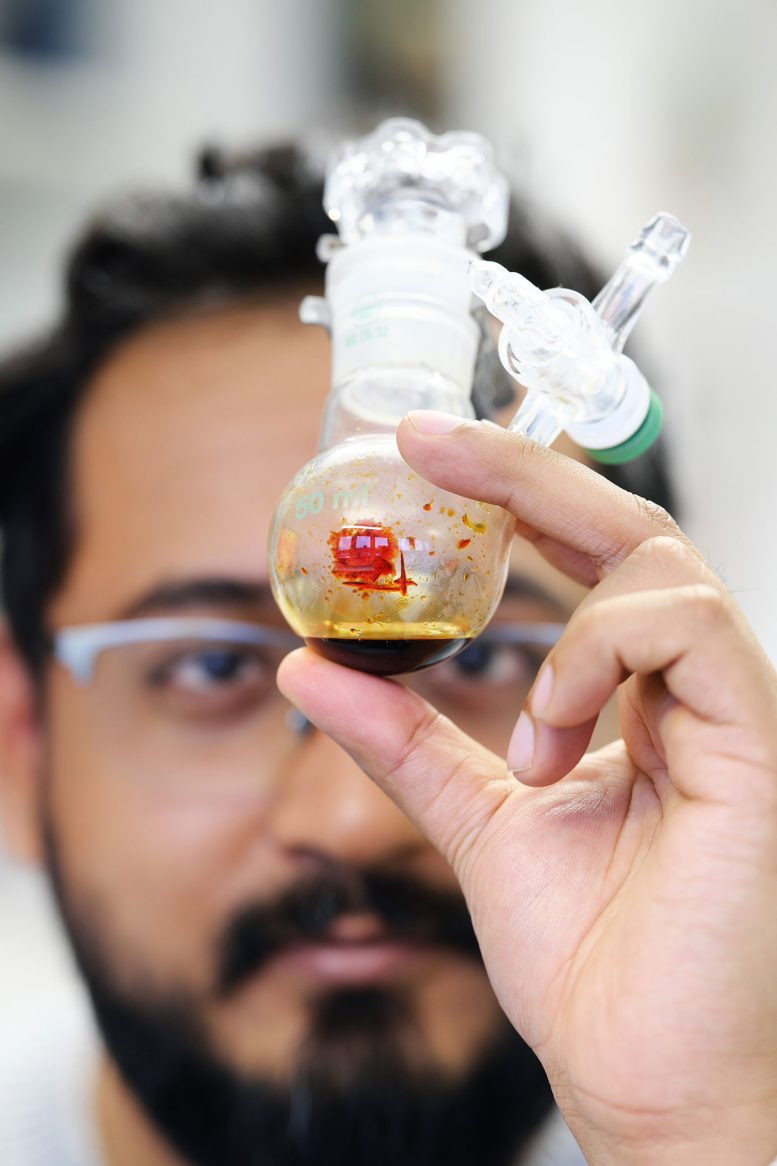
Aromatics play a prominent role in the world around us, for example, in the manufacture of plastics. ‘In polyethylene and polypropylene production, for example, aromatic compounds help make the catalysts that control these industrial chemical processes more durable and more effective,’ explains David Scheschkewitz. As silicon is much more metallic than carbon, it holds on to its electrons far less strongly. This shift creates opportunities for chemical systems that were previously unreachable, and the Saarland team has now demonstrated that such systems are possible.
Cracking Aromatic Stability and Opening New Chemical Frontiers
Why did it take so long to reach this point? The answer lies in the fundamental rules that govern aromatic molecules. Cyclopentadienide, the carbon-based counterpart to the newly synthesized silicon compound, is an aromatic hydrocarbon in which five carbon atoms form a flat (‘planar’) ring.
This geometry plays a key role in its unusual stability. (Historical side note: Aromatics were given this name because the first such compounds to be discovered in the second half of the 19th century were found to have particularly distinctive and often pleasant aromas.)

“To be classified as aromatic, a compound needs to have a particular number of shared electrons that are evenly distributed around the planar ring structure, and this number is expressed by Hückel’s rule – a simple mathematical expression named after the German physicist Erich Hückel,” explains David Scheschkewitz. Because these electrons are spread evenly around the ring rather than tied to individual atoms, aromatic molecules gain an extra level of stability.
Until now, silicon chemistry offered only one confirmed example of this behavior. In 1981, researchers synthesized the silicon analogue of cyclopropenium, an aromatic molecule in which a three-membered carbon ring was replaced by a three-membered silicon ring. Every attempt to extend this concept to larger silicon-based aromatic systems failed.
That situation has now changed. Ankur, Bernd Morgenstern, and David Scheschkewitz have created a five-atom silicon molecule that meets the strict criteria for aromaticity. In an unexpected coincidence, the same compound was discovered at nearly the same time in the laboratory of Takeaki Iwamoto at Tohoku University in Sendai, Japan. The two research groups agreed to publish their results side by side in the same issue of Science.
This work paves the way for entirely new materials and processes with potential industrial relevance. But the hardest first step has now been taken.
Reference: “Pentasilacyclopentadienide: A Hückel aromatic species at the border of resonance and equilibrium” by Ankur, Bernd Morgenstern and David Scheschkewitz, 5 February 2026, Science.
DOI: 10.1126/science.aed1802
Never miss a breakthrough: Join the SciTechDaily newsletter.
Follow us on Google and Google News.