
Table of Contents
Inflammation is a double-edged sword. Sprain your ankle and you’ll see it rush to the rescue, swelling the joint, causing redness and heat, and guiding white blood cells to the site of injury. That acute response is your body’s emergency repair crew. But problems start when the fire never gets completely put out. Low-grade chronic inflammation can simmer for years, right under the surface. Research now links it to everything from heart disease and type 2 diabetes to Alzheimer’s, autoimmune disorders, and even certain cancers. The good news: you have more control than you think. Your fork is one of the most effective anti-inflammatory tools you own. In this article, we’ll cover the anti-inflammatory foods that actually work, backed by research, and the common triggers that are quietly undoing your efforts.
What Exactly Is Chronic Inflammation?
Acute inflammation is the wind-up toy: it comes, does its job, and goes. Chronic inflammation, in contrast, is a faulty car alarm that keeps beeping long after the thief has left. Instead of a sudden, short-lived immune response, your body’s immune system stays slightly activated, releasing cytokines (chemical messengers) that damage healthy tissue over time. Elevated levels of C-reactive protein (CRP), a blood marker, often indicate this ongoing battle. It’s not the kind of thing you feel, unless you have persistent joint pain, brain fog, weight gain that you can’t shift, or frequent digestive issues. But even without obvious symptoms, the damage may be quietly accumulating.
6 Anti-Inflammatory Foods That Deserve a Spot in Your Kitchen
There’s no single miracle food that will instantly stop inflammation. Instead, you want a pattern of eating that provides a steady supply of anti-inflammatory compounds. These are your biggest-leverage choices.
1. Fatty Fish
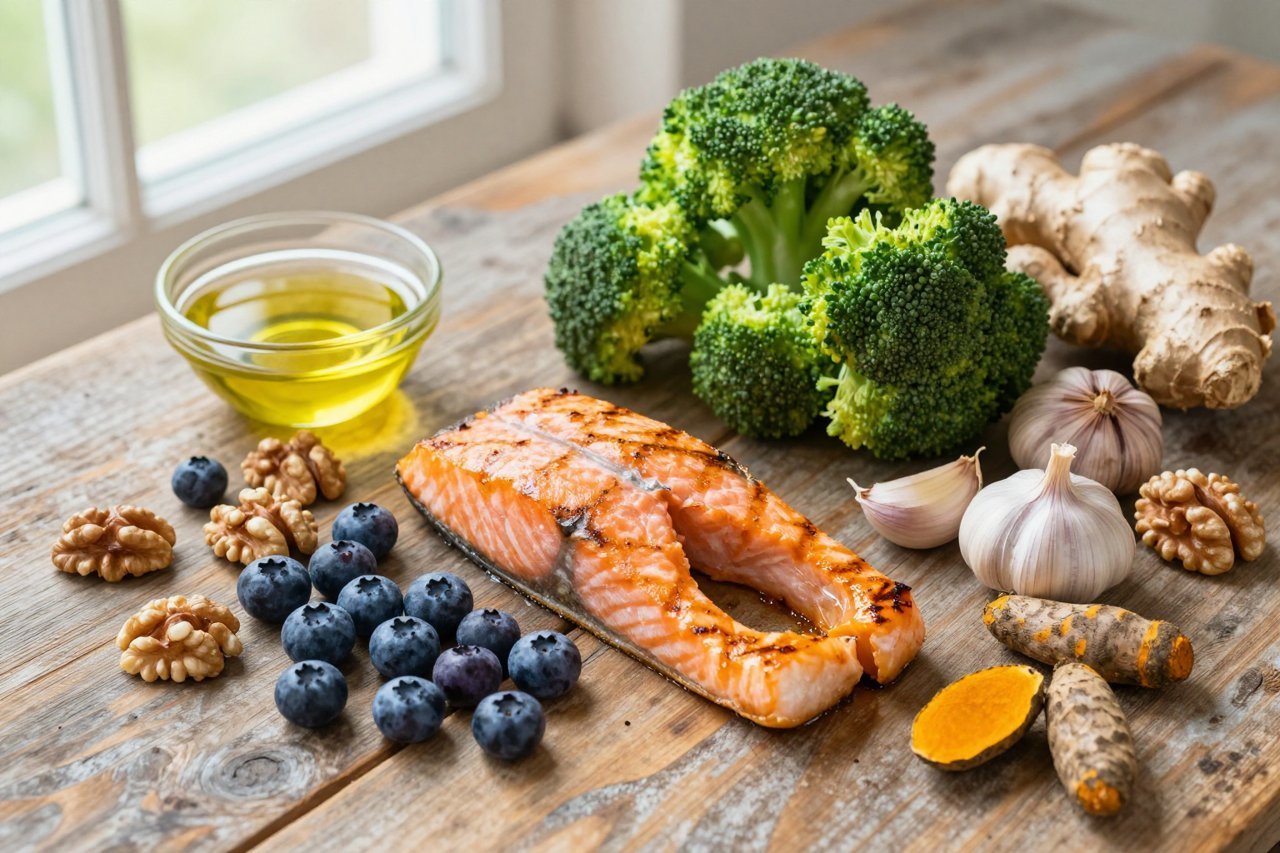
Salmon, mackerel, sardines and anchovies are packed with omega-3 fatty acids (EPA and DHA). These are the building blocks for resolvins and protectins, molecules your body uses to actively shut down inflammation. Aim for two to three servings per week. If you’re not a fish fan, you might be tempted to take a fish oil supplement. That’s not necessarily a bad idea, but the science is more nuanced than you might expect. Before you stock up on capsules, read about how omega-3s can sometimes increase inflammatory markers.

2. Berries
Blueberries, raspberries, blackberries and strawberries are rich in anthocyanins, the pigments that give them their deep colours. In one study, men who ate the equivalent of 2 cups of blueberries a day saw a significant drop in natural killer cell activity, which is a marker of inflammation. Even a modest daily handful seems to make a difference. The key is to buy them frozen when out of season; they retain virtually all of their polyphenols.
3. Leafy Greens
Spinach, kale, Swiss chard and collards are loaded with vitamin E (which protects cell membranes from oxidative stress), folate, and plenty of polyphenols. They also contain a less-known nutrient called lutein, which many people only associate with eye health. Lutein also acts as an anti-inflammatory in the body. You don’t need to sauté them at high heat; a salad with a little olive oil and lemon is just as effective.
4. Extra-Virgin Olive Oil
Extra-virgin olive oil (EVOO) is a cornerstone of the Mediterranean diet, and for good reason. It contains oleocanthal, a phenolic compound that has an anti-inflammatory effect similar to ibuprofen but without the stomach irritation. Not all olive oil is created equal, though. Heat, light and time degrade the polyphenols, so buy a fresh-looking bottle in a dark glass container. Drizzle it over hummus or use it as the base for a vinaigrette.
5. Nuts and Seeds
Walnuts, almonds, pecans, chia seeds, flaxseeds and hemp seeds provide a mix of magnesium (a mineral that’s often deficient in people with chronic inflammation), zinc, and plant-based alpha-linolenic acid (ALA). While ALA isn’t as potent as EPA/DHA, it still contributes to a balanced anti-inflammatory profile. A small handful a day is all you need. A trail mix with walnuts and dried cherries is a perfect afternoon snack.
6. Cruciferous Vegetables
Broccoli, cauliflower, cabbage, Brussels sprouts and kale (yes, it’s in both lists) contain sulforaphane, a compound that activates the Nrf2 pathway, a master regulator of antioxidant defences in your body. It can reduce the production of pro-inflammatory cytokines. Lightly steaming is best: this preserves most of the glucoraphanin, which is the precursor to sulforaphane. Boiling, on the other hand, leaches it out.
The Anti-Inflammatory Spice Rack
Spices are one of the cheapest and most concentrated ways to fight inflammation. They’re also delicious. The three standouts are turmeric, ginger and garlic.
Turmeric contains curcumin, the active compound that gives the spice its vivid yellow-orange colour. A systematic review of 32 clinical trials found that curcumin supplementation significantly reduces levels of CRP and other inflammatory markers, especially when combined with black pepper (piperine improves absorption by 2000%). If you’re staring at a capsule, look for one with piperine or consider using fresh turmeric root in curries.
Ginger is a close relative of turmeric, and its active compound, gingerol, blocks the activity of COX-2 enzymes, the same target as ibuprofen and celecoxib. Fresh, dried and powdered ginger all work. A simple tea made with hot water, lemon and a few slices of ginger is a great daily ritual.
Garlic contains allicin, a sulphur compound that has been shown to reduce inflammation by suppressing the activity of nuclear factor-kappa B (NF-ĸB). Fresh garlic is best, but even garlic powder retains some activity. Crush a clove and let it sit for ten minutes before you cook it; this allows the allicin to form fully.
Inflammatory Triggers to Limit
Even if you’re eating all the right foods, a few common offenders can wreck the balance. Here are the biggest culprits to cut back on:
- Refined sugar and high-fructose corn syrup (found in sodas, cereals, many snack bars).
- Refined carbohydrates (white bread, pastries, white rice; anything that spikes your blood sugar quickly).
- Trans fats (partially hydrogenated oils used in some fried foods and commercial baked goods).
- Highly processed meats (bacon, hot dogs, deli meats, sausage).
- Excessive alcohol (more than one drink per day for women, two for men).
- Vegetable oils high in omega-6 fatty acids (corn, soybean and sunflower oils) when consumed in excess.
If you’re a heavy drinker who regularly wakes up with a hangover, you’re literally experiencing acute inflammation. If you’re stocking up on water, electrolytes and light snacks, you might find our guide to the best foods for a hangover useful. It also explains which foods can make the morning-after misery worse.
How to Put It All Together: The Anti-Inflammatory Diet Pattern
Rather than obsessing over single foods, think about your entire plate. The Mediterranean diet is the most thoroughly studied anti-inflammatory pattern. It’s generous with fruit, vegetables, whole grains, legumes, nuts, olive oil and fish, and moderate in dairy and wine. If you want a more detailed roadmap with specific meal suggestions, this complete guide to the anti-inflammatory diet covers everything from breakfast to dessert and includes cheat sheets. And if you have an autoimmune condition (or suspect you do), the autoimmune protocol (AIP) diet is a strict elimination diet designed to calm the immune system down; our AIP guide breaks down exactly what to eat and what to avoid for the elimination phase.
Simple Swaps That Add Up
You don’t need to overhaul your kitchen in a weekend. Start with these:
Breakfast: Instead of sugary cereal, have a bowl of full-fat Greek yogurt with a handful of blueberries and walnuts. Or try oatmeal topped with cinnamon and chopped banana.
Lunch: Replace white bread with lettuce wraps in your sandwich. And instead of potato chips, have a handful of baby carrots with homemade guacamole.
Dinner: Swap half your plate for non-starchy vegetables, whether that’s roasted broccoli, a side salad with olive oil and lemon, or sautéed kale with garlic.
Snacks: Keep a jar of mixed nuts and seeds on your desk. When the 3pm craving hits, you’ll grab that instead of the vending machine pretzels.
Why This Matters for How You Age
Reducing inflammation isn’t just about avoiding a heart attack or a Type 2 diabetes diagnosis. It’s about how you feel on a daily basis, how well you recover from a workout, and your overall energy. It can even impact how quickly you age at the cellular level. One of our editors, after three months of a tight anti-inflammatory diet and lifestyle changes, saw her biological age drop from 38 to 21. That’s an extreme result, and it requires a lot more than a few blueberries, but it points to the power of consistently choosing foods that calm your body’s stress response. Nourish your cells, and they’re less likely to send up inflammatory flares.


