
[ad_1]

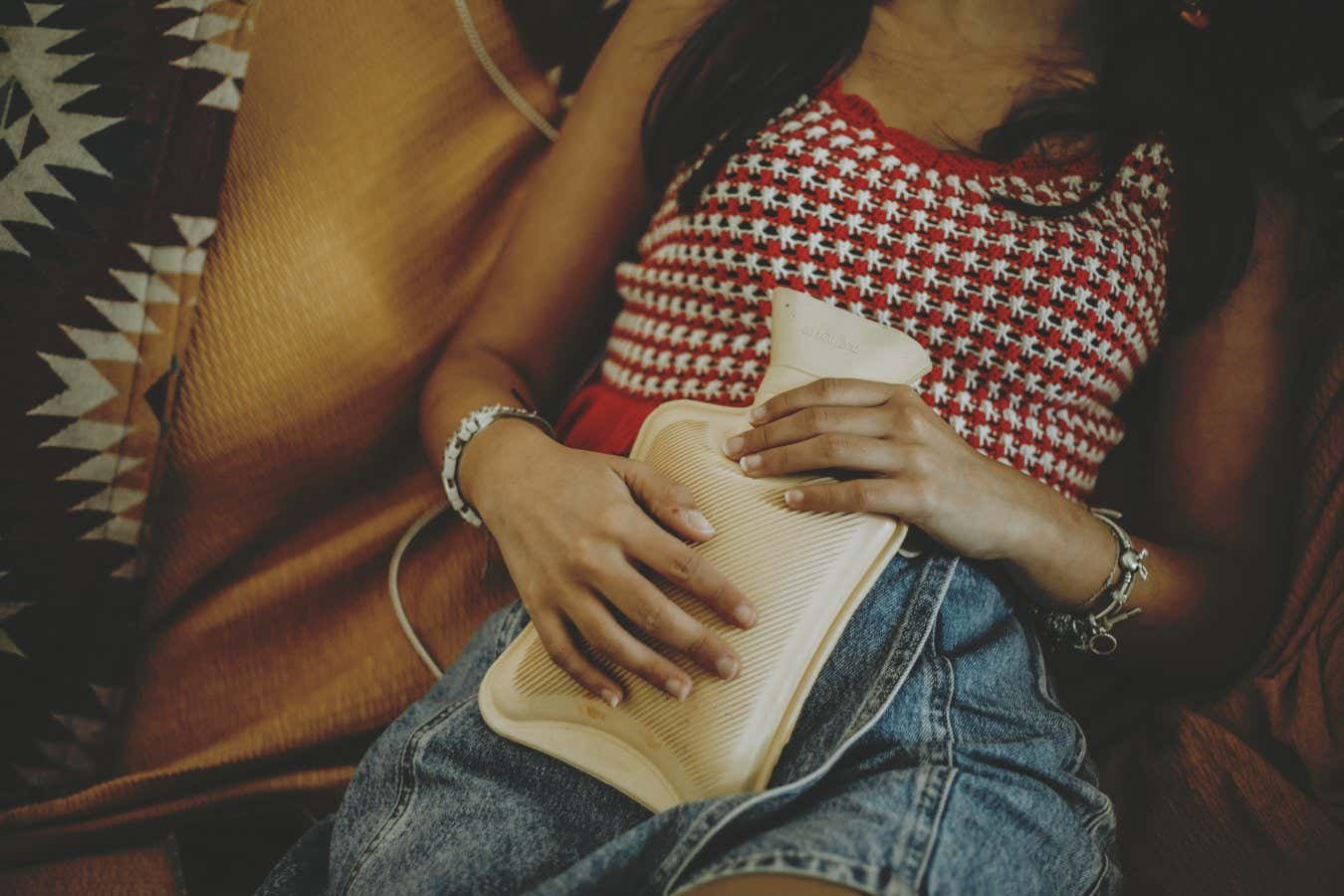
Hot water bottles can ease period pain, but some people need stronger relief
Carol Yepes/Getty Images
An antioxidant that is abundant in some mushrooms has shown promise for easing period pain. A daily dose of a supplement containing L-ergothioneine, which is also in fermented foods, seems to limit the extent of this pain by targeting cells within the uterus, rather than just blocking discomfort that has already taken hold.
“Instead of treating the symptom acutely when the pain is already severe, EGT [L-ergothioneine] acts as a nutritional foundational support, potentially reducing the reliance on strong medications and giving women a safer way to reclaim their well-being,” says Guohua Xiao at Gene III Biotechnology Co. in Nanjing, China.
Period pain, or dysmenorrhea, is considered one of the most common gynaecological-related issues, but reports of its prevalence vary hugely, from 16 per cent to 91 per cent. It is thought to be caused by the uterus producing higher levels of inflammatory chemicals called prostaglandins, which result in it contracting strongly to shed its lining. This can make the uterus press against nearby blood vessels, briefly cutting off the oxygen supply to muscle tissue, which causes pain.
Dysmenorrhea has also been linked to oxidative stress. This occurs when there is an imbalance between molecules called free radicals and antioxidants in the body, which causes cell damage.
Current advice recommends using painkillers such as ibuprofen, which reduces inflammation and blocks the production of prostaglandins. Xiao and his team wondered if L-ergothioneine could have a protective effect by relieving oxidative stress in the uterus.
To put it to the test, Xiao and his colleagues recruited 40 women, aged between 18 and 30, who had been diagnosed with primary dysmenorrhea – period pain that isn’t caused by a particular condition, such as endometriosis. None of them had attempted to treat their dysmenorrhea, such as through painkillers or traditional Chinese medicine, within the past month.
Half of the women were given 120 milligrams of L-ergothioneine to take every day across three menstrual cycles, while the others were given a placebo.
Those taking the supplement reported experiencing a pain score of 4.8 out of 10, on average, at the start of the study, which decreased to 4.1, 3.6 and 2.3 during their subsequent three menstrual cycles. L-ergothioneine may become more effective over time because it accumulates in cells, says Xiao. There was no significant reduction in pain in the placebo group.
The researchers also found no difference in inflammation levels between the groups, which supports the idea that L-ergothioneine works through a more novel pathway than many existing painkillers, says Xiao. “During menstruation, discomfort is heavily driven by localised oxidative stress in the uterine tissue. Since we saw no systemic anti-inflammatory signal, the evidence points toward a localised antioxidant effect. EGT likely neutralises free radicals directly at the source of the cellular stress before the systemic inflammatory cascade is even triggered.”
Andrea Maier at the University of Melbourne in Australia says this is biologically plausible, but needs to be confirmed in a larger study. “That is worth pursuing,” she says. Xiao says his team is planning a larger trial at multiple centres.
That will also give us a better idea of L-ergothioneine’s safety, although the researchers reported no side effects in either group. Long-term use of painkillers like ibuprofen has been linked to an increased risk of heart attacks, kidney failure and gastric ulcers. The way that L-ergothioneine is transported into cells means it is excreted by the kidneys once levels have reached a saturation point, says Xiao.
Topics:
[ad_2]
Source link


