
Table of Contents
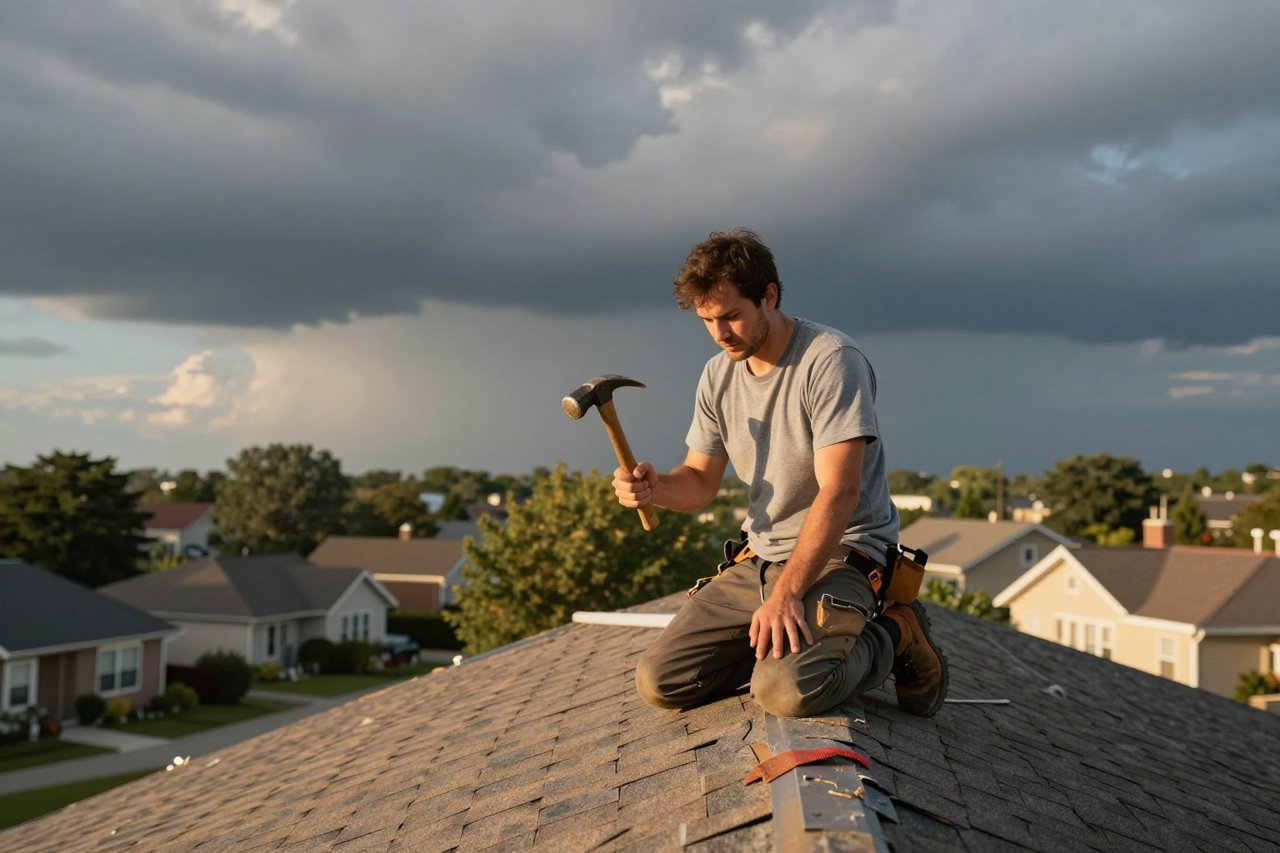
A June hailstorm rolls through a subdivision outside Denver. Two houses on the same block lose their roofs. One owner gets a check for $24,000 and a new roof inside ten days. Her neighbor gets $11,000, because his policy paid actual cash value on a twelve-year-old shingle roof and subtracted depreciation first. Same storm. Same damage. Very different summer.
That gap is the entire story of shopping for homeowners coverage. Price matters, of course, and nobody should overpay for a $400,000 house. But the best homeowners insurance companies prove themselves during the two or three worst days of your ownership, not on a quote page with a smiling stock photo.
What separates the best homeowners insurance companies
Advertising budgets reveal almost nothing. Four measurable things reveal a lot:
- Claim payout reputation. The NAIC complaint index compares a carrier’s complaint volume against the industry average. A score below 1.00 means fewer complaints than expected for its size. Anything above 1.5 deserves a hard look.
- Replacement cost as the default. Policies written on actual cash value for roofs and personal property look cheap at quote time and pay badly at claim time.
- Financial strength. AM Best ratings of A+ or better matter when a single wildfire or hurricane dumps 8,000 claims on one carrier in a month.
- Local appetite. A company writing 300,000 policies in your state prices your risk more accurately than one treating your ZIP code as a rounding error.
J.D. Power’s annual home insurance study is worth reading too, though remember that its scores lean on how customers feel about their agent rather than whether the roof claim actually got approved.

The companies that consistently earn their keep
State Farm
The largest homeowners writer in the country, holding roughly 18% of the market. That size buys something real: an agent within driving distance in most towns, and claims handled by someone who knows your street. Pricing lands mid-pack. The knock is that the company leans hard on its own repair estimates, so an independent contractor’s bid sometimes needs pushing.
Amica
A Rhode Island mutual that quietly sits near the top of every satisfaction survey. Policyholders can receive dividends, and the standard HO-5 form already includes perks other carriers sell as upgrades: higher water backup limits, service line protection, and replacement cost on contents. Entry prices run a little higher than State Farm, and availability is limited in some states.
USAA
If you or a parent served in the military, this is usually the strongest combination of price and claim handling available. Complaint ratios sit consistently below the industry average. There are no branch offices, which is either irrelevant or a dealbreaker depending on how you like to handle problems.
Erie Insurance
Erie’s Rate Lock feature freezes the rate attached to your dwelling coverage for as long as you own the home, unless you change the policy yourself. That predictability is rare in a market where premiums jumped 15% to 25% in many states between 2022 and 2024. The trade-off: Erie writes in about a dozen states plus D.C., so most homeowners can’t buy it.
Chubb
Built for homes worth $1 million and up. Chubb offers cash settlement instead of mandatory repairs, extended replacement cost up to 150% of your dwelling limit, and risk engineers who will walk your property to flag water leaks and wildfire exposure. You pay for that attention.
Allstate
A perfectly reasonable choice in many markets, with strong bundling discounts and a broad agent network. The catch is in the endorsements and the claims process, which is worth understanding before you sign rather than after. This breakdown of what Allstate home insurance covers and where it falls short covers the specifics.
Where cheap quotes quietly fall apart
A $1,100 annual premium that excludes half of what you assumed is not a bargain. Read the declarations page and check whether these are included or missing:
- Water backup and sump overflow. Many defaults cap out at $5,000. A finished basement flood costs $30,000 or more to restore.
- Service lines. The pipe between your meter and the street is your responsibility. Replacement runs $4,000 to $12,000.
- Ordinance or law. If your city requires upgraded electrical work during a rebuild, this pays for it.
- Matching siding and roofing. Without it, a carrier can replace one slope of discontinued shingles and call it done.
- Wind and hail deductibles. Often written as a percentage of dwelling coverage. On a $450,000 home, a 2% deductible is $9,000 out of your pocket.
- Mold remediation caps. Frequently $10,000 or less, which a slow leak will exhaust fast.
Deductibles, bundling, and the numbers that actually move your bill
Raising a $1,000 deductible to $2,500 typically cuts premiums by 10% to 15%. Going to $5,000 can save 20% or more, and if your emergency fund can absorb the difference, that’s one of the few discounts that doesn’t weaken your protection. A word of caution: in hail-prone states, your wind deductible is calculated separately and climbing to 5% on a $450,000 house means $22,500 before coverage starts.
Bundling home and auto is the most oversold discount in the industry. Savings of 5% to 25% are real, but they’re calculated against the auto policy you already have, which may itself be overpriced. Compare the auto side separately before you lock in, starting with where GEICO auto insurance savings are real and where they disappear, then run the numbers on cheap full coverage car insurance that still protects you. A $300 bundle discount that costs $600 in auto premium is a loss dressed up as a deal.
Three other variables carry real weight. Roof age, because carriers increasingly price on it and some won’t write a policy over 15 years old without an inspection. Your CLUE report, since prior water damage claims follow you for five to seven years. And your credit-based insurance score, which most states allow carriers to use and which can swing premiums by 50% or more.
Questions that separate a good agent from a salesperson
Ask each agent you interview these, and listen for whether the answer is specific or rehearsed:
“What’s my dwelling limit based on, and can I see the replacement cost estimator?” A real answer names the software and offers the report. “How long did your average non-catastrophe water claim take to close last year?” Most agents won’t know, and the honest ones will say so. “If my roof is damaged on 14-year-old shingles, will you replace the whole thing or just the slope?” Get that answer in writing if it matters to you. “Who handles my claim at 9 p.m. on a Sunday, an agent or a call center?” The difference shows up when you’re standing in a wet hallway with a flashlight.
How to compare five companies in one afternoon
Gather three things first: your current declarations page, the age of your roof and HVAC system, and a rough replacement cost for your home based on local square-foot construction costs rather than your property tax assessment. Tax assessments lag the market badly and often sit 20% to 40% below rebuild cost.
Then request quotes with identical inputs: the same dwelling limit, the same 1% wind deductible, the same $300,000 liability, water backup at $10,000, and replacement cost on contents. Quote-to-quote comparisons only work when the coverage matches. Once the numbers are on the table, check each carrier’s NAIC complaint index and AM Best rating, and ask whether any of them plan rate increases in your state in the next twelve months. Agents usually know, and they’ll usually tell you if you ask directly.
The cheapest quote in that stack will often be the one with the thinnest coverage. Pick the company that pays well, prices honestly, and has someone you can reach when the hail hits, because that is the version of your policy you’ll actually meet.


