
Table of Contents
Some places resist the travel industry by design. No airport, no shuttle, no guesthouse with a hand-painted sign. The seven places below are remote in the old-fashioned sense: hard to reach, harder to stay, and often legally or physically off-limits. A few have seen more scientific expeditions than tourists. Some have seen almost no one at all.
This list of the top 7 remote places where few humans have ever traveled is not a ranking of easy adventures. It is a look at the blank spots that still exist on the map, and at the people, permits, and weather systems that keep them blank.
What Makes These Places So Remote?
Remote is not the same as far from a city. A place can be a short flight from an airport and still feel empty. The locations here share a tougher set of barriers.
- No regular transport. Access depends on supply ships, chartered aircraft, icebreakers, or a yacht with the right captain.
- No permanent population or visitor services. There are no hotels, no fuel stops, and no rescue team waiting around the corner.
- Permits and environmental rules. Many are nature reserves, research sites, or restricted territories.
- Weather windows measured in hours. Swell, ice, wind, and cloud can cancel a landing that took months to plan.
- Legal and ethical limits. Some places are not open to travelers at all, and should not be.
1. Bouvet Island, Norway
Bouvet Island sits in the South Atlantic, roughly 1,600 miles southwest of South Africa and about 1,000 miles north of Antarctica. It is a Norwegian territory, a volcanic lump about 19 square miles in size, and almost entirely covered by ice. It has no harbor, no airstrip, and no permanent residents.

Why so few people land
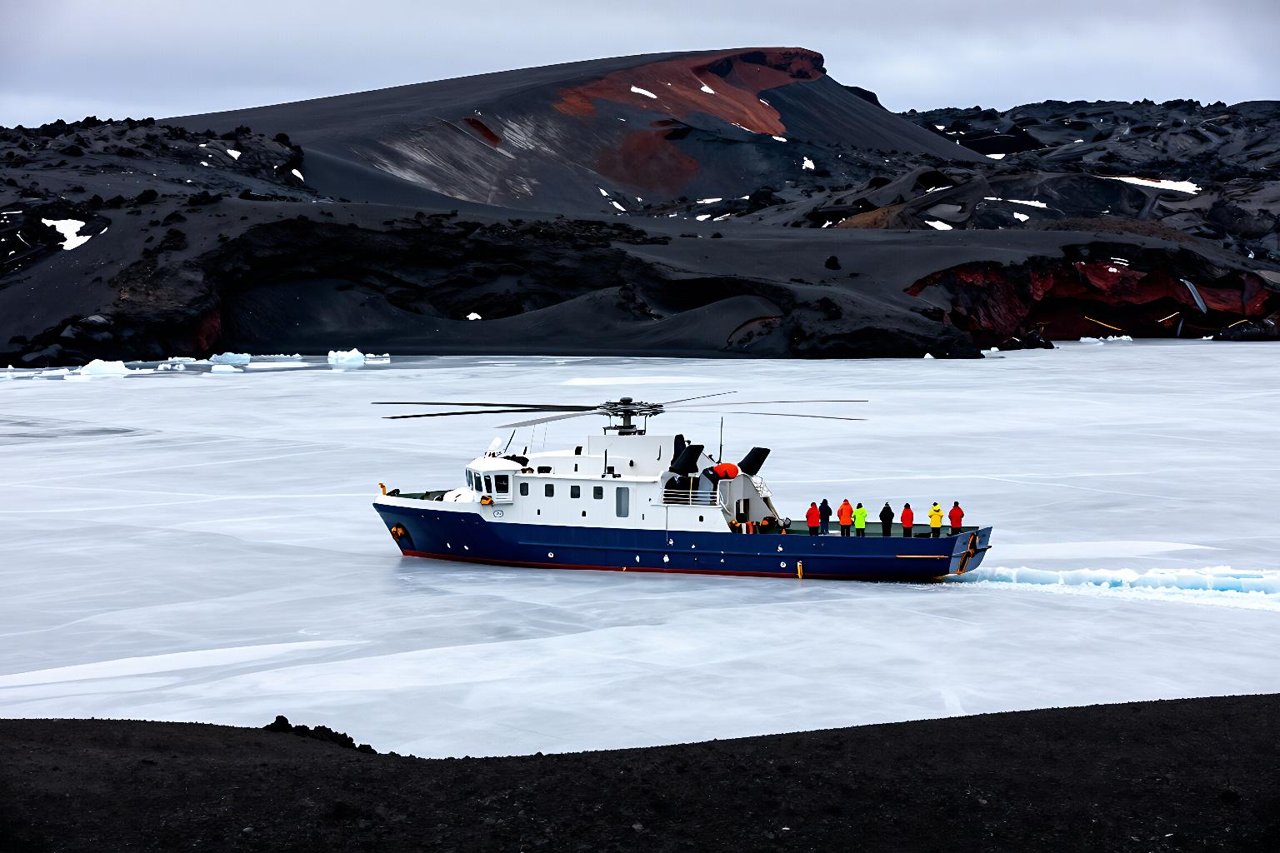
Most visits are made by expedition ships that launch helicopters when the weather allows. The island’s cliffs rise straight from the sea, and the swell often makes a shore landing impossible. Even approved landings are tightly controlled because Bouvet is a nature reserve. The number of people who have stood on its black lava and ice is tiny compared with almost any other place on Earth.
2. Marie Byrd Land, Antarctica
Marie Byrd Land is the largest unclaimed territory on Earth, a slice of West Antarctica covering roughly 620,000 square miles. No country owns it. There are no towns, no visa office, and no permanent research stations. The few humans who pass through are usually scientists supported by national Antarctic programs.
Getting there means flying from a major Antarctic hub or joining a deep-field expedition with fuel caches, ski-equipped aircraft, and a lot of planning. The ice sheet hides subglacial lakes and mountain ranges that have been mapped by radar more thoroughly than they have been walked. For most people, Marie Byrd Land is not a travel destination. It is a research frontier.
3. Kerguelen Islands, French Southern and Antarctic Lands
The Kerguelen Islands are a French territory in the southern Indian Ocean, often called the Desolation Islands. Captain Cook named them for good reason. Wind, rain, and cold water dominate. The main island, Grande Terre, is cold, mountainous, and cut by glaciers.
There is no permanent population, only a research station at Port-aux-Français. Supply ships from Réunion make the long run a few times a year, and berths are limited. Tourists are rare and usually arrive on small expedition vessels with permits. Wildlife is the payoff: penguins, albatrosses, elephant seals, and fur seals. If you want wildlife without the permit maze, these top wildlife destinations are a simpler place to start.
4. Henderson Island, Pitcairn Islands
Henderson Island is an uninhabited raised coral atoll in the Pitcairn group, a UNESCO World Heritage site with a strange claim to fame. Its beaches collect some of the highest densities of plastic debris recorded anywhere, carried by ocean currents from far away. The island itself has no freshwater streams and no safe anchorage.
Landing requires a small boat through surf, and even then visitors face sharp coral and dense scrub. Most people who reach Henderson are scientists, conservation workers, or sailors on rare yachts. The local Pitcairn community is hundreds of miles away and itself one of the most isolated inhabited islands on Earth. Few humans have spent a night on Henderson. Fewer still have crossed it on foot. The island’s seabird colonies are one reason scientists keep coming back; travelers who prefer birds and animals to extreme isolation can find easier options among these wildlife-focused trips.
5. North Sentinel Island, India
North Sentinel Island lies in the Andaman and Nicobar chain, and it is home to the Sentinelese, a group with no sustained contact with the outside world. India restricts access to protect them and visitors. This is not a place to book, charter, or approach. It is a homeland, and outside contact has been deadly.
Very few outsiders have ever set foot on the island. The reefs and forest make landing difficult, but the real barrier is law and ethics. A 2018 attempt by a missionary ended in his death and highlighted why the isolation is protected. North Sentinel belongs on any list of remote places where few humans have traveled, but it does not belong on a travel itinerary.
6. Clipperton Island, France
Clipperton Island is a small French coral atoll in the eastern Pacific, about 700 miles southwest of Mexico. It is uninhabited, low, and ringed by a lagoon that has turned stagnant. There is no freshwater, no harbor, and no regular transport.
Access is by permit and usually by research vessel or a rare amateur radio expedition. The island has a dark history, including a failed guano mining settlement and a period of Mexican occupation. Today it is a French possession visited by scientists and the occasional authorized group. For a place so small, it is remarkably hard to reach.
7. Devon Island, Nunavut, Canada
Devon Island is the largest uninhabited island on Earth, with an area of about 21,000 square miles. It sits in the Canadian Arctic, mostly within the Arctic Cordillera, and much of it is polar desert. The Haughton impact crater has been used as a Mars analog by NASA and other researchers.
The access problem
There are no towns or roads. Access is by chartered aircraft from Resolute Bay, a community that is itself thousands of miles from major cities. Permits are required, and the weather can ground flights for days. A handful of scientists and expedition teams visit each year. For everyone else, Devon Island remains a blank shape on the top of the map. The Arctic has its own wildlife draw, from muskox to seabirds; if you want those encounters with less logistical risk, these wildlife destinations are worth a look.
What It Takes to Visit, and When to Stay Away
Remote travel is not a flex. It costs money, time, and patience, and it carries real risk. A cancelled landing is common. A medical evacuation can take days. The places on this list are not theme parks with a queue system. They are ecosystems, research sites, and in some cases homes to people who have chosen isolation.
If you do plan a trip to a remote place, start with the rules. Check permits, quarantine requirements, and environmental guidelines. Use operators with a track record in the region. Pack for conditions, not for photos. And accept that the best decision may be to stay on the ship or turn back.
Some of these places are best left unvisited. North Sentinel is one. Bouvet Island is another for casual travelers. The world still has blank spots, and that is worth protecting. The point of looking at them is not to fill them in, but to remember how much of the planet still operates outside our plans.


