
Table of Contents
The tub in your cupboard probably cost somewhere between $35 and $70, and there’s a real chance the one you left on the shelf would have done more for you. Not because you were careless. Because the label is built to make comparison awkward. Serving sizes shift, scoop weights change, and “25g of protein” sits in a font four times larger than the disclosure on the back that tells you what that number actually measures.
So rather than another roundup of tubs, here are the mistakes that separate a smart buy from an expensive one, and what to do instead.
Mistake 1: Comparing Tubs Instead of Comparing Grams
Two chocolate tubs, side by side. One is 5 lb for $64.99 with 70 servings at 24g of protein. The other is 2 lb for $44.99 with 26 servings at 25g. The second one looks like the premium option, and it’s priced like one. Run the numbers:
- 5 lb tub: 1,680g of protein for $64.99, which is 3.9 cents per gram
- 2 lb tub: 650g of protein for $44.99, which is 6.9 cents per gram
The cheaper-looking tub is almost 80% less expensive per gram of protein. That’s the entire exercise. Divide the price by (servings × grams of protein per serving) before you read a single review. If you’d rather not do that in your head while standing in an aisle, this step-by-step walkthrough with real numbers runs the same maths across whey, casein and plant options so you can see how far apart the true costs land.

Mistake 2: Falling for the Bigger Scoop
Scoop weight is the quiet trick. A 30g scoop delivering 24g of protein is 80% protein by weight. A 46g scoop delivering 30g is 65%. Your brain reads “30g of protein” and assumes it’s a stronger product, but you’re paying for cocoa, sweetener, flavouring and thickener, and you’ll burn through the tub faster. Three scoops of the 65% powder gets you less protein than two and a half of the 80% one. Check the ratio, not the headline figure.
Mistake 3: Trusting a Protein Number That Isn’t Quite Protein
Protein content is usually estimated from nitrogen content. Glycine, taurine, creatine, glutamine and arginine are all cheap, all nitrogen-rich, and all get counted as protein by that test while doing nothing for muscle repair. It’s called amino spiking, and it lets a manufacturer advertise 25g of protein when closer to 18g is useful.
Three warning signs: a long list of individual free amino acids on the label, a “proprietary blend” instead of a clear breakdown, and a price that’s noticeably below everyone else. If you want a shortlist method that filters this out early, this guide to choosing protein powder without the hype is worth reading before your next order.
Mistake 4: Assuming Whey Always Wins
Whey is excellent, but “whey” covers a lot of ground. Concentrate is roughly 70–80% protein and carries some lactose. Isolate is 90%+ and filtered, which is the better pick if dairy gives you cramps. Hydrolysate is pre-digested, absorbs fastest, tastes bitter and costs the most.
Plant powders are where people get caught out. A single-source pea or rice protein usually falls short on one essential amino acid, and it’s often the one that matters most for triggering muscle protein synthesis. A 25g dose of whey isolate lands around 2.6g of leucine, which clears the roughly 2.5g threshold most research points to. The same 25g of pea protein gets you closer to 2g. That’s why good plant products blend pea with rice and increase the total dose. If you’re weighing up the categories, this comparison of whey, casein and plant blends compared does the amino acid work for you.
Mistake 5: Expecting One Shake to Carry Your Whole Day
Daily protein needs sit around 1.6–2.2g per kilo of bodyweight for most active people. At 80kg that’s 128–176g. A single 25g shake is roughly a sixth of the job. People add one shake, change nothing else, feel no different after three weeks, and blame the powder. The shake is a convenience tool for closing a gap, not a switch you flip.
The 30-minute window is looser than the gym floor suggests
Muscle protein synthesis stays elevated for hours after training, so the frantic post-workout shaker isn’t doing what the marketing says it is. Total daily intake and even distribution across three or four meals matter far more. If size is the specific goal, this breakdown of protein powder for muscle growth covers dose, frequency and what to skip.
Mistake 6: Paying Extra for the Add-Ons
Lactase is genuinely useful if you’re lactose-sensitive and drinking concentrate. Broad “protease enzyme blends” have thin evidence at the doses actually used. Added BCAAs are redundant when the base powder already contains a complete amino profile. “Enhanced absorption” and “bioavailability matrix” are phrases, not features. You are mostly paying for a paragraph of copy on the side of the tub.
Mistake 7: Ignoring Everything in the Tub That Isn’t Protein
Scan the ingredients past the first two lines. A few things worth flagging:
- Maltodextrin sitting second on the list, which usually means you’ve bought a mass gainer at a premium price
- Maltitol or sorbitol in quantities that cause bloating and gas past roughly 20g a day
- Very sweet, very cheap plant powders, where independent testing has repeatedly found cadmium and lead, and rice-based products have shown elevated arsenic
- California Prop 65 warnings, which some brands print and most bury on the website rather than the tub
None of this is a reason to panic. It is a reason to rotate brands and to treat a $19 three-pound bag of vanilla as suspicious rather than lucky. The same pattern of paying for claims rather than contents shows up across the supplement aisle, as this piece on supplement myths that cost you money points out.
Mistake 8: Buying Five Pounds of a Flavour You’ve Never Tried
Chocolate peanut butter sounds great until you’re 40 servings into a tub you dread opening. Buy the smallest size or a box of single sachets first. That $3 trial costs less than a $65 mistake.
Some “chalky” powders are just badly mixed
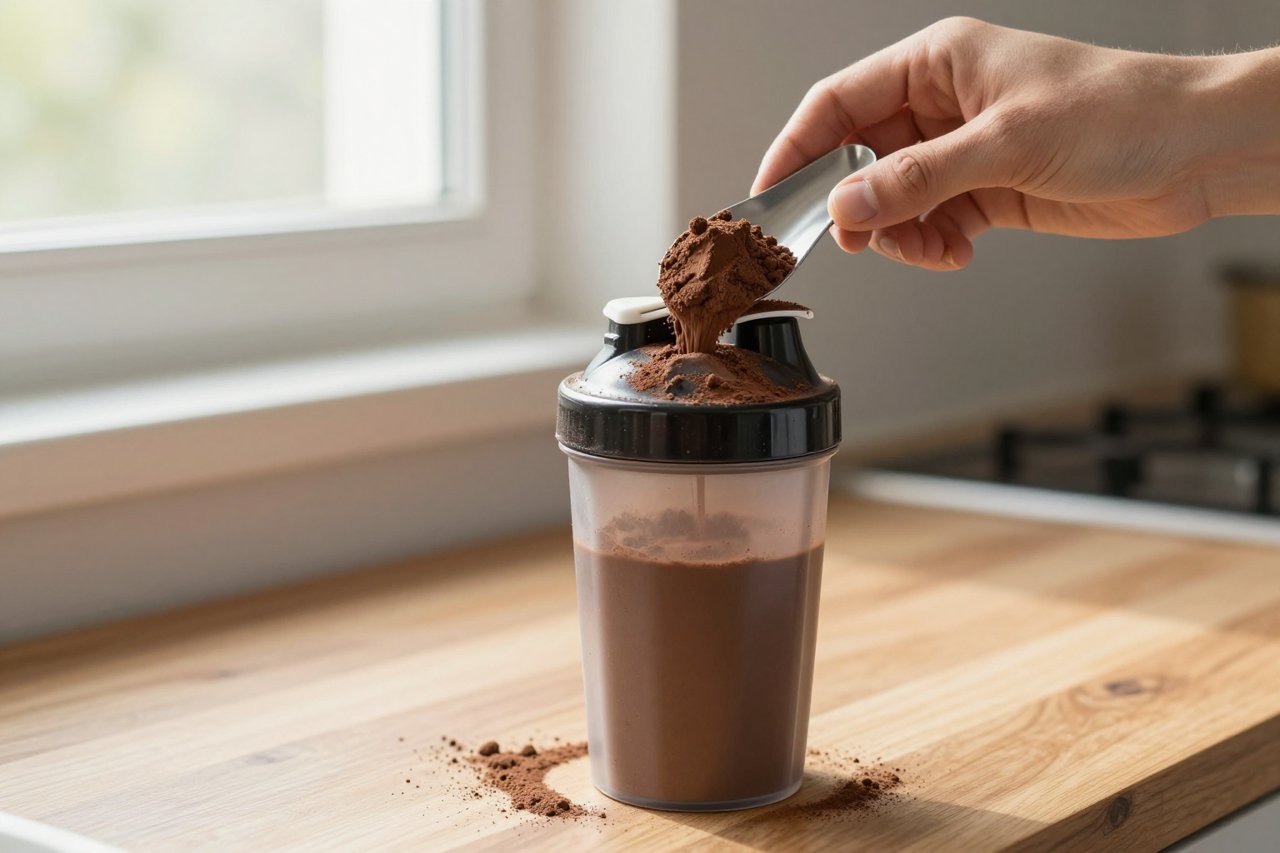
Put the liquid in the shaker first, then the powder. Use 8–12oz of cold water per scoop, not four. Add the shaker ball, not a fork, and shake for a full ten seconds rather than two. Hot water will clump whey almost instantly. A surprising number of one-star reviews are mixing errors rather than product failures.
Mistake 9: Skipping Third-Party Testing to Save Four Dollars
Look for Informed Sport, NSF Certified for Sport, or a public certificate of analysis. These verify two separate things: that the tub contains what the label claims, and that it’s free of banned substances. For most recreational lifters, label accuracy is the part that matters, because it’s the only real protection against amino spiking and underdosing. It usually adds a few dollars to the price. Given the per-gram maths above, that’s a rounding error.
What to Do With the Tub You Already Regret
Don’t force down 40 shakes you dislike. Blend it into oats, stir it into yoghurt, or use it in pancakes where a weaker flavour disappears. If the powder is underdosed, use a scoop and a half and accept that the tub will finish sooner. If it wrecks your stomach, stop and give it away — gut discomfort is a signal, not a personality flaw to push through.
Then write down what went wrong. Too sweet, too thin, too expensive per gram, clumped every time. That list is worth more than any ranking, because the best protein powder for you is rarely the one with the loudest label. It’s the one where the cost per gram, the scoop ratio and the testing certificate all line up, and you’d happily drink it four times a week.


