
Table of Contents
Walk into any supplement store and you’ll see the same thing: an entire wall of tubs covered in screaming fonts, superhero logos, and claims about “anabolic matrixes”. It’s exhausting. And it’s deliberately designed to make you forget that protein powder is actually a pretty simple product. The best protein powder for you comes down to a few concrete decisions about your budget, your digestion, and your goals. Everything else is just marketing noise.
Why Protein Powder Isn’t Just for Bodybuilders
Protein powder is famously associated with gym bros, but the reality is that most people could do with more protein. It’s the most satiating macronutrient, it supports muscle maintenance as you age, and it can help with weight management by keeping you full between meals. A scoop of powder is just a convenient way to add 20-25 grams of quality protein to your day without cooking a chicken breast at 9 a.m.
The Contenders: What’s Actually on the Shelves
Instead of listing every brand under the sun, let’s talk about the main types. Once you understand these, you can walk into any shop and make an informed decision.
Whey Protein: The Old Reliable
Whey is the best-selling protein powder for a reason. It comes from milk, it absorbs quickly, and it’s incredibly convenient to blend. A typical whey concentrate runs about 20-24 grams of protein per scoop with about 100-120 calories. Whey isolate takes it further, filtering out most of the fat and lactose to give you around 25-27 grams per scoop with a slightly higher price tag.

The downside? If you’re lactose intolerant, a standard whey concentrate can leave you gassy and bloated. That’s where isolate or a plant-based alternative steps in.
Plant-Based Protein: Not Just a Trend
Pea protein has quietly become the star of the plant-based world. A good pea protein blend delivers around 20 grams per scoop and includes all nine essential amino acids. The trick is that many brands blend pea with rice protein, because pea is low in one amino acid (methionine) and rice is low in another (lysine). Together, they form a complete protein profile.
Plant powders often contain a bit more sodium and can be a little chalky if the brand doesn’t invest in decent flavour technology. The good ones, though, have closed that gap.
Casein: The Slow Burner
Casein is the other milk protein, and it digests much more slowly than whey. You’ll often see it marketed as a “night-time protein” because it provides a steady trickle of amino acids for up to six hours. If you’re someone who struggles with late-night snacking, a casein shake before bed genuinely helps with satiety. The trade-off is that it doesn’t blend as easily into water; you’ll want a blender or a shaker and a bit of patience.
Egg and Other Protein Powders
Egg white protein is a solid option for people who can’t do dairy and don’t like plant-based flavours. It’s lean, it’s highly complete, and it usually mixes well in a shaker bottle. You’ll pay more for it, and it can be a little frothy, but it’s a great third option.
Then there are oddities like collagen protein. Collagen is great for your skin and joints, but it’s incomplete; it doesn’t have the full amino acid profile needed for muscle-building. So if your main goal is muscle maintenance or growth, keep collagen separate from your protein powder.
How to Judge a Protein Powder (Beyond the Label)
The front of the tub is where the marketing team earns its money. The back is where you’ll find the truth. Here’s what actually matters.
Protein Content Per Scoop
Look at the serving size and the protein per serving. A good rule of thumb: the protein should represent at least 70-80% of the calorie content. For example, a 30-gram scoop with 120 calories should contain about 24 grams of protein. If a scoop is 200 calories but only 15 grams of protein, you’re paying for carbs and fat.
The Amino Acid Profile
You don’t need to memorise amino acids. But you do want to check for a high level of leucine, the amino acid that’s most responsible for triggering muscle protein synthesis. A decent dosage is about 2.5-3 grams of leucine per scoop. The label can tell you this if it lists the full amino acid profile.
The Ingredient List: What to Avoid
You want to see a short ingredient list. Watch out for maltodextrin as the second ingredient (it’s basically a cheap sugar filler) and for proprietary blends that don’t tell you exactly how much of each ingredient you’re getting. You’re buying protein, not a magic formula.
Taste and Texture: The Unsexy Truth
An ideal protein powder is one you’ll actually drink consistently. That means the taste and texture matter, even if they’re less ‘important’ than the macros. Buy a small tub or a single-serve sachet before committing to a 5-pound tub. Better yet, see if the brand offers a sampler pack. A chalky powder that sits in your kitchen cabinet for six months is the worst value of all.
What’s Your Goal? The Big Filter
Now that you know the types, the question becomes: which one fits your life?
If Muscle Growth Is Your Focus
For most people, whey or a high-quality pea/rice blend will get the job done. You want at least 25 grams of protein per scoop, and you want to hit that 2.5-3 grams of leucine. If you’re training hard and looking to pack on size, there’s a reason the best protein powder for men guides have been recommending whey for decades. It’s fast-digesting, research-backed, and mixes well post-workout.
If You’re Trying to Lose Weight
Protein is your friend here. It helps you feel full, and a shake can replace a high-calorie snack or serve as part of a meal replacement. Look for a protein powder with fewer than 150 calories per serving and no added sugar. A lot of women gravitate toward the plant-based options because they’re lighter on the stomach, and the best protein powder for women weight loss guides often point to pea or whey isolate as the top choices. Either works if the calories are right.
For General Health and Convenience
If you’re just trying to hit a daily protein target, don’t overthink it. A basic whey concentrate is cost-effective, or a soy/pea blend if you’re dairy-free. You can even use an unflavoured one and add it to smoothies, oatmeal, or pancakes.
How to Actually Use Protein Powder
A scoop of powder and water shaken in a bottle is the bare minimum, but it gets boring fast. Here are a few practical ways to use protein powder without feeling like you’re drinking a milkshake every day.
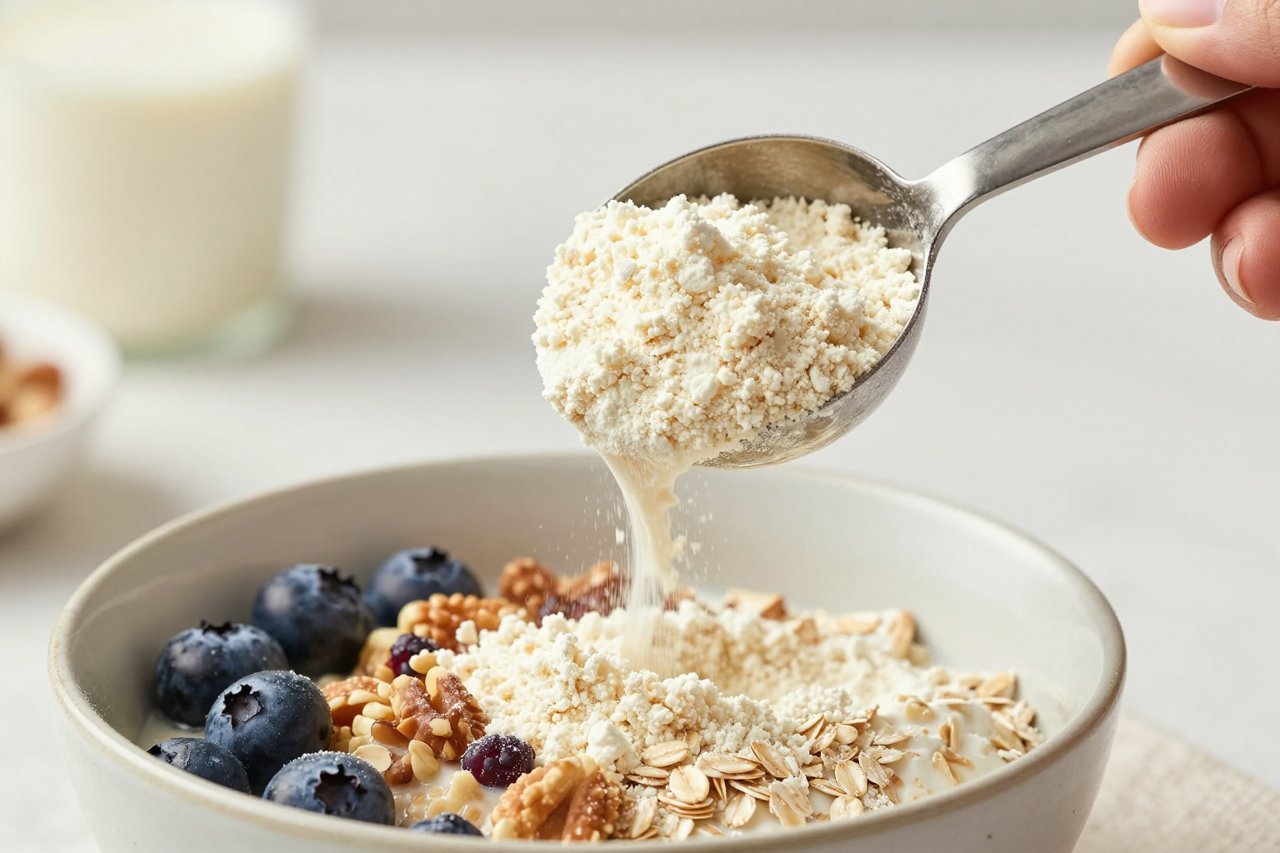
- Mix unflavoured whey into oats or a savoury soup to boost protein without changing the taste.
- Add a scoop of vanilla protein to plain Greek yoghurt for a high-protein dessert with around 320 calories and 40+ grams of protein.
- Blend a frozen banana, cocoa powder, a scoop of chocolate protein, and cold water for a smoothie that tastes like dessert.
One important note: protein powder is a supplement, not a substitute for real food. Your body prefers whole-food protein sources for micronutrients and digestive variety, but a shake or two a day is a perfectly reasonable way to close the gap.
The Pragmatic Shopping List
After all that, here’s the shortest possible version of how to find the best protein powder for your specific situation.
- Try a sampler pack before committing to a big tub.
- Check the macros: protein should be at least 70% of the calories.
- Look for a short ingredient list with minimal added sugar.
- If you’re lactose-sensitive, go for whey isolate or a pea/rice blend.
- For maximum value, buy a plain or lightly flavoured product and add it to your food.
Pair your shake with a solid supplement routine, and you’re off to a good start. Many people find that once they sort out their protein, the next weak link in their diet is something like magnesium or a specific vitamin. It’s worth looking at the best magnesium supplement guide if you’re dealing with muscle cramps or poor sleep, and checking the best vitamins for men for overall coverage. And if you’re struggling with mid-afternoon energy dips, a look at the best supplements for energy guide can help you stack things effectively.
Protein powder is one of those rare products that actually works when you choose it properly. It’s not magic. It’s not a steroid in a scoop. It’s just a practical, flexible way to get a macronutrient that most people need more of. Find the right one, use it intelligently, and move on to the stuff that actually matters.


