
Table of Contents
Two former business partners split over $84,000 that neither can fully account for. One says it was a loan. The other says it was a profit distribution. Both have bank records. Both sound believable. The case will not turn on who seems more honest. It will turn on a question most people never think about until they are sitting in a deposition: who has to prove what, and how convincingly?
That is the burden of proof, and in civil litigation it quietly decides more cases than any dramatic cross-examination ever does.
What the Burden of Proof Actually Means
The phrase covers two separate questions courts settle before a single witness testifies: which side must come forward with evidence, and how much evidence counts as enough. The second question sets the bar a plaintiff has to clear.
Criminal courts demand proof beyond a reasonable doubt. Civil courts ask for something far lower. That gap explains why the same set of facts can produce a conviction in one courtroom and a defendant’s verdict down the hall. If you want the fuller picture of how civil cases and criminal cases divide the work of proof, the differing standards are the right place to start.

Two Burdens, Not One
Judges and lawyers split the concept in half, and the distinction matters in practice.
The burden of production
This is the obligation to put actual evidence on the record for each element of a claim. A plaintiff claiming breach of contract has to introduce something showing a contract existed, that they performed their side, that the defendant didn’t, and that damages followed. Skip an element and the judge can rule against them as a matter of law before the jury ever deliberates. No evidence on causation means no claim, no matter how sympathetic the story.
The burden of persuasion
This is who loses if the evidence ends up in a dead heat. In civil cases, that is almost always the plaintiff. A perfect tie goes to the defendant, which is why so much trial strategy revolves around pushing the record just past the midpoint rather than chasing certainty.
Preponderance of the Evidence: The 50.1 Percent Rule
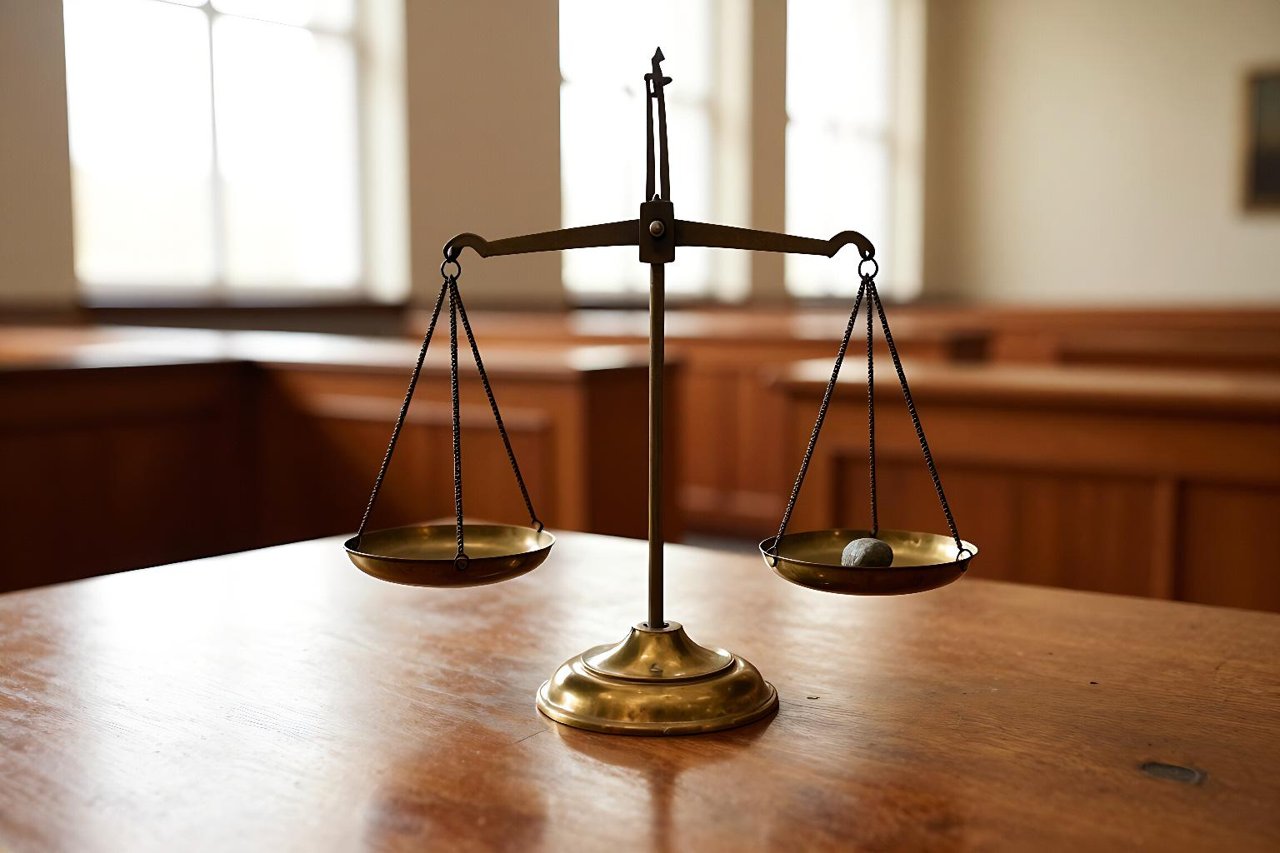
Most civil claims are judged on preponderance of the evidence, commonly described as “more likely than not.” Picture the scales of justice tipped by a feather rather than a boulder. If the fact-finder thinks there is a 51 percent chance the defendant ran the red light, the plaintiff wins. At 49 percent, they lose.
Consider a rear-end collision with $30,000 in medical bills. The plaintiff doesn’t need to eliminate every alternative explanation for the crash. They need the jury to believe their version is slightly more probable than the defendant’s. That is a genuinely low bar, and it is why insurance adjusters value cases by estimating how a jury will read the evidence rather than by who is objectively right.
The standard applies element by element. A plaintiff might prove negligence easily but struggle to prove the extent of damages, and the award shrinks accordingly.
When the Bar Rises: Clear and Convincing Evidence
Some civil claims carry a heavier standard. Clear and convincing evidence sits between preponderance and beyond a reasonable doubt. Courts resist assigning it a percentage, but it demands that the truth of the claim be highly probable, not merely more likely than not.
You’ll see it in fraud claims, requests for punitive damages, will contests, and proceedings to terminate parental rights. The elevated standard reflects the seriousness of what is at stake: an accusation of deliberate deception, a punitive award, or the permanent severing of a family relationship. Alleging fraud and proving it are very different undertakings, and the standard is the reason.
Who Carries the Burden, and How It Shifts
The plaintiff carries the burden on the elements of their own claim. That said, the burden of production moves around during trial, and defendants sometimes end up holding it.
Doctrine known as res ipsa loquitur is one example. A surgical instrument left inside a patient after an operation doesn’t normally end up there without negligence, so the court may require the defence to explain how it happened. The plaintiff still bears the ultimate burden of persuasion, but the practical pressure lands on the other side.
Affirmative defences work the same way. A defendant who argues contributory negligence, assumption of risk, expiration of the statute of limitations, or self-defence in a battery claim has to prove it. In a civil battery case, the defendant asserting self-defence takes on the burden of showing the force was justified, which is where the analysis in how assault and battery claims get proven becomes directly useful.
What Meeting the Burden Looks Like in Practice
Persuasion is built from unglamorous material. Bank statements that trace a transfer. Text messages timestamped eleven minutes apart. A treating physician explaining why the injury couldn’t predate the collision. A defendant’s own deposition testimony contradicting their answer to an earlier interrogatory. Each piece nudges the scales, and the cumulative weight is what the fact-finder evaluates. If you want the mechanics of how that evidence gets presented from complaint through judgment, this walkthrough of how civil lawsuits progress toward a judgment covers the sequence.
Credibility often proves decisive. A plaintiff with a clean documentary trail usually clears preponderance without much drama, while a plaintiff whose story shifts between deposition and trial can lose a case that looked airtight on paper.
Four Misconceptions That Sink Cases
- “I just need to tell my story.” Testimony is evidence, but documents and third-party records carry more weight than a party’s own recollection.
- “The other side has to prove I’m wrong.” In civil court, the defendant can present nothing at all and still win if the plaintiff’s evidence falls short.
- “Beyond a reasonable doubt applies here.” It doesn’t. Expecting that level of proof leads people to abandon meritorious claims they could actually win.
- “The judge will see who’s lying.” Fact-finders weigh probabilities, not moral verdicts, and a witness can be dishonest about one detail without losing the case.
Building a Case That Clears the Bar
Know which standard applies to your claim before you draft anything. A straightforward breach of contract action on preponderance needs a clean paper trail and a damages calculation. A fraud claim on clear and convincing evidence needs corroboration, documented misrepresentations, and usually an expert. The work required is not the same, and neither is the realistic settlement value.
Start preserving evidence immediately, because texts get deleted, security footage overwrites after thirty days, and memories fade within months. Then map your evidence against each element of your claim and look honestly at the weakest link. The practical guide to filing a civil lawsuit walks through the filing stage, but the analysis that decides outcomes happens earlier, at the kitchen table, with a legal pad and a list of what you can actually prove.
That is the real lesson buried in the phrase. The burden of proof is not a technicality lawyers invoke to sound impressive. It is a measurement of how much doubt your case can survive, and knowing the number before you file tells you far more about your odds than the strength of your conviction that you’re right.


