
Table of Contents
If you’ve recently welcomed a dog into your life, you’ve probably heard other owners talking about canine GPS trackers. Maybe you saw one on a neighbour’s Beagle or came across an advert while looking for a new collar. The concept sounds simple: a gadget tells you where your dog is. But when you start looking, you’re hit with terms like LTE, GPS vs GNSS, subscription fees, and geofences. It quickly feels overwhelming.
Let’s take a step back. This guide is for absolute beginners. You won’t find advanced troubleshooting or deep reviews here. Instead, you’ll learn the basics: what a canine GPS tracker actually is, how the technology works, what to look for, and where most new owners trip up. By the end, you’ll know enough to hold your own in any pet store conversation and, more importantly, choose the right tracker for your dog.
What Exactly Is a Canine GPS Tracker?
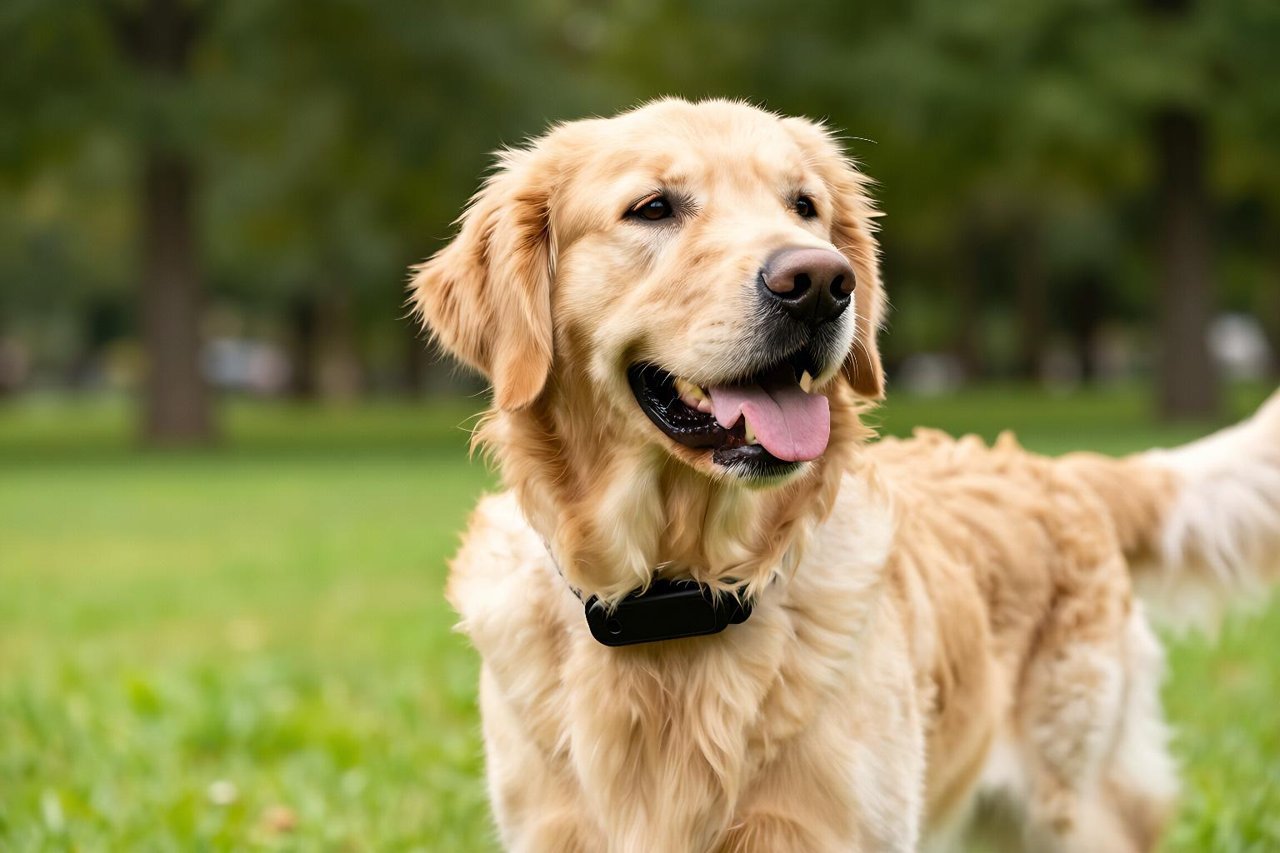
A canine GPS tracker is a small electronic device that attaches to your dog’s collar. It uses satellite navigation to determine your dog’s position, then sends that location to your smartphone using a cellular network. In real terms, that means you can open an app and see a dot on a map showing where your dog is at that moment.
It’s the same core technology in your car’s sat nav or phone’s map app. The difference is that the tracker is built to be light, waterproof, and rugged enough for a dog to wear day and night. Most weigh between 20 and 50 grams, and many are no bigger than a matchbox. They brace for weather, mud, swimming, and the odd scrape against a fence or tree.

The tracker itself doesn’t make a sound or emit a shock unless you buy a training collar that includes GPS. It simply acts as a location transmitter. That distinction matters because it means you can get a tracking-only device without any aversive features.
How Dog GPS Tracking Works (the Simple Version)
Think of it in three steps:
- Your dog’s tracker receives signals from a constellation of satellites orbiting Earth.
- Using at least three or four satellite signals, the tracker calculates its position by measuring how long each signal took to arrive. This is called trilateration.
- That position data, essentially a latitude and longitude, is sent over a mobile data connection to the tracker company’s server and then to your phone.
All of that happens automatically, usually several times per minute. If you’ve ever wondered why a tracker needs a SIM card or an active subscription, that’s why. The GPS satellites only give the tracker its location. It needs a separate connection (normally 4G or LTE) to transmit that location to you.
Some trackers work without a subscription by using radio frequencies instead of cellular networks, but those typically only work within a few miles of a handheld receiver. For most people, a subscription model gives more freedom and a longer range. If you want a very detailed, real-world explanation of how the data flows from dog to phone, the step-by-step breakdown in this guide to tracking your dog is worth reading.
Live GPS vs. Geofence Alerts
Two phrases you’ll see constantly are “live tracking” and “geofence.” Live tracking simply means the app updates your dog’s location continuously, so you can watch them wander around a field park or backtrack through a neighbourhood. A geofence, on the other hand, is a virtual boundary you draw on the map, such as your garden or a 50-metre radius around your camping pitch. If your dog leaves that boundary, you’ll receive an instant alert on your phone. Both are great tools, but they use the same underlying GPS system.
Basic Terms That Confuse Every Beginner
When you shop for a tracker, you’ll encounter specifications that read like alphabet soup. Here’s a quick list to get you started:
- GPS / GNSS: The satellite system. GPS is the American system; GNSS (Global Navigation Satellite System) is a broader term that also includes other constellations like Galileo. A tracker that supports GNSS usually gets a fix faster and holds it better in dense cover.
- LTE / 4G: The cellular network the tracker uses to send data back to you. A 4G/LTE tracker will work whenever your phone has a signal.
- Geofence: A virtual boundary that triggers an alert when your dog crosses it.
- Update interval: How often the tracker reports its position. Every 10 seconds, every 30 seconds, or every minute. Shorter intervals drain the battery faster but give you a more accurate live map.
- IP rating: How water-resistant the device is. For example, IP67 or IP68 means it can survive being submerged in water.
Don’t get bogged down in these details right now. The most important features for a first-time buyer are comfortable weight, decent battery life, and a network that works where you live.
How to Pick the Right Tracker for Your Dog
If you’re a beginner, a canine GPS tracker can feel like a major investment. Prices for the device itself range from £50 to over £300, and monthly subscriptions typically cost anywhere from £5 to £15. Before you spend anything, look at three practical things.
Size and Weight for Your Dog’s Breed
A Great Dane can carry a larger, longer-lasting tracker with no problem. A Chihuahua will struggle with anything that isn’t flat and light. Look for a tracker that’s no more than 5% of your dog’s body weight, and check that the collar attachment design won’t rub against their skin. Some trackers hang like a pendant; others clip onto the collar itself.
Battery Life and Charge Habits
Batteries range from a single day on one charge to nearly three weeks, depending on the model and update interval. If you’re someone who forgets to charge a phone, get a tracker with a battery that lasts at least 7 days. You’ll still need to develop a weekly routine, but that’s easier than remembering every single night.
Coverage Red Flags
Almost every tracker uses the mobile networks run by major carriers, but not all have the same roaming agreements. A tracker bought in one country might not work properly in another. If you travel with your dog or live in a remote area, double-check the coverage map on the manufacturer’s website. You can get a clear picture of the real trade-offs between coverage, battery, and cost by reading this comparison of canine GPS tracker options.
What to Expect on the First Day
Receiving your tracker is exciting, but resist the urge to strap it on and go walking immediately. Most trackers need a full charge before first use. Then, they need to find their position from satellites. In an urban street with tall buildings, that first “fix” can take a minute or two. Out in the open field, it’ll be ready in seconds.
When setting up, be careful about fixing the tracker to the collar too tightly. You need to be able to slide a finger between the tracker housing and your dog’s neck. Too loose and it will swing and cause chafing. Too tight and it may irritate the skin. If you want a clear, walkthrough routine for this, the canine GPS collar setup checklist explains exactly how to fit, charge, and test your tracker properly.
Don’t forget to set up the software side as well. Download the app, create your account, and activate the subscription plan on the first day. Many companies offer a free trial, but you must activate it. Otherwise, your tracker might show a successful pairing but never update the map.
When a Tracker Seems to Fail, Check These First
It’s bound to happen eventually. You open your phone, and the map shows your dog’s last known location from two hours ago. Panic sets in. But before you imagine the worst, understand that trackers don’t always fail because the technology is broken. More often, it’s a simple issue with charging, cellular connectivity, or indoor satellite signal.
GPS radio waves travel in straight lines and cannot penetrate thick walls, roofs, or dense woods. That means if your dog walks inside a concrete car park or into a thick forest canopy, the tracker may temporarily lose its fix. Once your dog moves into an open area, it usually recovers by itself. Also, remember that a tracker is only as functional as its battery. Many new owners buy a tracker, use it for a week, then forget to charge it. The day they need it, it’s dead. If you’re curious about the common reasons trackers stop working, the article on why canine GPS trackers fail breaks down each cause and gives practical fixes.
The Honest Truth About Trackers as a Safety Net
Let’s set realistic expectations. A canine GPS tracker is a fantastic tool, but it is not a substitute for a secure fence, a well-fitted collar, and a responsible owner. It does not prevent your dog from chasing a rabbit into traffic. It cannot tell you whether they are stressed or in danger. It simply tells you where they are.
There will be days when the battery is flat and you forgot to charge it. There will be times when your dog squeezes under the fence and the tracker takes a few extra seconds to update, sending your heart racing. That’s normal. The best mindset is to treat it as a backup plan rather than a perfect safety net. For a deeper look at what trackers can and cannot do, and how to use them effectively in real life, the honest guide to never losing your dog again is a solid next read.
Your First Step: Start with the Basics and Build From There
If you’re brand new to this, your task today isn’t to compare every model or learn every specification. Your task is simply to understand what a canine GPS tracker is, how it fits into your life, and whether it solves a real problem you have. For most owners, that problem is fear: fear of losing a family member, fear of a gate being left open, fear of a sudden noise spooking their dog. A GPS tracker addresses that fear with facts.
Start with a basic model that fits your dog’s size and your budget. Use it daily. Charge it on a schedule you can maintain. Learn how it behaves in different settings, such as open fields versus city streets. And if you ever feel lost, go back to the fundamentals you learned here. With clear expectations and a little practice, you’ll find that tracking your dog becomes second nature within a few weeks.


