
Table of Contents
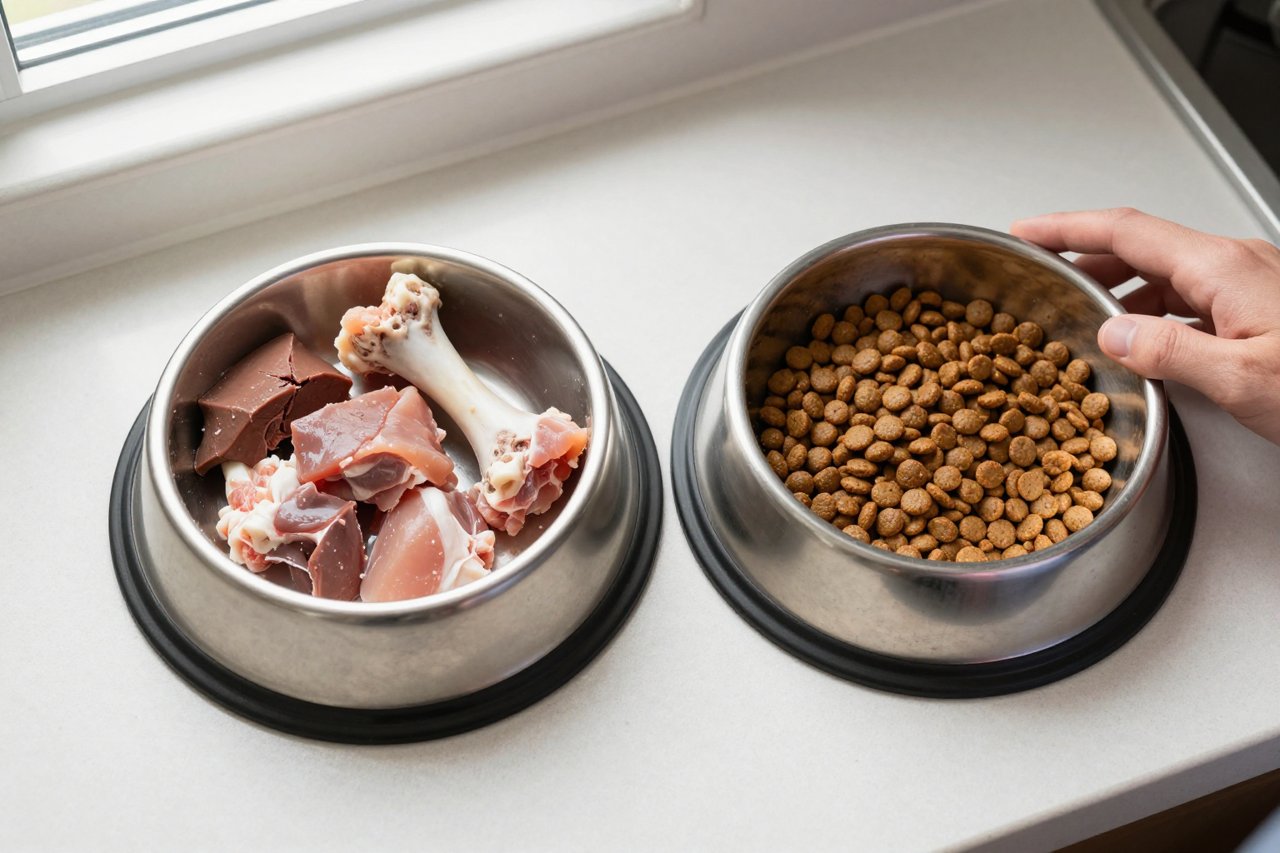
Picture a 25kg Labrador and two shopping baskets. One holds a bag of kibble, a scoop, and a receipt for £48. The other holds chicken carcasses, beef liver, a bag of frozen tripe, and a receipt for £63 that covers about a week. Same dog, same fortnight, wildly different routines. The raw versus commercial argument usually gets framed as ideology. In your kitchen, it is a question about time, freezer space, and how much risk you are willing to manage.
What Raw Feeding Actually Looks Like
“Raw” is not one thing. It stretches from whole prey and DIY mince to frozen nuggets sold in 500g packs. The most common framework is the 80/10/10 split, and it is worth knowing the parts before you judge the whole:
- Muscle meat (around 80%): chicken, beef, turkey, venison, plus heart as a cheap, dense source of taurine.
- Raw edible bone (around 10%): chicken necks, wings, lamb ribs. Never cooked bone, which splinters.
- Secreting organ (around 10%): liver and kidney, with liver making up roughly half of that share.
- Extras: oily fish once or twice a week for omega-3s, an egg now and then, and a spoon of blitzed veg if your dog tolerates it.
A 20kg adult dog eats somewhere between 400g and 600g a day depending on age and activity, so a week’s food takes up real shelf space in the freezer. Puppies need careful calcium-to-phosphorus balancing, which is where DIY raw most often goes wrong. Premade raw from a reputable brand removes that guesswork, at roughly £5 to £8 per kilo.
Where Commercial Food Earns Its Keep
Good kibble, wet food, and gently cooked trays are formulated to a nutritional standard, usually the AAFCO profile in the US or FEDIAF in Europe. That means the calcium, phosphorus, zinc, vitamin D, and amino acid levels have been calculated for a full life stage. Consistency matters more than people realise: a batch of kibble delivers near-identical calories per gram every time, which makes weight management far easier to control.

The category is also broader than the supermarket aisle suggests. Grain-free, freeze-dried, air-dried, insect protein, and fresh-frozen subscriptions all sit under “commercial,” and they behave very differently in the bowl. If you want a straight read on how those formats stack up, this side-by-side comparison of the best pet foods of 2026 covers every type with real feeding notes.
The daily cost gap
Numbers kill most of the argument. A decent 15kg bag of kibble at around £45 lasts a 20kg dog roughly six weeks at 300g a day, which works out near £1.10 daily. Premade raw at £6 per kilo and 500g a day lands at £3. A mid-range wet food sits somewhere between. Raw costs more per calorie, but it is not the luxury it is made out to be once you factor in fewer dental chews, since raw meaty bones do a lot of that work.
The Safety Conversation Both Sides Avoid
Raw meat carries bacteria: Salmonella, Campylobacter, Listeria, and E. coli among them. Freezing does not kill these, it only pauses them. Dogs are reasonably robust to most of it, but they can shed the bacteria in their stools for days or weeks, which puts toddlers, elderly relatives, and anyone immunosuppressed in the household at genuine risk. A separate chopping board, a hot wash of the bowl after every meal, and disinfecting the feeding area are not optional extras if you feed raw.
Commercial food is not sterile either. Recalls happen with depressing regularity, from vitamin D excess in UK batches to mould-related toxins in kibble. The difference is that commercial failures tend to be caught and publicised at batch level, while a raw mistake is usually personal and silent.
What the Health Evidence Really Shows
Most studies comparing raw and commercial diets are observational, meaning owners who choose raw tend to be more engaged with their dog’s condition, which skews the results. Raw-fed dogs in surveys often come out leaner with shinier coats and firmer stools. Some of that is real: less processed starch, more moisture, and higher fat can all show up in the coat within a month or two.
Dental health is the strongest case for raw, specifically for raw meaty bones. Chewing through a chicken neck scrapes plaque in a way that kibble simply does not.
Skin and digestion are murkier. Dogs with genuine food allergies react to proteins, not to whether the food is cooked, so a raw chicken diet will still flare a chicken allergy. If itching and ear infections are your problem, this guide to whether hypoallergenic dog food is worth the hype is a more useful starting point than switching to raw and hoping.
Dogs That Should Probably Skip Raw
Raw feeding is a poor fit for certain situations, and pretending otherwise helps nobody:
- Dogs with pancreatitis or a history of it, since raw diets often run high in fat.
- Large-breed puppies, where calcium excess or deficiency can cause joint problems for life.
- Dogs on chemotherapy or immunosuppressants.
- Households with crawling babies, or anyone immunocompromised.
- Dogs with advanced kidney disease, where precise phosphorus control is easier with a formulated prescription diet.
Building a Hybrid That Actually Sticks
Plenty of owners land in the middle, and it is a sensible place to be. Keep a complete, balanced base food for 70 to 80% of the bowl, then add raw as a topper: a chicken neck for the teeth, a spoon of green tripe for the gut, a raw egg twice a week. You get the dental and palatability benefits without carrying the whole nutritional burden.
This approach works especially well for fussy dogs. A warm, smelly raw topper over kibble will get an indifferent spaniel eating in about four seconds flat, and there is a whole playbook of tricks in this guide to the best dog food for picky eaters if you are dealing with a dog that walks away from a full bowl.
Whichever route you take, transition over seven to ten days by swapping roughly a quarter of the old food for the new, then half, then three quarters. Watch the stool: it should firm up but not turn chalky white, which signals too much bone. Weigh your dog monthly and run your hands over the ribs, because body condition tells you more than the bag does. And if the freezer is full, the bin smells, or the raw routine has become a chore you dread, that is information too. A consistent, well-formulated commercial diet fed with care beats an ambitious raw plan abandoned in three weeks.


