
Table of Contents
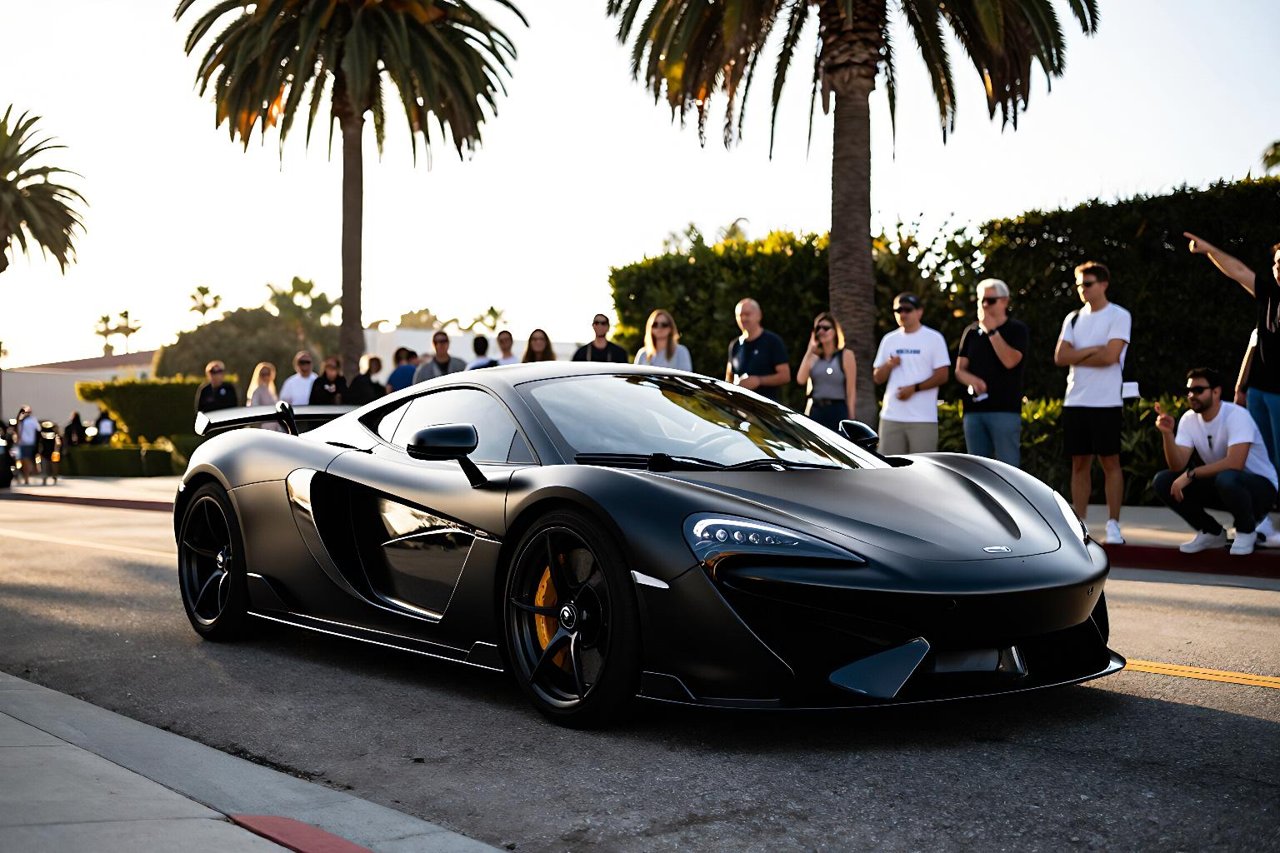
North Cañon Drive on a Saturday morning: a purple Lamborghini Aventador idles at the light, twenty people have their phones up, and a guy in a rented convertible is blocking the crosswalk trying to get the same shot. Nobody knows who owns the Lambo. Nobody asks. The car itself is the whole event.
That scene sums up both the appeal and the problem with celebrity cars. The metal is spectacular, the information swirling around it is mostly rumour, and the ways people follow these vehicles are wildly unequal in what they actually deliver. If you want more than a 30-second clip, you have to pick a lane and accept its trade-offs. Here are the four main ones, compared honestly.
The Four Routes, Side by Side
- Street spotting — free, spontaneous, real-world; almost zero reliable information about who owns what.
- Owner-led video tours — genuine access to the garage; heavily curated by the person holding the camera.
- Auction catalogues and sold prices — the only route with paperwork and verifiable numbers; dry, and often six figures out of date.
- Museums and public collections — you can stand next to the car; you lose the gossip and the ownership drama entirely.
Each one answers a different question. Spotting answers “what does money look like in motion?” Auctions answer “what is it worth?” Tours answer “what’s in the garage?” Museums answer “what does it feel like?” Pick the wrong one for your curiosity and you’ll come away annoyed.
Street Spotting: Highest Buzz, Thinnest Facts
Cities with dense celebrity populations have turned this into a semi-professional hobby. Beverly Hills, Monaco’s Casino Square, Knightsbridge, and the Dubai Marina car park on a Friday night all draw crowds with long lenses. Channels like Effspot have built substantial audiences simply by filming what rolls past, and the appeal is obvious: nobody is selling you anything, and occasionally you catch something unreleased or genuinely rare.

The trade-offs are brutal, though. You’re dependent on luck and geography, and the seasonality is real. Monaco is dead in February. A lot of “celebrity” spotting footage is actually rental supercars driven by tourists, and the commentary rarely distinguishes between the two. You also get no ownership provenance. A car with a famous plate in one city one week can be on a transporter to another continent the next.
Worth it if you live nearby or travel to these places anyway. A poor use of a weekend if you don’t.
Owner-Led Tours: Real Access, Curated Truth
Jay Leno’s Garage is the benchmark here, and the numbers explain why: roughly 180 cars and 160 motorcycles in a working warehouse, filmed by a guy who actually drives them and can talk about a Duesenberg’s valve timing without notes. That kind of long-form video gives you things no spotter ever will — engine sounds under load, the story behind a purchase, the honest answer to “does it run?”
The catch is that the owner controls the frame. You see the cars they’re proud of and the narrative they want to tell. Cars bought badly, sold quietly, or sitting in the corner with a mechanical problem rarely make the cut. There’s also an inherent bias toward the collector who enjoys being on camera, which skews the whole genre toward a handful of personalities. For a broader look at who actually owns what, this roundup of the wild world of celebrity cars from Jay Leno to Post Malone is a useful starting map before you disappear down a YouTube rabbit hole.
What tours are genuinely good for
Condition and detail. A walkaround tells you far more about paint, panel gaps and interior wear than any press photo. If you’re researching a model rather than a person, owner tours beat everything else on this list.
Auction Catalogues: The Only Route With Receipts
Bring a Trailer, RM Sotheby’s, Gooding & Company and Mecum publish more useful data in a week than the gossip ecosystem produces in a year. When Jerry Seinfeld’s Porsche collection went to Gooding in 2016, eighteen cars brought about $22.2 million and every hammer price was public within hours. A 1971 Plymouth Hemi ‘Cuda convertible once owned by Nicolas Cage has a paper trail you can follow through multiple sales.
This is where celebrity cars stop being vibes and become numbers. The trade-off is that the numbers are cold, the catalogues are marketing documents written by an interested party, and the interesting stuff — a car that quietly failed to sell, a reserve that was dropped at the last minute — lives in the gaps rather than the headlines.
Reading a celebrity premium properly
Provenance adds value, but far less reliably than sellers imply. A documented celebrity history might add 10 to 30 percent on an ordinary car and considerably more on something genuinely rare with a famous first owner. On a mass-produced modern supercar, the premium often evaporates the moment the story stops being newsworthy. The analytical skills overlap heavily with property: if you want a framework for cutting through a hype-heavy listing, this guide to decoding a celebrity mansion listing price, hype and square footage transfers almost line for line to a car catalogue.
Museums and Public Collections: Standing Next to the Thing
The Petersen Automotive Museum in Los Angeles keeps roughly 250 vehicles in its Vault, and a timed tour costs extra on top of general admission. Goodwood, the Louwman in The Hague and the various heritage centres run similar operations. What you get is proximity, context and a docent who knows the history — plus the chance to see cars that will never appear in a spotting video because they haven’t moved under their own power in decades.
What you lose is the living side of celebrity car culture. Nobody is drifting a 250 GTO out of a museum car park. The curation is also somebody else’s: what’s on the floor reflects a donor’s taste, a loan agreement, or whatever the museum could insure that year.
Social Feeds and Fan Accounts: Volume Over Accuracy
Instagram aggregators and paparazzi channels are fast and free, and they’re where new purchases surface first. They’re also where a blurry photo of a valet-parked Ferrari becomes “confirmed: [star] just bought a $3 million hypercar.” Ownership claims get recycled between accounts until nobody remembers the original source, and reposted images routinely strip the credit that would let you verify anything.
Treat these feeds as a tip-off service rather than a reference. Once a claim looks interesting, the same instincts you’d use to decode a celebrity scandal like a PR insider apply here: ask who benefits, who saw it firsthand, and whether a second independent source exists.
Matching the Route to What You Actually Want
If you want spectacle, spotting and social feeds win on cost and immediacy. If you want detail, owner tours are unbeatable. If you want truth, auctions are the only game in town. If you want to physically experience these cars, book a museum. Most people end up combining two — feeds to find leads, auction archives to check them. The comparison logic is much the same as working out whether house tours, tabloids or tax records get you closest to the reality of a celebrity home: the source that feels most exciting is rarely the most accurate.
The Cross-Check Habit That Fixes All Four
Whatever route you lean on, one habit upgrades all of them: triangulate before you repeat anything. A car’s story is solid when three things line up — a photograph showing the vehicle with a distinctive plate or spec, a paper trail confirming a sale or registration, and a second source that isn’t just reposting the first. That plate detail matters more than people realise; it’s often the only thread linking a car in a paparazzi shot to a car in a 2019 auction listing.
Apply that test and the picture sharpens fast. You’ll notice that most celebrity car “news” is one photo with a caption attached, that a surprising number of famous garages are leased rather than owned, and that the genuinely interesting cars — the well-documented, hard-used, thoughtfully maintained ones — tend to show up in auction archives and long-form owner videos rather than in the loudest feeds. Follow those two, use spotting and social for entertainment, and you’ll know more about celebrity cars than most of the people filming them.


