
Table of Contents
Chlorella is a single-celled green alga with a nutrition label that looks almost too good: protein, B vitamins, iron, zinc, magnesium, chlorophyll and carotenoids packed into a few grams of powder. That density is why it turns up in smoothies, capsule bottles and greens blends. The useful question is not whether chlorella contains nutrients. It is which form delivers them in a way your body can use, at a dose you will actually keep taking.
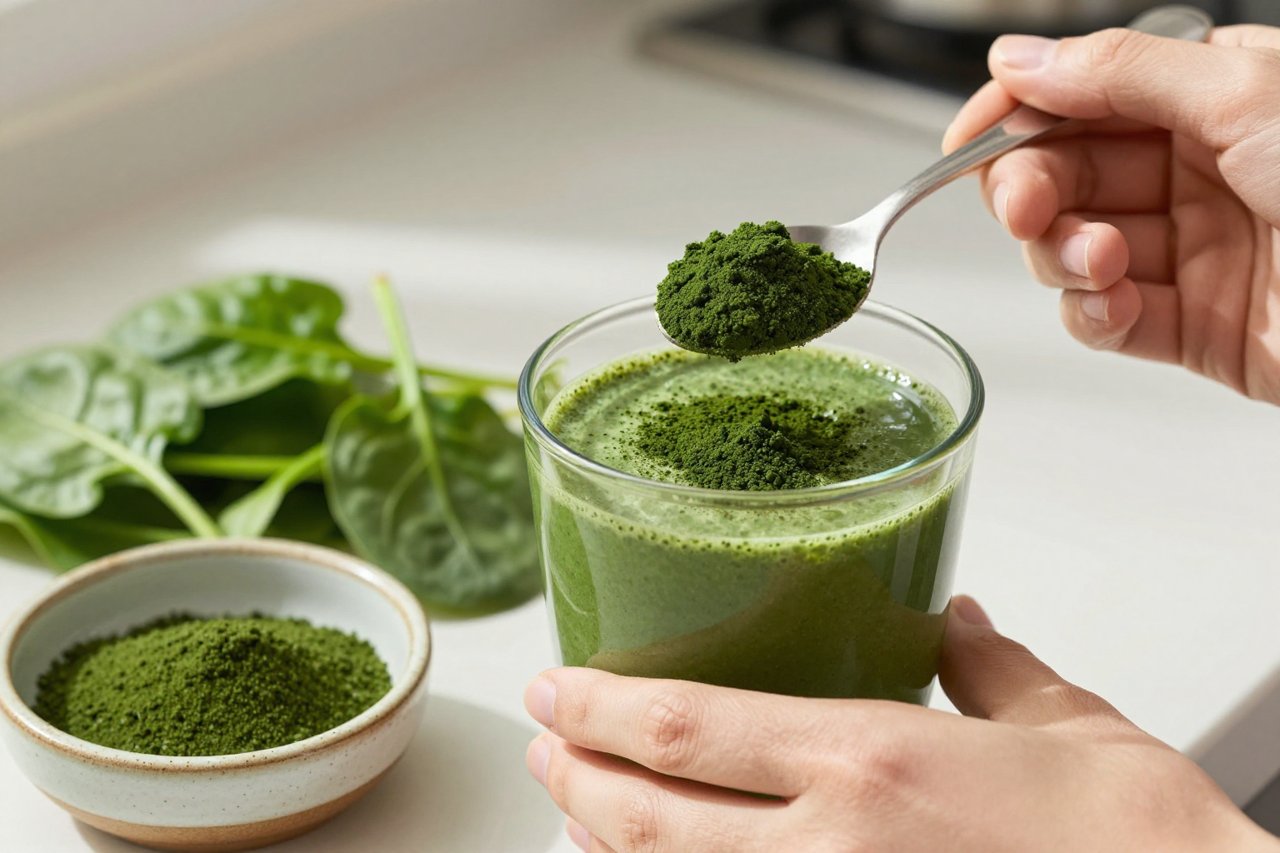
Most people meet chlorella as a vivid green powder with a grassy, slightly marine taste. Others see it pressed into tablets or tucked into a capsule alongside spirulina and wheatgrass. The differences between those products matter more than most labels admit.
What chlorella is, and why the cell wall matters
Chlorella vulgaris is grown in freshwater ponds and tanks, then harvested, dried and processed into supplements. Its thick cell wall is built to survive harsh conditions. Human digestive enzymes struggle to break it down, which is why raw, intact chlorella is not the most efficient way to eat it.
Many quality products use cracked-cell-wall chlorella. This is a mechanical process that opens the outer layer and improves access to the protein, pigments and fats inside. If a label does not mention cracked cell wall, assume the wall is intact. That is not a safety problem, but it may reduce how much nutrition you absorb from each scoop.

The nutritional profile: a small scoop with a broad spread
Chlorella’s numbers vary with growing conditions, drying methods and how much water the final powder contains. Dried chlorella is often around 50% to 60% protein by weight, which sounds impressive until you remember serving size. A 3g scoop supplies roughly 1.5g to 1.8g of protein. Useful, but not a replacement for eggs, beans or yogurt.
Protein and amino acids
Chlorella contains all nine essential amino acids, so it qualifies as a complete protein. It also brings some leucine, the amino acid tied to muscle protein synthesis. The catch is volume. You would need a large dose to make chlorella a meaningful protein source, and most people use 2g to 5g daily. Treat it as a nutrient-dense add-on, not a protein powder.
Vitamins, minerals and B12
Per 100g, dried chlorella looks like a mineral concentrate. Iron, zinc, magnesium and vitamin K appear at notable levels. A normal 3g serving shrinks those amounts, though it still contributes a little. Chlorella also contains vitamin B12, but the amount and bioavailability vary between samples. It is not a guaranteed substitute for a reliable B12 supplement, especially for vegans who depend on consistent intake.
Vitamin A precursors, including beta-carotene, are present too. Because these are fat-soluble, taking chlorella with a meal that contains some fat, such as yogurt, nuts or olive oil, is a sensible habit.
Chlorophyll, carotenoids and antioxidants
Chlorophyll gives chlorella its colour and is one reason the alga gets so much attention. It also contains lutein, zeaxanthin and other carotenoids. These compounds have antioxidant activity in the lab, but human studies on chlorella are smaller and often use different doses and preparations. The honest takeaway is that chlorella is a concentrated source of useful plant compounds, not a cure-all.
Supplement forms: powder, tablets, capsules and liquids
The same alga can be sold in several formats, each with a different cost per gram and level of convenience.
- Powder: Usually the cheapest per gram and the most flexible. It mixes into smoothies, soups or juice, though it can clump and the taste is unmistakably green. A 100g bag may provide 20 to 50 servings at 2g to 5g each.
- Tablets: Pressed chlorella powder in a solid form. Convenient for people who dislike the taste, but check the tablet weight. If each tablet is 250mg, a 3g dose means 12 tablets.
- Capsules: Pre-measured and travel-friendly. Most capsules hold 400mg to 500mg, so a 3g dose can mean six capsules. The cost per gram is often higher than powder.
- Liquid or liquid extract: Easy to add to drinks and sometimes marketed as more absorbable. Doses are often lower, and some products contain added sweeteners or preservatives. Read the ingredient list.
- Greens blends: Chlorella may be one of many ingredients. A proprietary blend can hide how much chlorella you actually get. Look for the amount per serving, not just the ingredient name.
How to read a chlorella label
Start with the species. Chlorella vulgaris is the most common in supplements. Next, look for cracked cell wall if you want better nutrient access. Country of origin and harvest details are useful, but they are not a guarantee of quality on their own.
Because algae absorb minerals from the water they grow in, heavy metal testing matters. A reputable brand should publish a certificate of analysis or use a recognised third-party testing programme. Organic certification addresses growing and processing standards, not heavy metal content by itself.
Check the serving size against the price. A bottle of 500mg capsules with 60 capsules contains 30g of chlorella in total. A 100g powder bag may cost less and deliver more than three times as much. Neither is automatically better, but the comparison keeps you from paying for packaging.
Dose and digestive adjustment
Typical daily doses in supplements range from 1g to 5g. Many people start with 1g to 2g and increase over a week or two. Taking chlorella with food can reduce stomach upset. Some users report mild digestive changes, brighter stools from the chlorophyll, or a temporary feeling of fullness. If a dose causes nausea or loose stools, scale back.
Timing is not critical. A morning smoothie works for many people because the taste disappears behind fruit and yogurt. Others prefer capsules with lunch. Consistency matters more than the exact clock time.
Safety checks before you start
Chlorella is generally well tolerated, but it is not risk-free for everyone. Its iodine content varies, which matters for people with thyroid conditions. Vitamin K content can interact with warfarin and similar anticoagulants. Anyone who is pregnant, breastfeeding, taking immune-suppressing drugs or managing an autoimmune condition should check with a clinician before using it. Buy from a brand that tests for contaminants, and avoid vague bulk powders with no sourcing information.
Matching the form to your routine
If you already make smoothies, a bag of cracked-cell-wall powder is usually the best value. You can control the dose, blend it with fat-containing ingredients and avoid swallowing a handful of tablets. If you travel often or dislike grassy flavours, capsules make more sense, even at a higher cost per gram. Tablets suit people who want a fixed dose and do not mind swallowing several at once. Liquid products are convenient for occasional use, but check that the chlorella amount is meaningful rather than decorative.
A person who eats breakfast at home and owns a blender will probably get more from 100g of powder than from a 90-count bottle of tablets. A frequent flyer may prefer capsules despite the price. The best form is the one that puts a consistent 2g to 3g into your day without turning breakfast into a chore.


