
Table of Contents
When you hear “fatty liver,” you might picture something skippable—a vague condition that sounds like a concern from your last ultrasound but nothing to really panic over. That’s a dangerous assumption. Fatty liver disease is the most common chronic liver condition worldwide, and if it progresses, it can lead to serious damage.
The good news? Unlike cirrhosis or genetic liver disorders, fatty liver is largely reversible. In fact, the treatment for this condition is one of the best-studied and most effective in all of metabolic medicine. It doesn’t always require a miracle drug—it requires a systematic approach that targets the root drivers of fat accumulation in your liver.
Here’s what actually works, ranked by evidence strength.
What Actually Causes Fatty Liver?
Fatty liver disease, medically known as metabolic dysfunction-associated steatotic liver disease (MASLD) or non-alcoholic fatty liver disease (NAFLD), occurs when more than 5% of your liver’s weight is fat. It’s tightly linked to insulin resistance, which explains why it often coexists with type 2 diabetes, high blood pressure, and abnormal cholesterol levels.

When your muscle and fat cells stop responding to insulin properly, your pancreas pumps out more insulin. That, in turn, forces your liver to store excess fuel as fat. Over time, this fat triggers an inflammatory response that can damage liver cells and, in some cases, progress to fibrosis (scarring).
That’s why the most effective fatty liver treatment isn’t liver-specific—it’s metabolic.
Can You Actually Reverse Fatty Liver?
Yes. Histological studies—gold-standard research using liver biopsies—have shown that with weight loss and metabolic control, liver fat can drop significantly and even completely resolve. But it’s not a quick fix. The reversal process takes months, and the amount of weight you lose is the biggest predictor of success.
A study published in Gastroenterology found that losing 10% of your body weight lead to a 90% chance of fatty liver resolution, and a 45% chance of improving the scarring that marks progression (liver fibrosis). Even a 7% weight loss substantially reduced liver fat in most participants.
The Single Most Effective Treatment: Targeted Weight Loss
If you take one thing from this article, make it this: weight loss is the most proven fatty liver treatment there is. Everything else—medications, supplements, dietary tweaks—pales in comparison.
But we’re not talking about crash dieting. The goal is loss of 7–10% of total body weight, achieved gradually. In a 200-pound person, that translates to 14–20 pounds. That amount is enough to significantly reduce liver fat and inflammation.
How quickly you lose matters too. Rapid weight loss (like from very-low-calorie diets) can actually worsen liver injury, so aim for about 1–2 pounds per week—and make it sustainable.
Dietary Changes That Heal the Liver
You don’t need to follow a fad diet to treat fatty liver, but you do need to address the foods that drive fat storage. Here are the evidence-backed adjustments.
Cut Sugar and Refined Carbohydrates
The biggest offender is fructose. Unlike glucose, fructose is processed almost entirely in the liver, where it’s turned into fat directly. This makes high-sugar drinks—soda, juice, sweetened teas—especially problematic. Cutting these alone has been shown to reduce liver fat in children and adults within weeks, even without weight loss.
Refined carbs (white bread, pastries, white rice, pasta) spike insulin, which then accelerates fat formation in the liver. Swapping them for whole grains, legumes, and vegetables can make a significant difference.
One study from the University of California San Francisco found that adults who cut added sugar to under 10% of daily calories saw a 36% relative reduction in liver fat over 6 weeks.
Increase Protein and Fiber
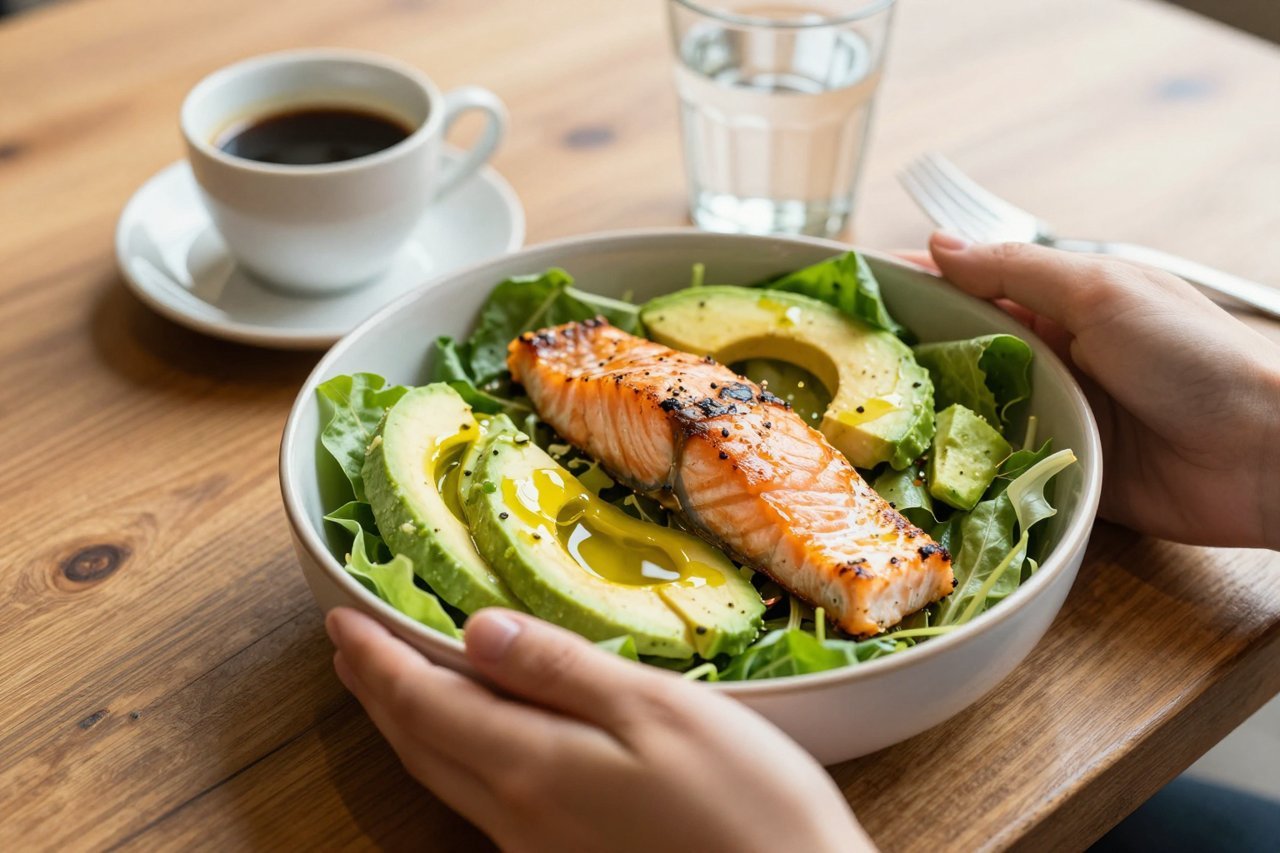
Protein and fiber both help with satiety, which makes weight loss easier. Fiber also feeds gut bacteria that produce short-chain fatty acids like butyrate, which can lower liver inflammation. Aim for around 25–38 grams of fiber per day, and include a protein source at every meal.
The Mediterranean diet—rich in fish, olive oil, nuts, legumes, and leafy greens—has built-in liver benefits. A 2023 meta-analysis of 16 studies found that adults who closely followed the Mediterranean diet had lower liver fat scores and better liver enzyme levels.
Coffee and Olive Oil: Real Evidence
Your morning coffee isn’t just a habit—it’s associated with less liver fibrosis. A 2021 review of 14 studies found that drinking 3 cups of coffee daily reduced the risk of liver fibrosis by 32%. Polyphenols in coffee appear to inhibit the inflammatory pathways that drive liver damage.
Extra-virgin olive oil also shows liver-protective effects. Its monounsaturated fats and polyphenols reduce oxidative stress in the liver. Swapping butter for olive oil is a low-effort change you can start this week.
Exercise: Benefits Beyond Weight Loss
Physical activity has a direct effect on the liver, independent of weight change. Exercise improves insulin sensitivity and reduces lipolysis (the breakdown of body fat that releases free fatty acids into the bloodstream, where they can accumulate in the liver).
Aerobic exercise—brisk walking, cycling, swimming—has the strongest evidence, but resistance training also helps, especially for muscle mass. The goal is not marathon training; it’s consistency. Aim for at least 150 minutes of moderate-intensity exercise per week, or 75 minutes of vigorous activity.
One study found that individuals who did 150 minutes of aerobic exercise per week for 12 weeks saw a 19% reduction in liver fat—without necessarily losing weight. That’s a powerful effect.
Medications and Emerging Treatments
Until recently, no drug was approved specifically for fatty liver disease. That changed in March 2024, when the FDA approved resmetirom (Rezdiffra) for adults with the condition who have significant liver fibrosis. It works by blocking thyroid hormone receptor pathways, which reduces liver fat and inflammation. It’s not right for everyone, but it’s a major step forward.
Other pharmaceuticals are used off-label when underlying metabolic conditions are present:
- GLP-1 receptor agonists (semaglutide, liraglutide) — originally for diabetes and obesity, these drugs promote 10–15% weight loss and have shown direct liver benefit in trials.
- Pioglitazone — a diabetes drug that reduces insulin resistance and can decrease liver fat, though it can cause weight gain.
- Vitamin E — at 800 IU/day, it improves liver enzymes and inflammation in non-diabetic patients, according to the PIVENS trial. It’s not for everyone, and high doses carry long-term risks, so it requires medical supervision.
You may also be interested in science-backed strategies to reverse insulin resistance, since that’s the foundation of liver fat.
Treat the Underlying Metabolic Disorder
Fatty liver doesn’t happen in isolation. In most cases, it’s a manifestation of a broader metabolic problem. That’s why your doctor will likely screen for metabolic syndrome—a cluster of conditions including high blood pressure, high blood sugar, and elevated triglycerides.
Treating these aggressively is part of the fatty liver treatment plan. For example, managing high cholesterol often requires lifestyle changes and statins, which are safe in people with fatty liver. Research suggests that statins reduce the risk of liver fibrosis progression. You can read more in our guide to lowering high cholesterol levels for practical steps.
If you’re a woman with polycystic ovary syndrome (PCOS), you should know that up to 70% of women with PCOS have fatty liver. The connection is insulin resistance. Fortunately, the same treatment principles apply—weight loss, sugar reduction, and insulin-sensitizing medications. Our PCOS treatment guide covers the links in detail.
Supplements: Separating Evidence from Hype
Supplement marketers love the liver, but clinical data is sparse. There are a few with modest evidence:
- Milk thistle (silymarin): Widely used, but a 2020 Cochrane review found no evidence of reduced liver fibrosis or death. It’s harmless but unproven.
- Omega-3 fatty acids: EPA/DHA can lower liver fat and triglyceride levels, but the effect is modest.
- Curcumin (turmeric extract): Some studies show reduced ALT and liver fat, but the bioavailability is low unless combined with piperine.
- Choline: Used in severe deficiency cases, but not typical fatty liver.
The bottom line on supplements: they can complement a healthy diet and lifestyle, but they can’t replace it. No supplement has been shown to reverse fatty liver on its own.
When to See a Doctor About Fatty Liver
If you’ve been diagnosed with fatty liver, you need regular monitoring. The key metric isn’t just liver fat, but fibrosis (scarring). A simple blood test called fibrosis-4 (FIB-4) can determine if you have advanced scarring. If your result is above 2.67, it’s a red flag for advanced fibrosis.
You should also ask your doctor for a liver stiffness measurement, typically done with FibroScan. This noninvasive test gives a numeric score that predicts the risk of progression to cirrhosis.
Liver fibrosis doesn’t always reverse, but you can stop it from getting worse. That’s why early fatty liver treatment is so critical.
What Full Reversal Looks Like
Achieving reversal isn’t a single event—it’s a trajectory. You may start to notice improvements in liver enzymes within 8 weeks of starting a low-sugar diet and losing just 3–5% of your weight. At 6 to 12 months, a follow-up FibroScan or MRI-PDFF can show objective reductions in fat content.
For those who reach that 10% weight loss milestone, studies show liver fat drops by an average of 50% or more. And if you maintain the changes, the fat doesn’t come back.
Some people fall into the trap of waiting to see a doctor until something hurts. Fatty liver usually causes no pain. It’s silent. The only way to know it’s working is to take action early and measure your progress with real tests.
If you’ve been told you have “a little fat on the liver,” that’s your cue to start now. The next scan—and your future self—will thank you.


