
Table of Contents
Ginger is one of the few foods that manages to be both a pantry staple and a topic of serious scientific study. You’ve probably used the knobby brown root to spice up a stir-fry or soothe a sore throat. But beyond its sharp, fragrant kick, a growing body of research suggests ginger offers real, measurable health benefits—from settling an upset stomach to dialing down muscle soreness.
The secret lies in a group of bioactive compounds, mainly gingerol, shogaol, and zingerone, which give ginger its distinctive heat and its antioxidant punch. Here’s what the evidence actually says about how ginger can improve your health, and how to get more of it into your day.
Ginger’s most studied benefit? Settling your stomach
If there’s one thing ginger does consistently well, it’s calming nausea. Researchers have focused on three situations where ginger shines: motion sickness, pregnancy-related morning sickness, and chemotherapy-induced queasiness.
A study of 80 naval cadets who were prone to seasickness found that 1 gram of powdered ginger was more effective than placebo in reducing vomiting and cold sweats. The same dose has been tested in pregnant women: a 2005 review of six trials found that ginger significantly reduced morning sickness symptoms with no increased risk to the mother or baby. Scientists believe gingerol interacts with certain serotonin receptors in the digestive tract, which helps break the chain of nerve signals that trigger the urge to vomit.

For day-to-day nausea, that means you don’t need a specialized prescription. A cup of ginger tea brewed with fresh slices 15 to 20 minutes before traveling, or a piece of crystallized ginger kept in your bag, works for many people. For chemotherapy-related nausea, the evidence is a bit more mixed, but some patients report ginger chews help take the edge off when anti-nausea drugs aren’t enough.
Easing inflammation, sore muscles, and joint pain
Ginger’s anti-inflammatory properties come from the same gingerol compounds that calm your stomach. In the lab, these molecules inhibit the production of prostaglandins and leukotrienes, two types of chemical messengers that promote inflammation.
In human trials, the effects are modest but real. A 2009 study from the University of Georgia gave participants either a ginger supplement or a placebo, then had them perform 18 bicep curls with a heavy weight. Those taking ginger reported significantly less muscle pain for the next 24 hours. For osteoarthritis, a 2012 study of over 300 patients found that 250 mg of ginger extract four times daily reduced knee pain to a degree comparable to some nonsteroidal anti-inflammatory drugs, but with fewer side effects.
If you’re already a fan of turmeric for joint health, think of ginger as its spicier cousin with a different but complementary profile. You can learn more about the science behind the golden spice in our deep dive on turmeric benefits. And since both are anti-inflammatory, combining them in a dish like a curry works surprisingly well.
Ginger may help keep your blood sugar and cholesterol in check
A small but growing body of research points to ginger as a useful tool for metabolic health. In a 2015 randomized trial of 41 adults with type 2 diabetes, taking 1.6 grams of ginger powder each day for 12 weeks lowered fasting blood sugar by 12%, and also reduced hemoglobin A1c, a marker of long-term glucose control.
The effect on cholesterol is more mixed, but several studies have found that ginger supplements can reduce LDL (the “bad” cholesterol) by around 10% while boosting HDL levels. It seems that gingerol helps improve insulin sensitivity at the cellular level, making it easier for the body to shuttle sugar out of the bloodstream.
The changes aren’t enormous, so think of ginger as a supporting player, not a replacement for medication. Apple cider vinegar has also shown similar modest effects on post-meal blood sugar, and we’ve covered the research behind it in our guide to apple cider vinegar benefits. If you enjoy both, adding a bit of fresh ginger and a splash of vinegar to a glass of sparkling water makes a tart, fizzy drink that’s more exciting than plain water.
Ginger can make a cold feel slightly more bearable
Ginger isn’t a cure for the common cold, but it absolutely earns its place in a warm mug when you’re sniffling. The root’s anti-inflammatory action can help ease a sore throat and reduce the sensation of congestion. A systematic review from 2013 found that ginger extracts have direct antiviral activity against respiratory syncytial virus, though the doses used in the lab were far higher than what you’d drink in a tea.
What ginger does reliably well is make you feel more comfortable. The warmth, the slight heat, and the steam help loosen phlegm and encourage you to hydrate. For a simple cold remedy, steep several thin slices of fresh ginger in hot water, add a squeeze of lemon and a spoonful of honey, and sip it slowly. Some research on honey suggests it can work as a mild cough suppressant, so the combination is more than just comfort food.
Easy ways to get more ginger into your day
The best way to enjoy these benefits is simply to eat ginger regularly. Here are some practical, realistic ways to work it in:
- Grate fresh ginger into stir-fries, soups, and sauces at the end of cooking. The flavor is brighter and shows up more than dried ginger.
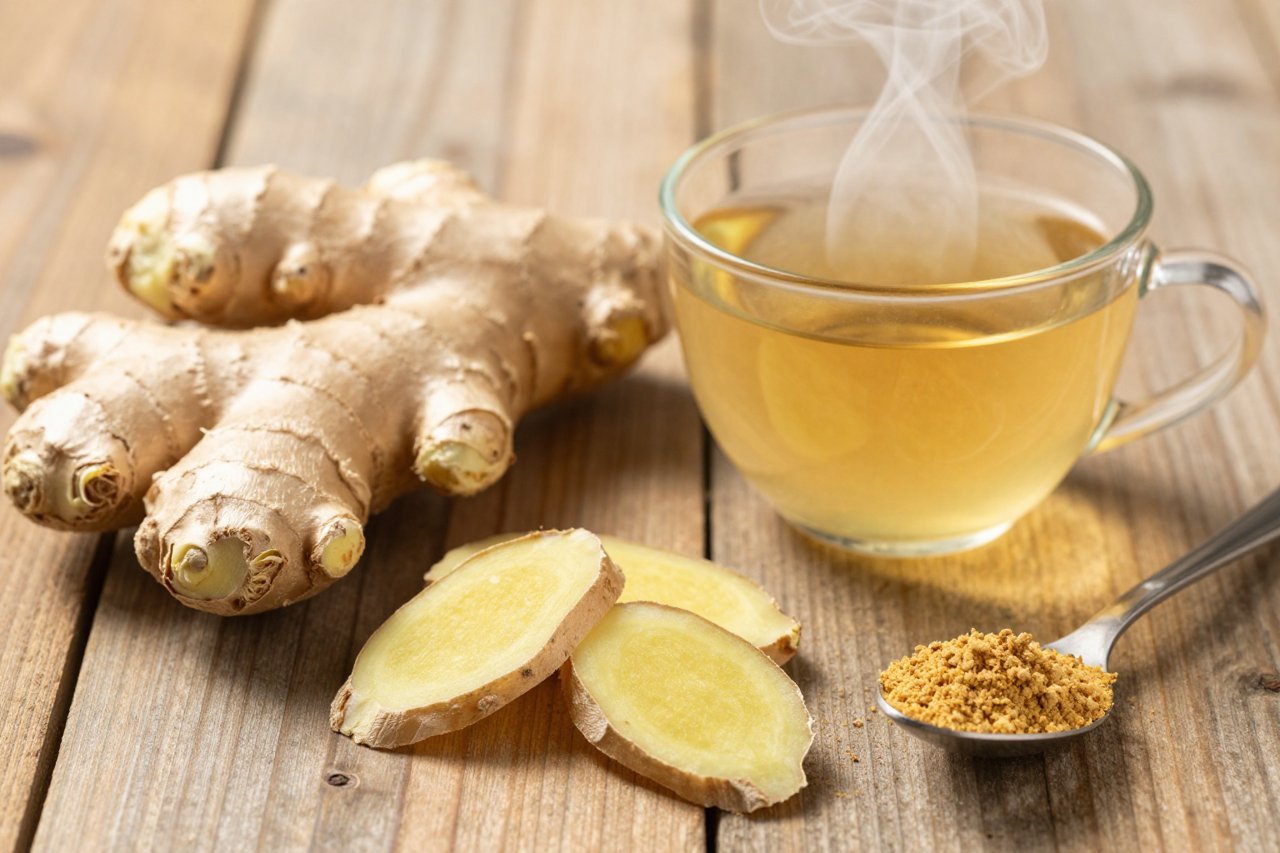
- Make a pot of ginger tea. Slice a knob into a mug, pour boiling water over it, and steep for 10 minutes. You can refrigerate a large batch and sip it iced.
- Blend it into smoothies. A one-inch piece of peeled ginger adds a warm zing that pairs beautifully with mango, pineapple, or banana.
- Bake with it. Grated ginger works in muffins, banana bread, and oatmeal cookies. Dried ginger gives a more intense spice.
- Try pickled ginger with rice bowls, salads, or even sandwiches. Just check the label for added sugar.
- Snack on it with dried fruit. Crystallized ginger and raisins together make a sweet-spicy trail mix that travels well – and you can read more about raisins in our dedicated guide to raisins.
For a savory option, this carrot ginger dressing is a staple in our kitchen. It dresses salads, roasted vegetables, and grain bowls in a way that feels fresh but not too heavy. If you’re pairing ginger with grains, try it grated over a bowl of jowar porridge – the mild, nutty flavor of sorghum is a perfect foil for ginger’s burn, and we’ve outlined the full nutritional picture in our piece on jowar (sorghum) benefits.
Fresh vs. dried vs. capsules: what’s the difference?
The form of ginger matters more than you might think. Fresh ginger is rich in gingerol, which is heat-sensitive. When ginger is dried, that gingerol converts into shogaol, a compound that tastes spicier and seems to have even stronger anti-inflammatory effects on a per-gram basis. Pickled ginger, the kind you get with sushi, is made from fresh roots and has a milder, slightly sour profile.
Dried and powdered ginger is more convenient and lasts longer, but the volatile oils that give fresh ginger its floral aroma are partly lost. Capsules are concentrated, usually standardized to contain 5% gingerol, and are practical if you want a consistent dose for a specific health goal. For most people, though, eating ginger in food is the most sustainable approach.
Who should be careful with ginger?
Ginger has a strong safety record, but it’s not risk-free at very high doses. Ginger can naturally thin the blood. If you take warfarin or other blood-thinning medication, talk to your doctor before adding ginger supplements to your routine. It can also lower blood pressure, so check for interactions if you’re on antihypertensive drugs, and be aware that ginger stimulates bile production – if you have gallstones, large amounts of ginger can exacerbate symptoms.
For morning sickness, limit yourself to no more than 1 gram of ginger per day, and always confirm with your obstetrician first. At these levels, it’s considered safe, but large, concentrated doses are not advisable during pregnancy.
If you’re using fresh ginger, here’s a final practical tip: keep the root in the freezer. It grates beautifully without peeling when frozen, and it stays usable for months. That way, a knob of ginger is always on hand, ready for the moment a cold starts creeping in or dinner needs a lift. You’ll reach for it far more often than you’d expect, and that’s honestly the easiest way to get more ginger benefits without even thinking about it.


