
Table of Contents
I used to slice ginger into stir-fries and proudly call it healthy. It was not until I actually researched how ginger works that I realised I was using the wrong form, too little of it, and often killing the active compounds before they reached my plate. This guide is a practical fix. It walks you through a step-by-step protocol that delivers real ginger benefits for nausea, muscle soreness, and everyday digestion, without pretending that ginger ale or sugary snacks count for anything.
Step 1: Pick the right form for the benefit you want
Fresh ginger and dried ginger do different things inside your body. Fresh ginger contains higher amounts of gingerol, a heat-sensitive compound that gives the root its bite. Dried ginger has a different profile: during drying, gingerol converts into shogaol, which appears to be especially effective for nausea and for soothing an upset stomach in early research.
So before you reach for the jar, decide what outcome you are chasing. For everyday digestion, fresh ginger is a beautiful addition to meals. For a concentrated anti-nausea effect, powdered ginger or a supplement is easier to dose. For muscle pain after exercise, both forms can help, but you generally need about 2 grams of the powdered form or an equivalent amount from fresh.
- Fresh root: bright, pungent, and ideal for tea, salad dressings, or stir-fry added at the last minute.
- Ground ginger: more concentrated and easier to measure by the teaspoon.
- Ginger extract or capsules: the most consistent way to get a known dose of 1 gram in one swallow.
If you want to understand the clinical detail behind these differences before you buy, this science-backed ginger guide covers the trial evidence and the exact conditions where ginger shows the strongest results. For now, we are moving on to dosage.

Step 2: Measure a useful dose, not a sprinkling
Most people with good intentions use a sliver of ginger in a cup of tea and wonder why nothing changes. That’s because the amount is too small to matter. In human trials, the most common ginger dose is around 1 gram of powdered root per day, split into two doses. That translates to about half a teaspoon of ground ginger, or around 10 grams of fresh root, depending on how dry the root is.
Think about what 10 grams of fresh ginger actually looks like: it is roughly the size of your thumb from the top joint to the tip when you curl it. If you’re only shredding a pinch onto a vegetable bowl, you might be getting 1 gram total, a tenth of the amount used in effective studies. A pinch is somewhere between 0.1 and 0.2 grams.
To get the anti-nausea effect on a moving train or in early pregnancy, I would use a supplement with a known extract strength rather than guesswork. But if you’re making tea, then take a full thumb-sized piece and use it all in one session.
Step 3: Brew a ginger tea that keeps the gingerols alive
The most common home mistake is boiling fresh ginger for a long time. The bubbles themselves are not the problem; the high temperature and prolonged contact slowly convert gingerol to shogaol and eventually break down both. You want a short, covered steep with just-boiled water rather than a rolling boil on the stove.
My everyday method
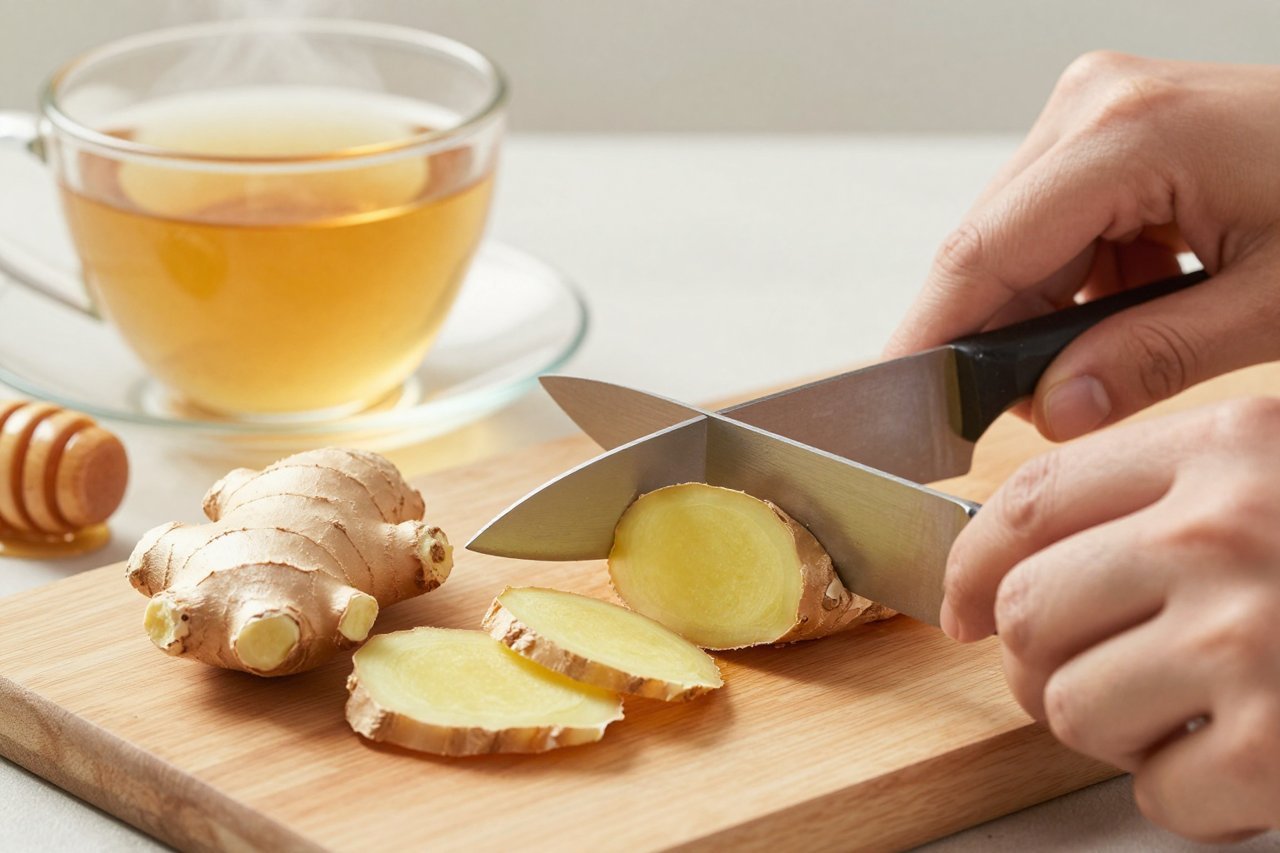
Slice 7 to 10 grams of fresh ginger into thin coins. Place them in a mug and pour 250 ml of water that just reached a boil over them. Cover the mug immediately and set a timer for 10 minutes. After 10 minutes, strain the tea, add a squeeze of lemon and a drizzle of honey. Do not remove the lid while it steeps, because the volatile oils in ginger escape with the steam.
This gives you a mellow, spicy cup with a much stronger punch than boiled ginger water. If you want extra antioxidants, add a green tea bag in the final 2 minutes of the steep. I like this pairing because ginger and green tea have complementary mechanisms, but they are not the same. For a closer look at what the research says about green tea and its dosage, read this guide on green tea benefits.
Step 4: Make a better ginger shot at home
Packaged ginger shots from the cold section are expensive and often hide added fruit juice or sweeteners. You can make a better, less sweet version in less than five minutes.
Grate a 4-cm piece of fresh ginger. Squeeze the shredded mass with your fist over a small bowl; you should collect roughly 1 to 2 tablespoons of pulpy juice. Add 1 tablespoon of lemon juice and 3 tablespoons of water. If you want a touch of heat, add a pinch of cayenne. Stir and drink immediately. That little burn is exactly the sensation some people need to clear their head on a sluggish morning.
If you have also tried apple cider vinegar for digestion, you can blend one teaspoon into this same shot. Do not overdo it; acidity plus gingerol can irritate an empty stomach. For a more measured approach to vinegar, take a look at this step-by-step apple cider vinegar plan that explains how to dilute it properly without gagging.
Step 5: Cook with ginger in the last half of the cooking time
When you add ginger to a curry at the same time as onions, the ginger will cook into something mild and sweet, but you will lose much of its sharper anti-inflammatory edge due to heat exposure. If cooking with ginger has one rule, it is this: add it later, not earlier.
If your recipe calls for ginger in the first step, add half of it then for aromatic depth and then add a fresh grated teaspoon near the very end to preserve the gingerol. This also creates a more layered, bright taste. In most soups, I add grated ginger during the final 5 minutes. In stir-fries, I turn off the heat and toss in the grated ginger with the sauce just before serving. This trick preserves both the flavour and the active compounds.
Do not forget ginger’s close relative, turmeric. Pairing fresh ginger with fresh turmeric, plus a pinch of black pepper, gives you a stronger anti-inflammatory combination than either spice alone. If you want a structured, day-by-day system for turmeric, this practical 7-day turmeric guide is the perfect companion to my ginger routine.
Step 6: Use ginger as an acute remedy when the moment arrives
For motion sickness, do not wait until you feel queasy. Capsules need to land before the sensation starts. A standard strategy is one gram of powdered ginger, taken 30 minutes before you board. When I fly in turbulent weather, this is the only non-pharmaceutical thing that keeps my stomach calm.
For muscle soreness, the moment is not on the day of the workout but the following morning. A 2015 clinical trial found that 2 grams of ginger powder daily reduced pain in participants who did muscle damaging exercise. You can split that into one gram of powder in a smoothie and one gram in a tea that afternoon. If you feel an ache coming on, starting earlier can help more than waiting until you’re already stiff.
For general nausea during pregnancy, clinicians often recommend 1 gram per day, but you should always talk to your obstetrician before taking any herbal product, especially in the first trimester.
Step 7: Don’t let the marketing label fool you
Just because a product has a picture of a ginger root on the package does not mean it gives you the benefits you are after. The following “healthy” ginger options are usually too weak, too sweet, or both.
- Ginger ale: Most brands are carbonated water, high-fructose corn syrup or cane sugar, and artificial flavouring with a tiny amount of ginger extract.
- Crystallized ginger: It is a sugar-dense snack. A 30-gram serving can contain nearly 20 grams of sugar.
- Ginger tea bags: Often the ginger is blended with lemon verbena or sugar, and a bag may contain only 500 mg of ginger. You would need four bags to reach a reasonable dose.
- Pickled ginger: Usually contains artificial colour if it is pink, and the vinegar preserves the texture but not necessarily the active compounds.
Be equally cautious if you take blood thinners or have gallstone issues. High-dose ginger may interfere with clotting or stimulate bile release. A daily thumb of fresh ginger in tea is generally fine for most adults, but for concentrated extracts, speak up about it at your next doctor’s visit.


