
Table of Contents
A single strand of hair is dead protein. Everything that makes it look alive, the shine, the bounce, the way it holds a curl on a humid Tuesday, was decided before it ever pushed through your scalp. That sounds like bad news. It’s actually useful, because it tells you exactly where effort pays off and where it doesn’t.
Hair care and healthy hair aren’t the same project. One is a routine you run on the surface. The other is a growth cycle you influence slowly, from the inside out, over months rather than days. Mixing the two up is why plenty of people own eleven bottles and still hate their hair.
What healthy hair actually looks like
Healthy hair isn’t hair with zero split ends. It’s hair with elasticity. Take one wet strand and stretch it gently between two fingers. Good hair stretches maybe 30% and springs back. Hair that snaps immediately is brittle. Hair that stretches like chewing gum and doesn’t retract is over-processed and drowning in moisture.
Shedding is the other number worth knowing. Losing 50 to 100 strands a day is normal, and wash days concentrate three or four days of that into one shower, which is why the drain looks alarming. What matters is the trend, not any single wash. If your ponytail feels noticeably thinner in six weeks, that’s data. One clump on the floor is not.

Your scalp is the soil, not the plant
Hair grows at roughly 1cm to 1.5cm a month, and nothing you smear on the ends changes that. What you can change is the environment it grows out of. A scalp with buildup, inflammation, or unchecked flaking grows weaker hair, and that’s the part most routines ignore in favour of the mid-lengths.
Two things do most of the work here: cleansing the scalp properly, and getting blood moving. Shampoo goes on the scalp, not the ends. A two-minute massage with fingertips, not nails, during conditioning is genuinely worth doing, and a weekly scalp scrub or clarifying wash helps if you use silicone-heavy stylers or dry shampoo more than twice a week.
Flaking is worth a mention because it’s usually misdiagnosed. Most dandruff is driven by a yeast called Malassezia, not dryness, which is why adding oil to a flaky scalp often makes it worse. A shampoo with zinc pyrithione or ketoconazole used twice a week for a month beats any amount of moisturising.
How often should you actually wash?
Judge by scalp, not by hair type. Fine, straight hair shows oil within 24 to 36 hours; a tight coil pattern can comfortably go 7 to 10 days with proper scalp care and a water-based leave-in. If your scalp itches or flakes by day three, wash more. Stretching wash day out of principle just gives you a scalp problem dressed up as discipline.
Wash day, in the right order
Small sequencing changes cut a surprising amount of damage:
- Detangle before water. Wet hair loses around half its tensile strength, so a knot you comb out dry costs less than one you fight in the shower.
- Shampoo the scalp only. The suds running down your lengths during rinse are enough for the ends.
- Conditioner from mid-length to ends, two to three minutes, then a cool rinse. Cool water doesn’t seal the cuticle permanently, but it does reduce the frizz halo better than hot water.
- Squeeze, don’t rub. A cotton t-shirt or microfibre towel removes more water with far less friction than a terry towel twist.
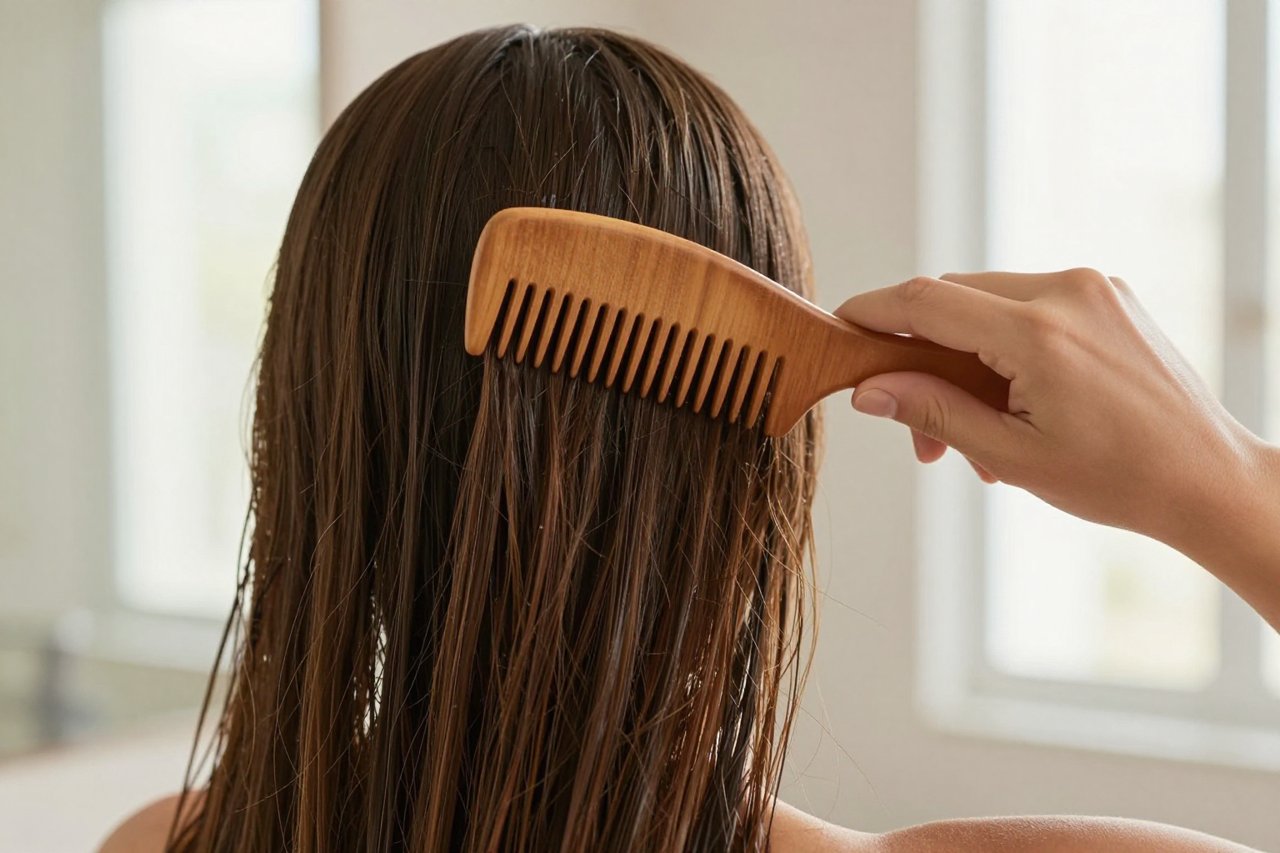
- Comb from the ends upward with a wide-tooth comb while conditioner is still in. Start at the tips, work up in sections.
Oil is a sealant, not a moisturiser
This is the single most common mix-up in hair care. Oil doesn’t add water to hair; it slows water loss. So oil applied to bone-dry hair just coats it and sits there, which is why heavy oiling leaves fine hair stringy and flat.
Coconut oil is the exception worth special handling, because lauric acid is small enough to actually penetrate the shaft and reduce protein loss during washing. That makes it a great pre-wash treatment thirty minutes before shampoo, and a poor choice as a leave-in for anyone with thin hair. If you want the full picture on when it helps and when it backfires, this breakdown of coconut oil for hair covers the details better than a generic instruction label.
The protein and moisture tightrope
Most hair problems sit on one of two sides of a balance. Hair that snaps when wet, feels limp, and sheds short broken pieces usually needs protein. Hair that feels mushy, sticks together, and stretches without bouncing back usually has too much of it. Bleached, coloured, and heat-styled hair needs protein top-ups every four to six weeks. Virgin hair that’s never been chemically treated rarely does, and overloading it makes hair stiff and rough.
A cheap rice-water or keratin mask once a month is enough for most people. If your hair snaps rather than stretches, skip the protein and go straight for a deep conditioner with fatty alcohols and let it sit under a shower cap for twenty minutes.
Serums, supplements, and the money question
No topical product regrows hair that a follicle has stopped producing. Minoxidil is still the only over-the-counter ingredient with decades of clinical trials behind it, and it’s a commitment measured in months, not weeks. Caffeine, rosemary oil, and peptide blends have smaller studies behind them and modest results, and that’s a fair thing to know before spending $60 on 30ml.
What matters far more than the formula is whether you can use it consistently for six months. Photograph your hairline in the same light on the first of each month, because memory is a terrible judge of slow change. If you’re narrowing down options, this step-by-step guide on how to choose a hair growth serum is a sensible filter, and these tested picks for hair growth serums that deliver real results skip the marketing noise.
Supplements deserve the same scepticism. Biotin only helps if you’re genuinely deficient, and it skews thyroid blood tests for days, so tell your doctor if you take it. Iron is the one that matters most: ferritin below 30 ng/mL is a well-known driver of shedding in people who’d never call themselves anaemic. Get a panel before you buy a jar.
Heat and mechanical damage, the unglamorous 80%
Ask anyone with genuinely great hair what they do and the answer is boring: they stop damaging it. Flat irons and curling wands belong at 180°C or below, one pass per section, on hair that’s 100% dry. Two hundred degrees and up causes bubbles inside the cortex that no serum repairs.
Sleeping on a silk or satin pillowcase, tying hair in a loose braid rather than a tight topknot, and swapping cotton scrunchies for silk ones removes a cumulative amount of friction that shows up in six months. If you bleach, leave three weeks minimum between sessions, and use a bond builder as insurance rather than a cure.
Breakage or shedding? Learn to tell the difference
This single distinction saves people from buying the wrong product for a year. Pull a hair off your pillow. If it has a small white bulb at one end, it was shed from the root, and your scalp is the issue. If it’s short, has no bulb, and one ragged end, it broke off along the length, and your routine is the issue.
Shedding concentrated on pillows and shower drains points toward iron, thyroid, stress, or a crash diet, and it typically shows up two to three months after the trigger. Breakage clustered around the ends, the crown, or wherever you clip your extensions points toward friction, heat, or chemical damage. Fixing the wrong one is expensive and slow, which is exactly why the honest, unglamorous habits in this realistic guide to skin, hair, and confidence beat most product routines hands down.
Once you know which problem you’re solving, everything gets simpler. Wash the scalp, protect the ends, feed the body, and give it twelve weeks before deciding whether it worked. Hair rewards patience with more reliability than it rewards spending.


