
Table of Contents
The first blend I ever made was a mess: equal spoonfuls of everything in the spice drawer, steeped far too long, tasting like hot dirt with a hint of potpourri. It took several more attempts to work out that blending herbal tea has very little to do with collecting exotic herbs and a lot to do with ratios, grind size, and knowing which plant is doing the heavy lifting in the cup.
The good news is that you don’t need a lab bench or a shelf of glass beakers. A digital kitchen scale, a fine strainer, and four or five decent dried herbs will take you further than any starter kit.
The Three-Part Structure Behind Most Balanced Blends
Almost every blend that tastes good follows a rough shape: something mild that carries the cup, something that gives it direction, and a small accent that makes it memorable. In numbers, that’s 50 to 60 percent base, 25 to 35 percent support, and 5 to 15 percent accent.
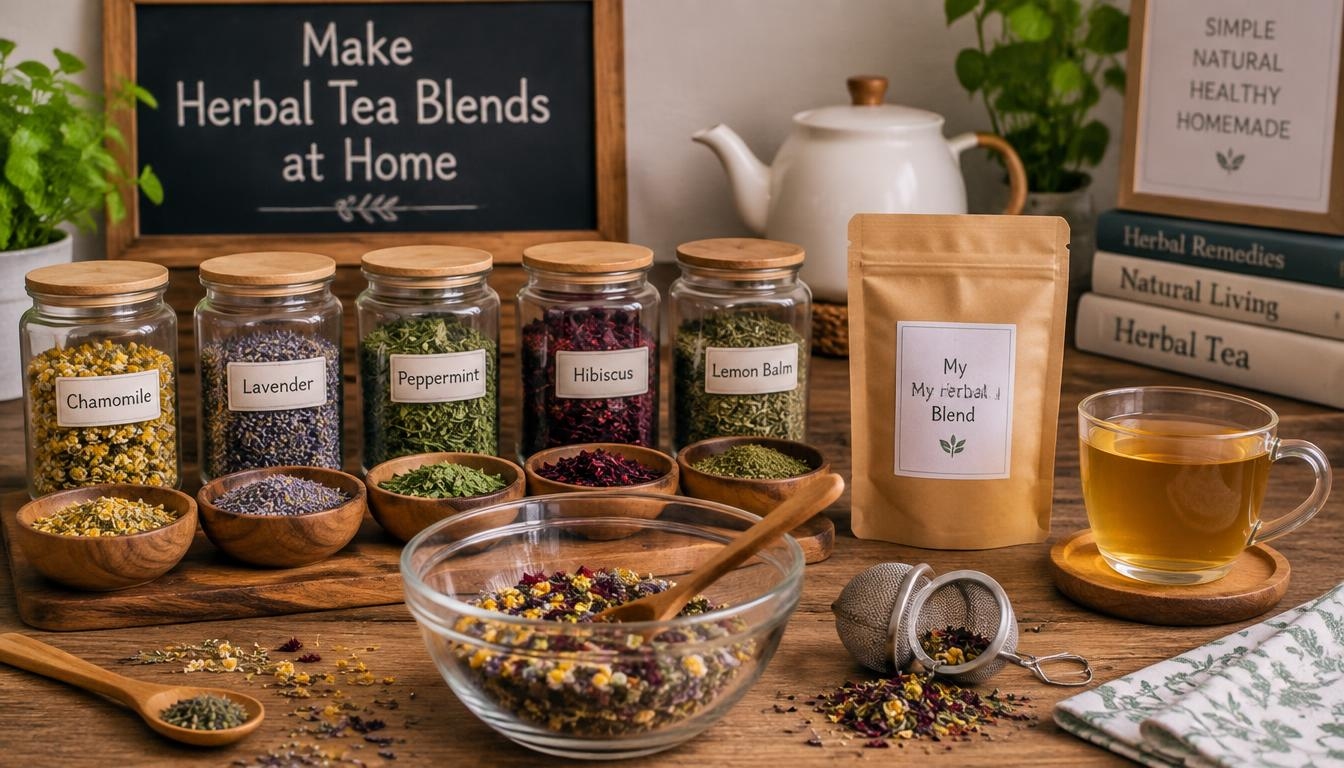
Base herbs are gentle and affordable enough to use in volume. Chamomile, lemon balm, peppermint, rooibos, hibiscus, and lemongrass all work here. Support herbs add a clear function or a stronger flavor note: ginger for heat, fennel for sweetness, nettle for body and a slightly grassy backbone. Accents are the loud ones, used sparingly: licorice root, clove, cardamom, dried orange peel, rose petals, a pinch of dried chilli if you’re feeling brave.

A 100-gram batch is a sensible size to work in. It makes roughly 30 to 40 cups and gives you enough material to taste the blend twice and still adjust it. Twenty-gram test batches are fine for wild ideas, but they leave no room for error when you change a single ingredient.
Weigh Your Herbs, Don’t Scoop Them
This is the single change that improved my blending most. Volume measurements lie, because dried herbs have wildly different densities. A level tablespoon of fluffy chamomile flowers weighs about 1.5 grams. That same tablespoon filled with fennel seed weighs close to 6 grams.
Blend by the spoon and a formula meant to be 60 percent chamomile and 40 percent fennel can quietly become 25/75. Weigh everything in grams on a cheap scale and write the numbers down. Those notes are the real recipe; the herbs are just ingredients.
If you want a starting point before you invent anything, spend a week brewing single herbs on their own. A guide like the top herbal teas worth exploring and how to brew each one is a fast way to learn what lemon balm, rooibos, and hibiscus taste like without three other plants shouting over them.
Know What Each Herb Is Doing in the Cup
Calming and evening herbs
Chamomile, lemon balm, passionflower, linden flower, and lavender. Chamomile is the most forgiving place to start because it blends with almost everything and rarely turns bitter, though the flowers are delicate enough that boiling water flattens them. There’s more to it than bedtime, as this look at chamomile’s traditional applications beyond sleep makes clear. Passionflower is stronger in flavor and slightly earthy; a 10 percent share of a blend is usually plenty, and what the research on passionflower actually supports is worth reading before you lean on it heavily.
Digestive and warming herbs
Peppermint, fennel seed, ginger, aniseed, cardamom, and cinnamon bark. These are your after-dinner components. Peppermint is dominant, so treat it as a base or a strong support rather than an accent. Fennel and aniseed bring natural sweetness without sugar. Turmeric belongs here too if you like a golden, peppery cup, and brewing turmeric tea with the right ingredients and technique saves you from the chalky version most people give up on.
Roots, barks, and seeds
These are dense and need more than a steeping. Ginger root, dandelion root, cinnamon bark, and fennel seed release their flavor when simmered for 10 to 15 minutes, not steeped for five. Dandelion root in particular adds a roasted, coffee-adjacent depth that balances sweet floral herbs, and its traditional uses beyond the garden weed go well past tea.
Three Blends You Can Make Tonight
1. Evening blend (100 g)
50 g chamomile flowers, 30 g lemon balm, 12 g passionflower, 8 g dried orange peel. Steep 5 minutes at 85°C. The orange peel is doing more work than you’d expect, lifting the whole thing so it doesn’t taste like a sleeping pill.
2. After-dinner digestive (100 g)
40 g peppermint, 25 g fennel seed, 20 g dried ginger root, 10 g lemongrass, 5 g licorice root. Simmer the fennel, ginger, and licorice in 250 ml water for 10 minutes, then take the pot off the heat and add the peppermint and lemongrass for another 4 minutes.
3. Spiced rooibos chai (100 g)
50 g rooibos, 15 g cinnamon bark, 12 g dried ginger, 10 g cardamom pods, 8 g fennel seed, 5 g black peppercorns. Crush the pods and peppercorns lightly with the back of a spoon; leave everything else whole.
Fresh Herbs Change the Math
Fresh mint, lemon verbena, or lemon balm from the garden works, but the water content means you need roughly three times the weight to match the flavor of dried leaf. Fresh blends also keep for about three days in the fridge, so make them in small amounts. A hybrid approach works nicely: dried base herbs for shelf life, a handful of fresh mint or lemon verbena stirred in at the end of the steep.
Grind Size, Sifting, and a Jar That Seals
- Keep leaves whole. Tearing them roughly is enough. Powdered herbs release flavor in seconds but turn harsh and bitter within a couple of minutes, and they clog a fine strainer.
- Crush only what’s tough. Cardamom pods, peppercorns, and cinnamon bark benefit from a light crack. Chamomile and rose petals don’t.
- Sift out the dust. A quick shake through a coarse sieve removes the powdery fraction that makes cups cloudy.
- Store in airtight glass, away from light. A labelled jar in a dark cupboard holds quality for 6 to 12 months. Write the blend name, the date, and the exact gram ratio on the label.
- Smell before you buy. Bulk-bin herbs that smell like hay or cardboard will taste like hay or cardboard. Buy from a shop with turnover, and favour leaf over the dusty “fannings” sold in cheap teabags.
Brewing Temperatures That Match the Ingredients
Most disappointing homemade blends are disappointing because of water temperature, not the recipe. Use 250 ml of water per 2 to 3 grams of dried blend, which is roughly one heaped teaspoon.
Delicate flowers and leaves (chamomile, lemon balm, rose, linden) want 80 to 85°C for 4 to 6 minutes. Mint, rooibos, and hibiscus handle 90 to 95°C for 5 to 7 minutes. Roots, barks, and seeds need a proper simmer at 95 to 100°C for 10 to 15 minutes. Boiling water on chamomile pulls out a flat, slightly soapy note, while 80°C water poured over chopped ginger leaves you with a pale, sweetish liquid that tastes of almost nothing.
Five Mistakes That Flatten a Blend
Crowding the recipe. Every herb you add fights the others. Three or four ingredients is a blend; seven is a committee. Overdoing the licorice. Even at 5 percent it can taste medicinal and coat your mouth. Grinding everything to powder. Convenient, but bitter. Brewing stale herbs. A two-year-old bag of lavender will not be rescued by a better ratio. Ignoring the aroma. Smell the dry blend before you brew it. If it doesn’t smell appealing in the jar, hot water won’t fix that.
Change One Thing at a Time
The blend that suits you is rarely the one you copied from a book. Keep a small notebook with the date, the gram weights, the water temperature, and a one-line verdict like “too sweet, cut fennel to 15 g” or “needs more ginger”. Adjust a single ingredient per batch and keep the rest fixed, otherwise you’ll never know what worked.
Season matters too. Lighter, floral blends land better in spring and summer, while the root-heavy and spiced ones earn their place from October onward. A blend you build in June with lemongrass and rose will taste wrong in December, and that’s not a failure of technique. It’s a reason to keep a few jars on the shelf and rotate them as the weather turns.


