
Table of Contents
A friend of mine once spent four days gargling salt water for a throat that felt like broken glass. The gargle wasn’t the problem. The salt ratio was wrong, the water was lukewarm instead of warm, and — more to the point — she was treating what turned out to be strep throat with a technique designed for scratchy irritation. Four days of effort, zero progress, one course of antibiotics she could have started on day one.
That pattern repeats constantly. Home remedies get a bad reputation not because they don’t work, but because they get used carelessly: wrong problem, wrong strength, wrong timing, wrong expectations. Below are the mistakes that sink most kitchen-cabinet treatments, plus the practical fixes.
Mistake 1: Treating a symptom you haven’t actually named
A sore throat is at least four different problems wearing the same costume. Viral irritation responds well to honey, warm fluids and rest. Strep needs a doctor. Reflux-driven throat pain gets worse with the very lozenges you’d reach for. Post-nasal drip from allergies won’t budge until you deal with the allergies.
The same confusion shows up elsewhere. A red, itchy patch could be fungal, could be contact dermatitis from a new detergent, could be eczema — and slapping raw apple cider vinegar on it will burn healthy skin while doing nothing for the cause. Before you assemble ingredients, spend sixty seconds deciding what you’re actually dealing with. If you can’t name it in a sentence, that’s your first clue to look it up properly.

Mistake 2: Assuming “natural” means “safe at any strength”
This is the mistake with the highest chance of sending someone to urgent care.
Undiluted essential oils
Tea tree, oregano, cinnamon and clove oils are genuinely useful and genuinely caustic straight from the bottle. Skin contact with undiluted oregano oil can leave a chemical burn that takes weeks to fade. The working rule for adult skin is a 1–2% dilution: roughly 6 to 12 drops in 30 ml (one ounce) of carrier oil such as almond or jojoba. For children and anyone with sensitive skin, halve it. Citrus oils also make skin photosensitive for up to 12 hours, so don’t apply them before gardening or a beach day.
The herb-and-medication blind spot
St John’s wort speeds up the breakdown of several common drugs, including hormonal contraceptives. Ginkgo and high-dose garlic can add to the effect of blood thinners. Liquorice root in large amounts pushes blood pressure up. None of these are reasons to avoid herbs — they’re reasons to know what you’re taking alongside them. If you’re on daily medication, check interactions before you start a regular herbal routine, and treat a practitioner’s knowledge as worth paying for. A structured approach helps here; this practical home apothecary crash course walks through safe preparation and dosing rather than guesswork.
Mistake 3: Dosing like a recipe instead of a treatment
Two habits cause most failures. The first is token effort: one cup of chamomile tea on Monday, then wondering why sleep hasn’t improved by Wednesday. Herbal and dietary approaches generally need consistent daily use across one to three weeks before you can judge them.
The second is the opposite — the more-is-better instinct. Ginger in large amounts brings on heartburn. Senna taken for a week straight trains your gut to depend on it. Too much vitamin C delivers cramps and loose stools. There’s a range between “pointless” and “too much” and almost nobody looks it up. The delivery method matters as much as the amount, which is why it’s worth understanding how tinctures, teas and capsules differ in strength and timing before you commit to one.
Mistake 4: Destroying the remedy during preparation
Plenty of good ingredients are ruined in the first thirty seconds.
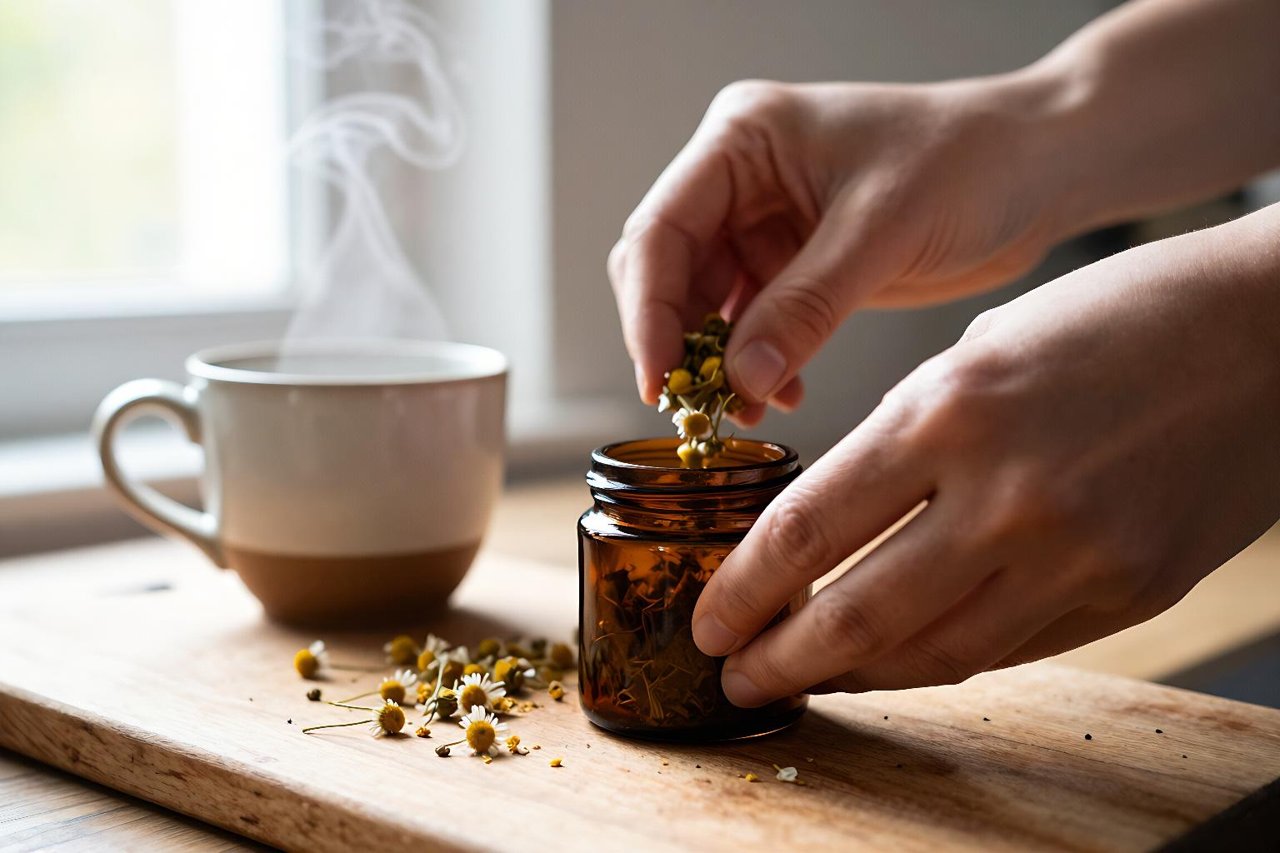
- Boiling delicate herbs. Peppermint, chamomile and lemon balm lose their volatile oils in a rolling boil. Pour water that’s just off the simmer — around 80–90°C — over them and cover the cup for five to ten minutes.
- Honey into boiling water. You won’t poison anyone, but you will waste the enzymes and some of the soothing texture that made honey worth using. Let the drink cool to sipping temperature first.
- Storing tinctures on a sunny windowsill. Light degrades many herbal preparations within weeks. Amber glass, a dark cupboard, a tight lid.
- Keeping a batch too long. A garlic-and-oil mix left in the fridge for a month is a botulism risk, not a remedy. Sugar-based syrups last about two weeks refrigerated; oil infusions should be made in small amounts and used up.
Mistake 5: Throwing five things at one problem
Congestion gets steam, eucalyptus, a decongestant, a saline rinse and three supplements, all in the same evening. Then the person reports it worked — or didn’t — with no way of knowing which part mattered. Worse, stacking supplements multiplies the chance of an interaction.
The disciplined version is dull but effective: change one thing at a time, give it three to five days, and note what shifted. If a remedy earns its place, keep it. If it doesn’t, retire it and try the next. You end up with two or three things that reliably work for your body instead of a cupboard of maybes.
Mistake 6: Misreading the clock in both directions
Some people quit on day two. Others keep going long past the point of sense. Both are timing errors.
A rough guide: minor irritation, cold symptoms and small skin issues should show some shift within 48 to 72 hours of consistent treatment. If nothing moves in that window, the remedy isn’t the answer and you need a different diagnosis. Red flags that end the home-treatment experiment immediately include a fever above 38.3°C (101°F) in an adult, a wound that’s spreading redness or leaking pus, chest pain, breathing difficulty, a stiff neck, or a child who’s listless. For borderline calls, it helps to know which situations a pharmacy handles faster than a kitchen remedy — that’s a decision most people make badly and late.
Mistake 7: Forgetting that the boring stuff does most of the work
Elderberry syrup gets all the attention; sleep, fluids and steam do the heavy lifting. A person treating a cold with four supplements while sleeping five hours a night is fighting uphill.
Before adding anything, tidy the foundation: eight hours in bed, actual water intake rather than coffee and tea, a bedroom cool enough to sleep in, ten minutes of steam, and enough food to fuel recovery. Those aren’t passive measures — they’re the conditions under which any remedy has a chance. If you want a handful of treatments that lean on exactly these basics, this set of everyday remedies for sore throats, splinters and similar small disasters is a sensible starting point.
Mistake 8: Forgetting who the remedy is for
A treatment that’s fine for a healthy 35-year-old can be wrong for a toddler, a pregnant person, an elderly parent or anyone with a chronic condition. Honey is off the table under twelve months. Many essential oils are out during pregnancy. Aspirin and children don’t mix. Doses scale with body weight, not enthusiasm. And “it worked for me” from a neighbour is not evidence for someone with different kidneys, a different liver and two prescriptions in the cupboard.
Three questions worth asking before you try anything
Skip the ingredient lists for a moment and run this filter instead.
What exactly am I treating, and would I bet money on that identification? If the answer is fuzzy, stop and refine it. Vague problems attract vague remedies.
Is the plan realistic for my actual week? A remedy that needs reapplication every two hours will be abandoned by Thursday. Choose the version you’ll genuinely do — a shop-bought saline spray used daily beats a handmade infusion used twice.
What would make me stop? Decide the exit condition before you start: a deadline, a symptom that worsens, a fever that appears. Writing it down in advance protects you from the sunk-cost trap where three days of effort turns into a week of denial.
Most people who get good results from home remedies aren’t using secret ingredients. They’re just honest about what they’re treating, careful with strength, patient for a few days, and quick to change course when the body says otherwise. That’s the whole method — and it costs nothing.


