
Table of Contents
Four doors, one sore throat
It’s 9:40 on a Tuesday night and your throat feels like gravel. You have four realistic paths: raid the kitchen, brew something herbal, open the medicine cabinet, or wait for the clinic to open at eight. Most advice treats these as rivals with a single winner. In practice they trade different currencies: money, time, risk, and how deep the fix actually goes. The smartest choice usually depends on which of those you’re shortest on.
Here’s an honest look at each option, including the parts nobody prints on the label.
Kitchen cures: cheap, fast, and quietly effective
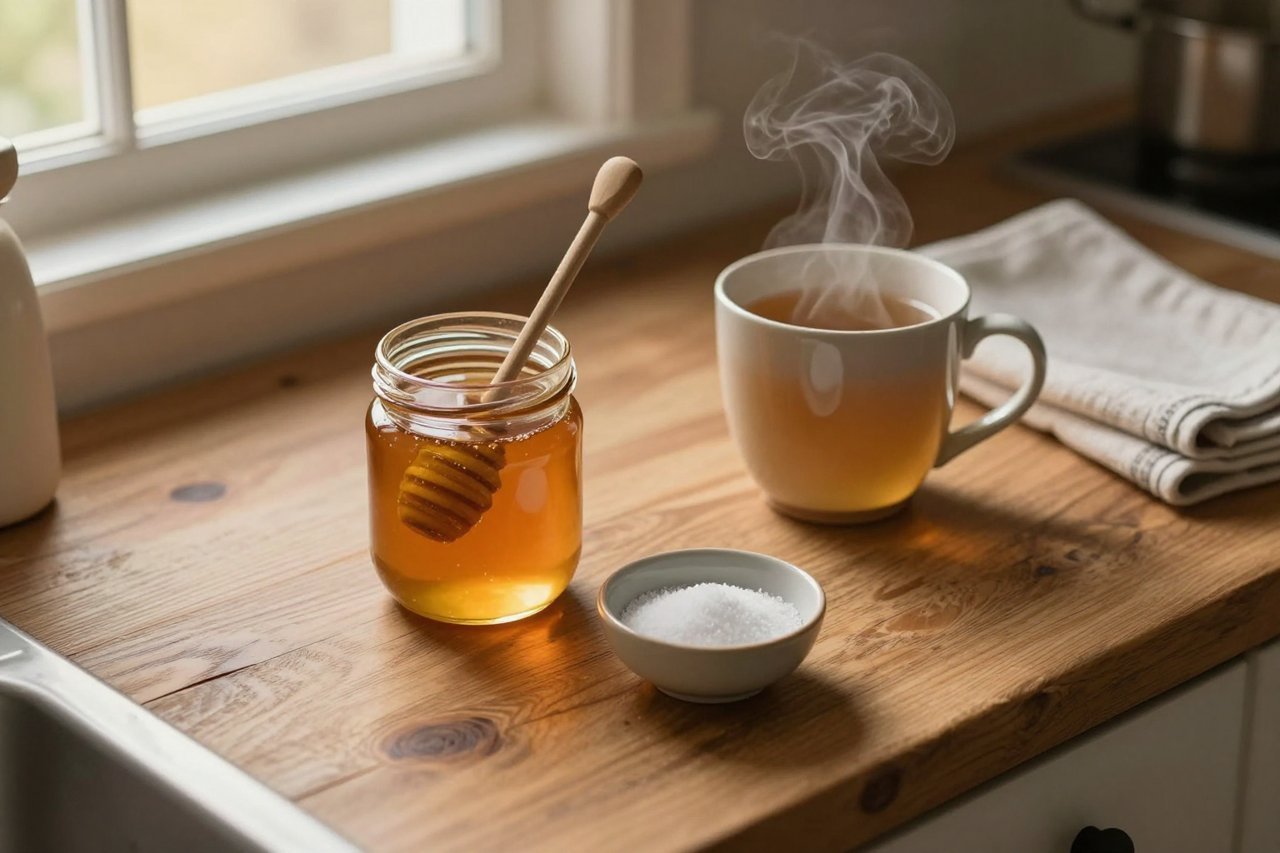
The pantry is the most underrated first stop. A spoonful of honey does more for a nighttime cough than most people expect. A 2020 review in BMJ Evidence-Based Medicine pooled 14 trials and found honey beat usual care for cough frequency and severity, and it edged out diphenhydramine in one head-to-head comparison. It won’t cure anything, but it calms the symptom for roughly a penny per dose.
The same pattern repeats across the kitchen:

- Salt water gargle: half a teaspoon of salt in 8 ounces of warm water, three times a day, reduces throat swelling.
- Colloidal oatmeal bath: one cup in a lukewarm tub for 10 minutes eases eczema and chickenpox itch.
- Cold compress: 15 minutes on, 15 minutes off, for sprains, bruises, and tension headaches.
- Steam: a hot shower does about as much for congestion as most drugstore vapor rubs.
Where kitchen cures fall short is depth. They manage symptoms. They don’t touch bacterial infections, and they won’t replace a splinter that needs pulling or a wound that needs proper cleaning. If you want a short list of the ones with the strongest evidence, this rundown of home remedies that actually work for sore throats and splinters is a solid place to start.
Herbal remedies: a bigger toolbox, with more homework
Herbs sit one step up the ladder in strength, and one step up in complexity. Peppermint oil diluted to roughly 10 percent and dabbed on the temples has decent trial support for tension headaches. Ginger, at a gram or two per dose, beats placebo for nausea and motion sickness in multiple studies. Valerian and chamomile are mild but real sleep aids for some people.
The trade-offs nobody mentions
Dosing is inconsistent between brands, and a bargain bottle of “chamomile complex” might contain almost no chamomile. Interactions matter more. St. John’s wort speeds up the breakdown of many medications, including birth control pills and some antidepressants, and ginkgo can push blood thinners into risky territory. If you take anything prescription, check before you brew.
Herbal medicine also asks for time: steeping, straining, and dosing three times a day. A practical home apothecary crash course is worth an evening if you plan to go this route, mainly because preparation technique decides how well the plant compounds actually extract.
Over-the-counter medicine: the middle path people overlook
Pharmacy shelves often get dismissed as the “chemical” option, but they solve a problem kitchens and herb jars can’t: consistency. A 200 mg ibuprofen tablet contains 200 mg of ibuprofen, every single time.
Where OTC wins
Pain, fever, allergies, and inflammation are its home turf. Ibuprofen and acetaminophen knock down a fever faster and more predictably than any tea. Antihistamines work within an hour. Hydrocortisone cream settles a rash in a day or two.
Where it costs you
NSAIDs like ibuprofen irritate the stomach and stress the kidneys with regular use, and acetaminophen has a narrow safety margin. More than 3,000 mg a day starts to risk liver damage, which is easy to hit by accident when a cold remedy, a headache pill, and a sleep aid all contain it. Decongestant sprays cause rebound congestion after about three days. And OTC drugs mostly silence symptoms rather than resolving the cause.
The best results usually come from stacking rather than choosing. Honey plus acetaminophen for a cough. A saline rinse plus an antihistamine for allergies. That combination logic is exactly what a side-by-side comparison of herbs, kitchen cures, and supplements ends up recommending.
Professional care: when the math flips
Prescriptions and clinic visits cost the most in time and money, and they’re the easiest to skip. They earn their keep in specific situations:
- A fever above 101.5°F lasting more than three days
- Symptoms that improve and then get sharply worse
- White patches on the tonsils with no cough, which points to strep and needs antibiotics
- Any trouble breathing, chest pain, or a stiff neck
- A wound that’s red, hot, and spreading
Outside those flags, a prescription usually adds cost and side effects without changing the outcome. Most upper respiratory infections are viral, and antibiotics do nothing for them except feed resistance.
Cost, time, and risk, side by side
- Kitchen cure: pennies per dose, ready in minutes, near-zero risk, symptom relief only.
- Herbal remedy: $8 to $25 per bottle, 10 to 20 minutes of prep, low to moderate risk from interactions, mild to moderate effect.
- OTC medicine: $6 to $15 per package, instant, moderate risk with overuse, strong symptom control.
- Clinic or prescription: $0 to $200 plus one to four hours of your day, real side-effect risk, but the only option that treats some root causes.
How to pick without overthinking it
Start with severity. Mild and annoying: kitchen. Mild but dragging on: kitchen plus OTC. Moderate and specific, like a rash or a headache that shows up every week: herbal or OTC, whichever you already know works on you. Severe, unusual, or still going after a week: get seen.
Then check what you already own. Most households have salt, honey, and ibuprofen within 30 feet of the couch. If you’d rather not improvise, these five easy treatments you can do tonight cover the common 9 p.m. problems using things already on the shelf.
Two habits make every option work better. First, write down what you tried and whether it helped, because memory is terrible at this and patterns matter when the same cold rolls around in March. Second, learn the technique side of whatever you use. Weak ginger tea, a gargle mixed too salty, and a compress left on for an hour all underperform for avoidable reasons, the kind of detail covered in a step-by-step guide to prepping and using natural remedies.
Build a two-tier kit and you’ll rarely be stuck. Tier one: honey, salt, ginger, a hot water bottle, and a thermometer. Tier two: ibuprofen, acetaminophen, an antihistamine, hydrocortisone cream, and saline spray. Between the two you can handle most of what turns up on a weeknight, and you’ll know the specific symptoms that mean it’s time to stop self-treating and make the call.


