
Table of Contents
Last winter, I watched a friend pour her third cup of chamomile tea while a cold rattled in her chest. She was doing it wrong. The tea was pale, the steep time was a guess, and she expected a few dried flowers to fix what antibiotics couldn’t. Natural remedies don’t usually fail because the plants are weak. They fail because the preparation is sloppy. This guide is the opposite of a listicle. It walks you through the exact steps, measurements, and routines that make natural remedies work when you actually need them.
Pick one problem and give it a real test
The quickest way to fail with natural remedies is to try eleven at once. Buy one herb, use it correctly, and track the result. A single complaint that shows up regularly works best: tension headaches, after-dinner bloating, or a dry cough that hangs on for weeks.
- Choose a symptom you’ve had at least three times in the last month.
- Pick one remedy in one form, such as dried peppermint for infusion.
- Run a seven-day trial before you judge it.
If you want the broad view of what’s worth trying, our overview of natural remedies for everyday ailments is a good starting point. But this guide goes deeper on the process.
Match the remedy form to the job
A form is just a delivery system. The same plant can be a tea, a tincture, a poultice, or a syrup, and each works differently because of what gets extracted and how fast it hits your system.

Tea and infusion
Best for water-soluble plant compounds like many flavonoids and minerals. You get a mild dose that’s easy to control. Use dried leaves, flowers, or roots. Don’t boil the herbs directly; pour hot water over them and cover.
Tincture
Alcohol or glycerin extracts pull out different compounds and they work faster. You can carry a small dropper bottle in your bag, but the taste is usually bitter and the dose is less forgiving.
Compress and poultice
For muscle tension, joint pain, or skin issues, a warm compress delivers the remedy exactly where you need it. This is where fresh plant material shines.
If you’re still sorting out which herbs are worth your shelf space, the herbal remedies that actually work guide helps narrow it down. Our focus here is making the chosen remedy properly.
Make a proper herbal infusion, not a sad cup of hot water
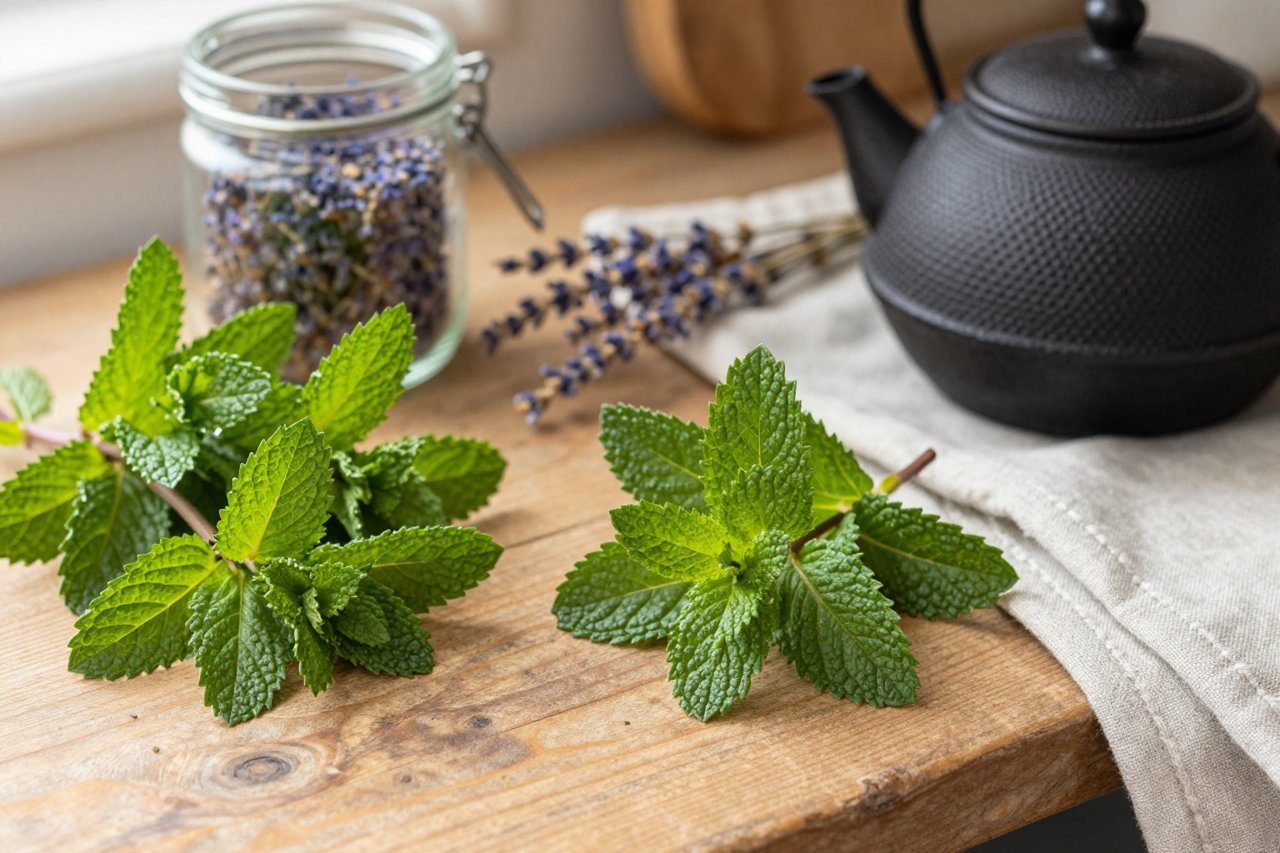
Take peppermint. It’s the fastest thing for a tension headache when brewed right. Here is the version I use:
- Measure 1 tablespoon of dried peppermint leaves (or 2 tablespoons fresh) into a teapot.
- Boil 250 ml of water and let it sit for one minute so it drops to about 95°C.
- Pour the water over the mint, cover the pot, and steep for exactly 10 minutes.
- Strain, drink slowly, and don’t add sugar if you can help it. A tiny bit of honey is fine.
Why cover? The volatile oils in mint escape as steam. When you cover the pot, you trap them back in the water. If your tea is clear and weak, you skipped the cover or the steep time. It should be golden and fragrant, with a slight cooling sensation in your throat.
Real example: a sore throat sequence
Sore throats are a perfect testing ground because they respond to simple steps. The day you feel that first scratch, start with a saltwater gargle: ½ teaspoon of salt in 240 ml of warm water, gargle for 30 seconds, and repeat every three hours. It’s not glamorous, but it reduces swelling and pulls fluid out of irritated tissue.
If the scratch is still there by evening, make a sage gargle. Put 1 tablespoon of dried sage (or roughly 12 fresh leaves) in a cup, pour over 200 ml of boiled water, cover, steep for 10 minutes, then strain. Add 1 teaspoon of honey and half a lemon. Gargle a mouthful for 30 seconds, then swallow. The honey coats, the lemon cuts mucus, and the sage contains compounds that calm inflammation.
For more everyday fixes like this, you’ll find plenty of practical ideas in the roundup of home remedies that actually work from sore throats to splinters. The key is to do the first step early and not wait until you’re miserable.
How to dose a tincture without guessing
Tinctures are concentrated, so the difference between a helpful and a numbing dose is small. Always use the dropper that came with the bottle. A full dropperful is usually about 1 ml, but check the label.
Start with one full dropperful, diluted in 60 ml of warm water or juice. Wait 15 minutes. Notice how your body responds: skin temperature, mouth feeling, mental clarity, or lack of change. If the effect is nil, try one and a half dropperfuls the next time. Never double a dose “just to see” unless you know the herb’s safety profile. This is where reading the label matters more than trusting a blog.
For persistent sleep problems, a tincture like valerian or passionflower can help, but timing matters more than dose. Take it 30 to 45 minutes before bed, not when you’re already frustrated. If you prefer a ready-made formula, the guide to Hypnozan’s route to becoming a go-to natural sleep aid explains why some people switch from loose herbs to a standardized product.
Stock your home apothecary for the problems you actually have
You don’t need forty jars. You need ten things that overlap with your patterns. This is my working list:
- Colds and coughs: dried elderberry, ginger root, raw honey, echinacea tincture
- Sleep: chamomile flowers, valerian root, passionflower tincture
- Digestion: peppermint leaves, fennel seed, ginger tea bags
- Skin and minor wounds: calendula petals, plantain leaves, lavender essential oil
- Headaches: dried lavender, peppermint, skullcap tincture
Keep them in dark glass jars out of direct light. Write the date you opened each one on a piece of painter’s tape. Most dried herbs keep for a year, but only if they smell like the plant. If a jar smells like hay, it’s already dead. And if you want a broader reset, you can apply the same step-by-step thinking to a detox diet that supports your body’s natural cleanse, but only after your basics are solid.
Track your results like a scientist
Natural remedies work subtly, so your memory is not reliable. Keep a simple log. It can be a small notebook, not an app with charts. For each trial, write:
- Date and time
- Symptom intensity before, from 0 to 10
- Remedy, form, and dose
- Symptom intensity at 30 minutes and again at 2 hours
Here’s a real entry from my own notes: “Tuesday 2pm, headache at back of head, 6/10. Took 1 dropperful skullcap tincture in water. 2:30pm, 4/10. 4pm, 1/10.” That single entry told me more than a week of vague memory.
Make it an automatic habit
The best natural remedies don’t work if you have to remember them at the peak of a crisis. Put the kettle and remedy basket where you’ll see them. When you feel the first throat tickle, don’t wait for the full sore throat to develop. When you smell the first hint of a tension headache, start the steeping process while you still feel fine.
That’s the core skill. Early action, proper preparation, and honest tracking turn a random cupboard of herbs into a system you can rely on. The next time you reach for a chipped mug full of weak chamomile, you’ll know exactly which step to fix first.


