
Table of Contents
You apply SPF at 8:15, leave for work, and by lunch you’re eating outside. Is one morning layer still doing anything? Usually, no. The practical answer to how often you should reapply sunscreen is every two hours while you’re exposed to daylight, and sooner if you swim, sweat heavily, or towel your face. That’s the short version. The useful version depends on where you are, what’s on your skin, and how much sunscreen you put on in the first place.
The two-hour rule, without the fine print
Sunscreen labels and dermatologists point to the same interval: reapply every two hours. This isn’t because SPF switches off at 120 minutes. It’s because the protective film thins as you sweat, produce oil, touch your face, and wipe your mouth. UV filters also get used up as they absorb or scatter radiation. After about two hours in direct sun, most people have patchy coverage, even if they haven’t noticed.
An SPF 50 product doesn’t buy you four hours. A higher SPF gives you more margin if you apply too little, but it still needs the same reapplication rhythm. If you want the basics of what those numbers mean for Indian skin, this explainer on what SPF actually measures is worth a read.
When to reapply sooner than two hours
Two hours is the default, not a promise. Reset the clock immediately when:

- You swim or dunk your head. Water-resistant sunscreen is tested for 40 or 80 minutes of swimming, not a whole afternoon.
- You sweat enough to feel damp at your hairline or upper lip.
- You towel dry after a workout or swim. Toweling removes sunscreen along with water.
- You wipe your face, blow your nose repeatedly, or eat something messy.
- You’re at high altitude, near water, snow, or reflective surfaces. UV bounces back and raises exposure.
After swimming, pat dry and reapply to dry skin. A wet or dripping surface dilutes the product and leaves you with uneven coverage.
Does the two-hour clock apply indoors?
If you’re in a windowless room, far from glass, and not going outside, you don’t need to reapply every two hours like clockwork. Sunscreen is still useful for incidental exposure on the commute and lunch break. But you can be practical.
UVA passes through standard window glass. If your desk is beside a sunny window, or you drive a lot, treat those hours as sun exposure. In India, that matters for tanning and pigmentation, especially on the right side of the face if you’re in the driver’s seat. Cloud cover isn’t a free pass either. Up to 80% of UV can pass through thin clouds.
For an office day, apply before you leave home, then reapply before lunch outside or the commute home. If you’re mostly indoors and away from windows, one top-up in the afternoon is often enough.
How much should you put on when you reapply?
Most people use 25% to 50% of the amount used in SPF testing. That turns an SPF 50 into something closer to SPF 15 or 20 in real life. For the face and neck, aim for about two finger-lengths of product, or a little more than a rupee coin in diameter for a lotion. For the body, a small shot glass, around 30 ml, covers an adult in a swimsuit. Reapplying a thin mist over a thin first layer rarely gives you the label protection.
This is why your sunscreen texture matters. A heavy cream that pills or feels greasy is the one you’ll avoid topping up. If you have oily skin, look for lightweight gels or fluids; these best sunscreens for oily skin types are a good starting point. If your skin is dry, the layer underneath can make or break reapplication. A moisturizer that sits well under SPF will keep you from skipping the second coat; this comparison of gel, cream, or balm moisturizers for dry skin explains the trade-offs.
Reapplying over makeup without starting over
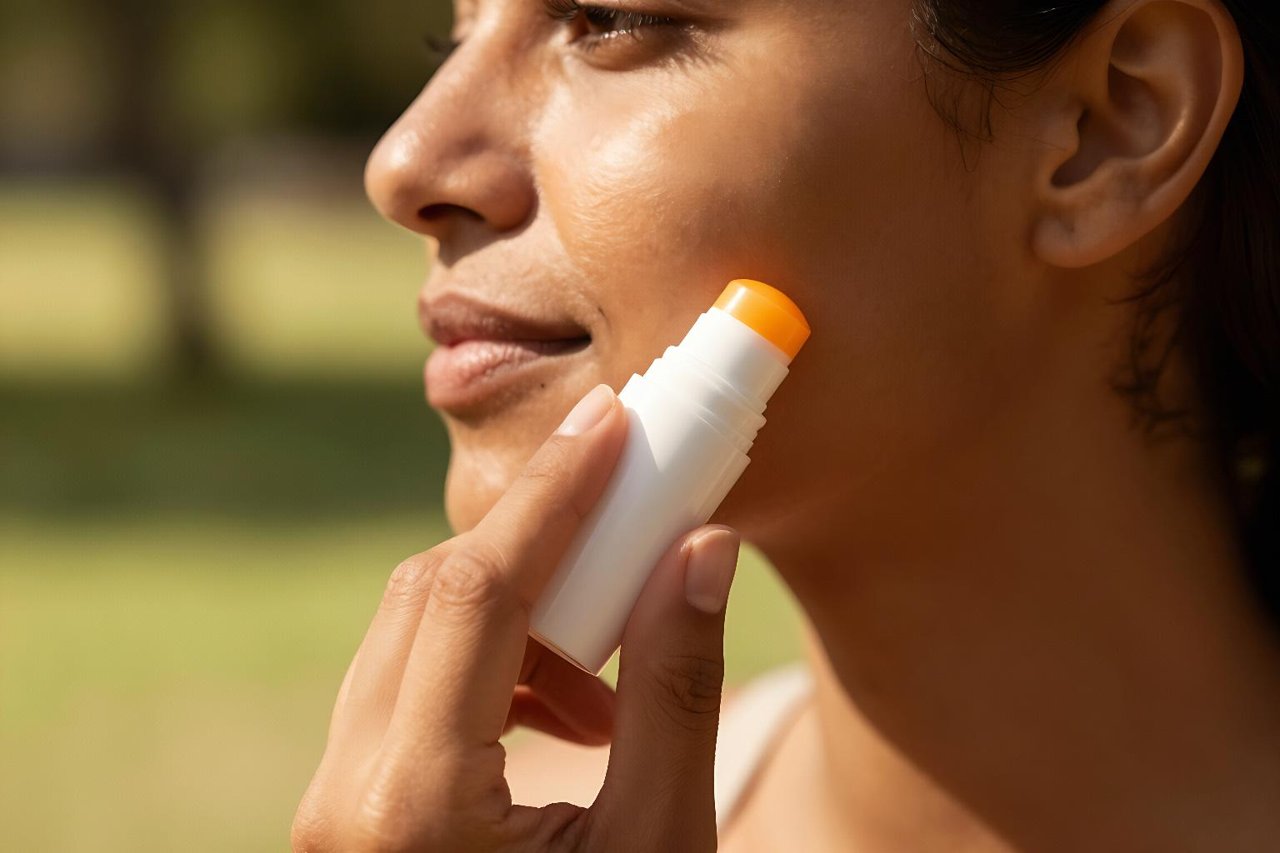
You don’t need to wash your face and rebuild your base at 1 p.m. Use a sunscreen stick, a fine mist, or a tinted SPF powder for touch-ups over makeup. Pat, don’t rub. A stick is handy around the hairline, nose, and ears. A mist needs several passes to reach a meaningful amount, so use it for top-ups rather than your first application.
If you’re going to be outdoors for hours, a powder or mist alone won’t cut it. Carry a small lotion or fluid and accept that you may need to redo the center of your face. On high-exposure days, a hat and sunglasses do more reliable work than a dusting of SPF powder.
For an ultra-light option that layers well, the Be Bodywise Ultra Light Sunscreen SPF50+ guide covers how to use a fluid formula without the white cast.
A realistic reapplication schedule
Here’s what a normal workday might look like for someone who commutes and eats lunch outside:
- 7:45 a.m.: Apply two finger-lengths to face and neck, plus ears and the back of your hands.
- 10:30 a.m.: If you’ve been in direct sun or beside a window, top up. Otherwise, wait.
- 12:30 p.m.: Reapply before lunch outdoors, especially on the nose, cheeks, and neck.
- 3:00 p.m.: Another top-up if you’re still getting sun through a window or heading out.
- 5:30 p.m.: Reapply before the commute home. Evening sun still tans and causes pigmentation.
If you’re at the beach or on a trek, compress that to every two hours, with extra applications after swimming or heavy sweating. Set a phone alarm. It sounds excessive until you realize how often “I’ll do it in a bit” turns into six hours.
Signs your sunscreen has stopped doing its job
You don’t need to wait for a sunburn. A sunburn means you got too much UV, not that you timed reapplication perfectly. Look for practical clues: your skin feels slick or gritty, the product has broken into a white or greasy film, your face has been wiped with a towel or tissue, or you can see tan lines developing. If you’re using actives like retinol, acids, or prescription pigmentation creams, your skin may be more sensitive, so stay consistent with the two-hour rule when outdoors.
Sunscreen isn’t the only habit that matters, but it’s the one you have to repeat. A single generous application at dawn won’t cover a lunchtime walk, a window seat, or an afternoon swim. Keep a stick in your bag, a lotion in your desk drawer, and a reminder on your phone. Then reapply like you mean it.


