
Table of Contents
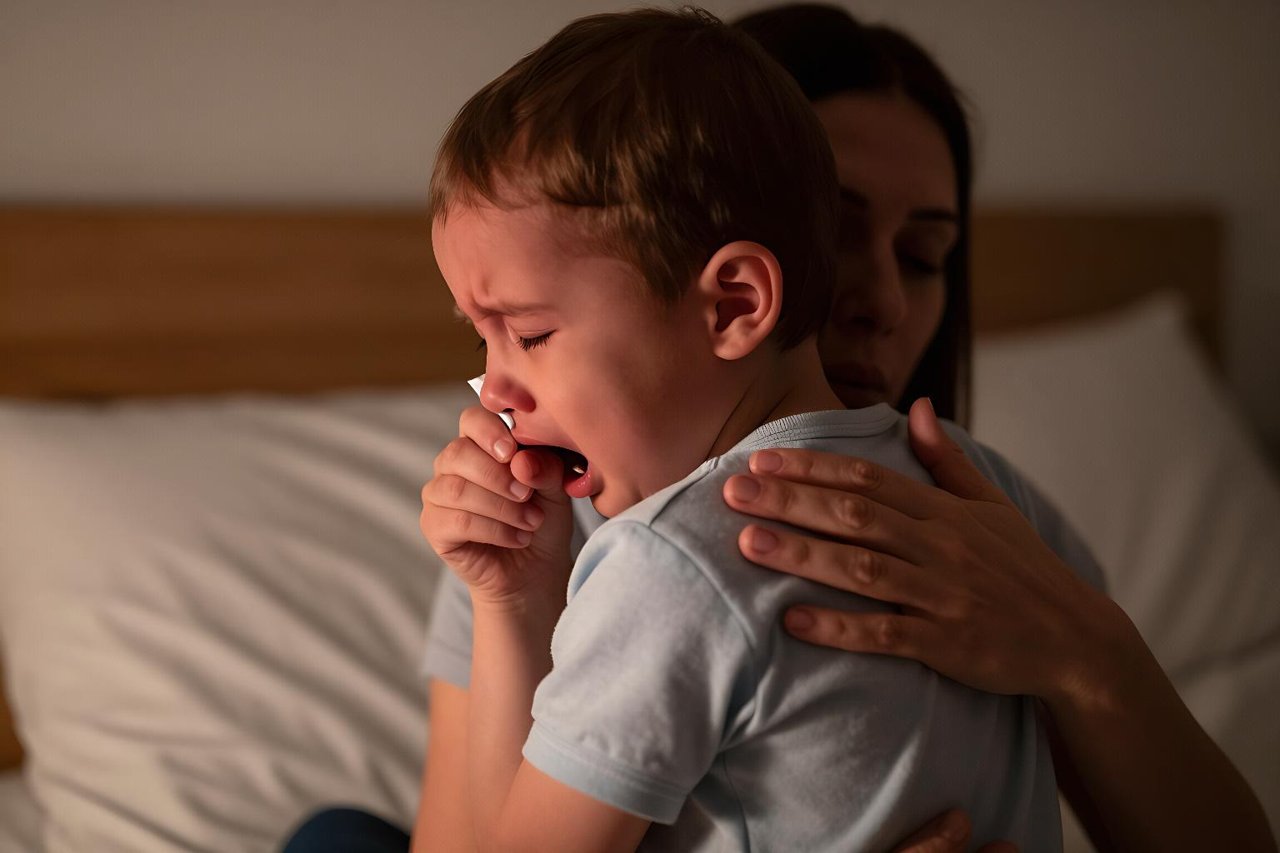
It usually starts around 2am. A cough you half-hear through the baby monitor, then a small voice calling for you. By morning there’s a runny nose, a low fever, and the question every parent eventually faces: is this just a cold, or something that needs a doctor tonight?
That question is harder than it sounds, because the most common respiratory infections in children share an enormous amount of ground. The same cough, the same snot, the same three-day stretch of nobody sleeping. What separates them is usually a handful of small details: the child’s age, how fast they’re breathing, the sound of the cough, and how the illness unfolds over 48 hours.
Here are the seven you’ll meet most often, in roughly the order you’re likely to encounter them.
Why young children catch so many of them
A child averages six to ten respiratory infections a year before starting school. A toddler in daycare can hit twelve without anything being wrong with them. More than 200 viruses cause the common cold alone, and a two-year-old has met maybe a dozen.

Their airways are small, too. A millimetre of swelling in an adult’s windpipe is a minor annoyance. In a six-month-old, the same swelling can narrow the airway by half. That’s how one virus gives a grown-up a scratchy throat and sends a baby to hospital with wheezing.
Some children do genuinely catch more than their share, and it’s worth knowing the real warning signs of an underlying immune deficiency rather than guessing. The same symptoms also overlap heavily with a long list of common childhood diseases, which is why a good paediatrician asks about rashes, ears and energy levels, not just the cough.
1. The common cold (rhinovirus and friends)
The baseline against which every other illness gets measured. Clear runny nose first, thicker and yellower by day three, sneezing, a low fever under 38.5°C, and a cough that often shows up after the nose has already been running for a day or two.
Most colds settle in seven to ten days, but the cough can drag on for three weeks. That lingering cough is normal and doesn’t mean the cold is getting worse. Antibiotics do nothing here, because the cause is viral.
2. RSV and bronchiolitis
Respiratory syncytial virus is the leading cause of infant hospitalisation in the first year of life, and nearly every child has had it by their second birthday. In an older child it looks like an ordinary cold. In a baby under twelve months it can drop into the small airways and cause bronchiolitis: wheezing, fast breathing, a tight little cough and poor feeding.
Watch the nappies and the bottles, not the cough. A baby taking half their usual feeds with no wet nappy for eight hours is dehydrated and needs to be seen. Breathing that pulls in the ribs or dips in the notch above the collarbone is a red flag at any age.
3. Influenza
Colds build. Flu arrives. A child who was fine at lunchtime can have a 39.5°C fever, aching limbs and a headache by dinner. They look flattened in a way that a cold rarely produces, and they usually want to lie still rather than play.
Children under two, and any child with asthma, heart disease or a weakened immune system, are the ones most likely to need antiviral treatment. Those medicines work best within 48 hours of the fever starting, so it’s worth calling the same day rather than waiting to see how it goes.
4. Croup
Croup has the most distinctive sound in this list: a harsh, seal-like barking cough, a hoarse voice, and often a noisy, high-pitched breath on the in-breath called stridor. It’s caused mostly by parainfluenza viruses and peaks between six months and three years.
Symptoms are famously worse at night, and a child can be perfectly cheerful by mid-morning. A single dose of oral dexamethasone, prescribed by a doctor, usually settles things within hours. Stridor that continues while the child is calm and resting is a reason to go to emergency, not to wait for morning.
5. Strep throat and tonsillitis
This one is bacterial, which changes the rules. It’s rare under three and common between five and fifteen. Expect a sudden sore throat, fever, swollen tonsils with white patches, tender glands in the neck, headache, and often stomach pain or vomiting in younger children.
The useful clue is what’s missing. A child with strep usually has no cough and no runny nose. If your child is coughing and streaming, it’s far more likely to be viral. A swab confirms it, and a full course of antibiotics matters because untreated strep carries a small but real risk of rheumatic fever. Our guide to common throat conditions and how to tell them apart goes deeper on the sore-throat differential.
6. Pneumonia
Pneumonia is the one where counting matters. A fever plus fast or laboured breathing is the classic pairing, and you can check the rate yourself by counting breaths for a full minute while the child is calm and resting.
- Under 2 months: more than 60 breaths per minute
- 2 to 12 months: more than 50 breaths per minute
- 1 to 5 years: more than 40 breaths per minute
Add chest indrawing, grunting, flaring nostrils, or a child who is drowsy and not interested in anything, and it’s a same-day assessment. Bacterial pneumonia is treatable with antibiotics and usually improves noticeably within 48 hours of starting them.
7. Whooping cough (pertussis)
It begins innocently enough, like a mild cold with a tickly cough. Then the cough changes. Fits of ten or fifteen rapid coughs in one breath, ending in a whoop, or in vomiting, or in a gasping pause. It’s worse at night and can run for six to ten weeks, which is why it’s nicknamed the hundred-day cough.
Babies under six months often never whoop at all. Instead they simply stop breathing for a few seconds, which is the most dangerous version of the illness. Vaccination during pregnancy is the single most effective way to protect a newborn before their own jabs begin.
The symptoms that mean you stop reading and call
Most of these infections are managed at home with patience. A few signs override that:
- Any fever in a baby under 3 months old
- Breathing that’s fast, noisy at rest, or pulls the ribs and neck in
- Bluish or grey lips, tongue or fingernails
- Pauses in breathing, or a baby who is hard to wake
- Refusing all fluids, or no wet nappy for 8 hours
- A rash that doesn’t fade when pressed
- A child who seems to improve, then gets significantly worse on day five or six
That last one matters. A secondary bacterial infection after a viral cold is a well-known pattern, and a turn for the worse mid-illness deserves a fresh look rather than reassurance.
What actually helps at home
Saline drops before feeds and bedtime loosen a blocked nose enough for a baby to drink and sleep. A cool-mist humidifier in a small bedroom makes the air less irritating overnight. Fluids in small, frequent amounts beat one big glass. Lying propped up slightly helps an older child cough less, though nothing should be added to a cot for a baby under one.
Honey works. Two to five millilitres before bed measurably reduces night coughing in children over twelve months, and it outperforms most over-the-counter cough syrups in trials. Never give it to a baby under one, because of the risk of infant botulism.
Skip the pharmacy shelves full of cough and cold medicines for children under six. Regulators have repeatedly found little benefit and real harm, including accidental overdoses when parents combine products containing the same ingredient. Aspirin is off-limits for children with a fever, and antibiotics won’t touch a virus no matter how long the cough lasts.
If you want to compare these against the versions adults get, our breakdown of common respiratory infections and how to tell them apart covers the same territory from a grown-up’s point of view. The viruses are often identical. The stakes for a two-month-old are not.


