
Table of Contents
Picture a plate at 7pm on a Wednesday. A pile of pasta, a couple of sausages, maybe a token slice of tomato on top. It’s not a bad meal, but it’s also not one that keeps you full until morning or nudges your weight in the direction you want.
Building a balanced plate is one of the few weight management skills that survives real life. No app, no counting, no weighing chicken breast on a Tuesday night when you’re already hungry. You just look at your plate and adjust.
Here’s how to do it properly, with the numbers that matter and the shortcuts that don’t.
The proportions that do most of the work
The classic template is simple: half the plate vegetables, a quarter protein, a quarter starchy carbohydrate, plus a small amount of fat for flavour and cooking. It’s a starting point, not a law of physics, but it works because it changes the calorie density of a meal without shrinking the volume of food you actually see.

Two practical details matter more than people expect.
- Plate size. Swap a 12-inch dinner plate for a 9-inch one. The same serving looks generous and you’ll serve yourself roughly 20% less without noticing. This is one of the most reliably reproduced findings in eating behaviour research.
- Serve from the kitchen. Bowls on the table get refilled. Bowls on the counter get forgotten.
The half-plate rule works because vegetables carry water and fibre, which means a big portion for very few calories. A whole courgette is about 30 calories. A hundred grams of broccoli is 34. You can eat a genuinely large plate of food and still land in a calorie deficit, which is the underlying mechanism behind any weight loss approach worth its salt.
Vegetables first, and make them the volume
Aim for two cupped handfuls at lunch and dinner, roughly 150 to 200g cooked. That sounds like a lot until you realise it’s one pepper and a handful of green beans.
Most people fail here because they treat vegetables as a side dish rather than the base of the meal. Flip that. Roast a tray of peppers, red onion and courgette on Sunday and you’ve removed the main obstacle for four dinners. Bagged salad, frozen peas, and pre-cut stir-fry mixes are all legitimate.
Fibre targets sit around 25 to 30g a day for most adults, and a half-plate habit gets you most of the way there. Higher fibre intake is consistently linked with better appetite control and lower body weight over time. It also feeds your gut bacteria, which is a nice bonus rather than the point.
Protein: the quarter most people short-change
This is where balanced plates usually fall apart. A slice of ham and a spoon of cheese is not a portion of protein. You’re looking for a palm-sized serving, roughly 25 to 35g of protein per meal.
For reference:
- 100g cooked chicken breast: about 31g protein
- Two large eggs: about 12g (add a third, or pair with Greek yoghurt)
- 170g plain Greek yoghurt: about 17g
- One cup of cooked lentils: about 18g
- 120g firm tofu: about 15g
- One tin of tuna, drained: about 25g
Protein does two useful things. It’s the most satiating macronutrient, so meals with a solid protein anchor keep hunger quieter for longer. And it protects lean muscle while you’re in a calorie deficit, which matters because muscle drives your resting energy expenditure. If you want the deeper reasoning on why this beats crash dieting, the smart strategies for losing weight that hold up long term are worth a read.
A rough daily target is 1.2 to 1.6g of protein per kilo of body weight, spread across three meals. That’s 90 to 120g for someone at 75kg.
Carbohydrates: fence them in, don’t ban them
A fist-sized portion of starch is your quarter plate. That’s roughly 40 to 60g of cooked rice or pasta, one medium potato, or two small slices of bread. Choose the least processed version you genuinely enjoy: potatoes with skin, wholemeal pasta, oats, barley, beans.
Cutting carbohydrates entirely tends to backfire for anyone who trains, sleeps badly, or simply likes toast. You get rebound cravings and a binge on Friday night. Keeping a measured portion at each meal is more sustainable, and the evidence on long-term adherence favours it. If you want the full picture on which dietary patterns actually produce results, this evidence-based weight loss diet guide covers the comparison properly.
One trick worth knowing: cook rice, pasta or potatoes, cool them in the fridge, then reheat. Cooling raises resistant starch content, which blunts the blood glucose spike a little. Small effect, no cost, easy habit.
Fat: tiny volume, big calorie bill
You need fat for flavour, vitamin absorption and sanity. You don’t need much. One to two thumb-sized portions per meal is the visual cue: a tablespoon of olive oil, a quarter of an avocado, a small handful of nuts, 30g of cheese.
Watch the hidden stuff. A tablespoon of oil is around 120 calories. Nuts are 170 to 190 calories per 30g. Neither is forbidden, but a generous pour of dressing can quietly add 300 calories to a salad that was supposed to be the light option.
Eat the components in the right order
This sounds fussy until you try it. Start with the vegetables, move to the protein and fat, and eat the starch last. Fibre and protein slow gastric emptying, so the carbohydrate lands in your gut more gradually and the glucose response is flatter.
In practice it means a few bites of salad before the potatoes, or the chicken before the rice. It costs nothing and people report steadier energy and fewer post-meal crashes. Smaller, slower blood sugar swings also mean fewer of those urgent sweet cravings an hour after eating. The habits that make this kind of change stick are covered in weight loss that actually lasts.
Drink water with the meal rather than juice or soft drinks. A 250ml glass of orange juice is roughly 110 calories and barely touches hunger.
Three plates you can actually assemble on a weeknight
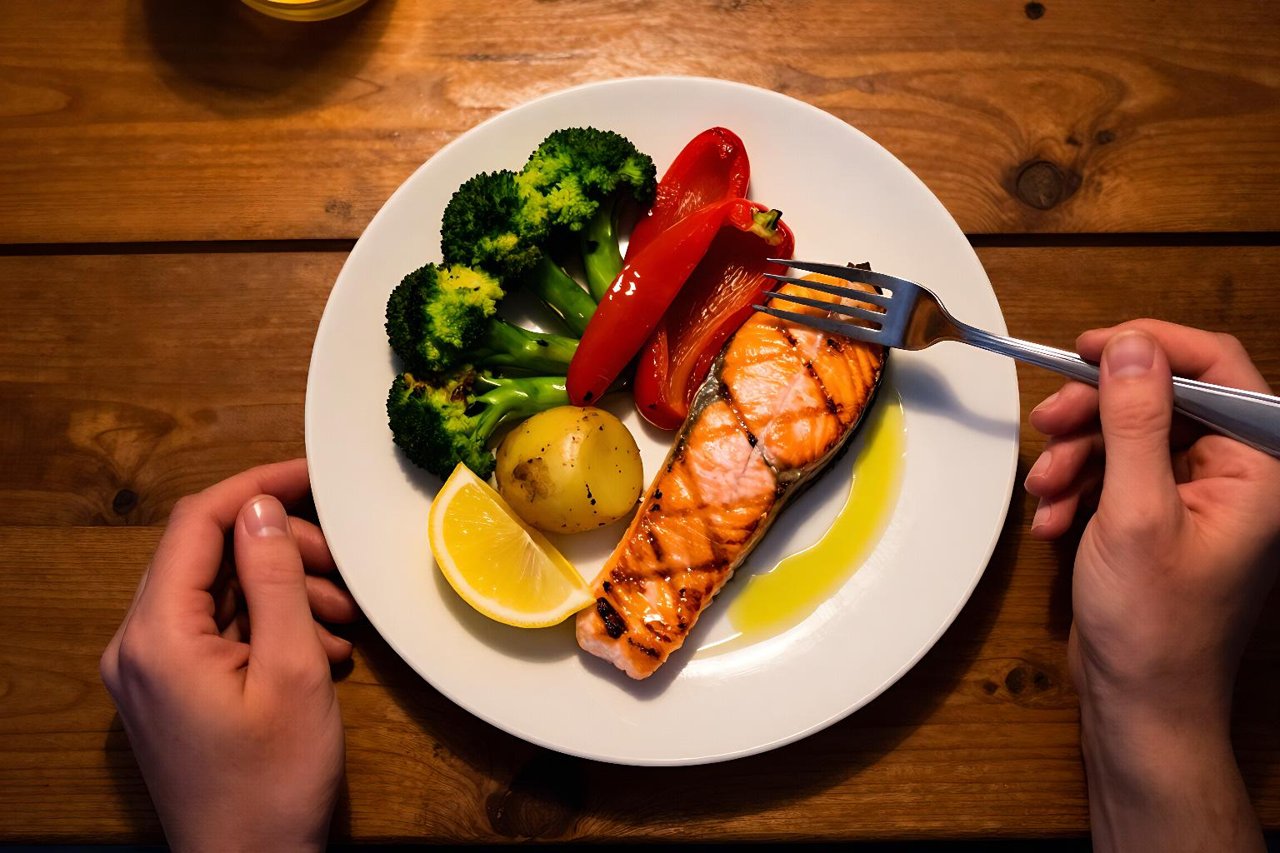
- Salmon and potatoes. Half a plate of roasted broccoli and green beans, a 140g salmon fillet, two small boiled potatoes, a teaspoon of oil and lemon. Roughly 500 calories, 35g protein.
- Chicken traybake. Peppers, red onion and courgette roasted in a tablespoon of oil, a chicken thigh and drumstick, a fist of couscous. Around 550 calories.
- Vegetarian bowl. Lentils, spinach and roasted carrots over half a plate, 120g halloumi or tofu, a spoon of yoghurt, chilli and cumin. Protein lands near 30g.
Notice the pattern: one big vegetable volume, one clear protein anchor, one controlled starch, one small fat. Once you’ve built ten meals like this, you stop needing to think.
Adjusting the plate for medication and appetite changes
If you’re on a GLP-1 medication such as semaglutide or tirzepatide, appetite drops fast and the risk shifts from overeating to under-eating protein and fibre. Front-load protein at the start of the meal while you still feel like eating, and keep portions smaller but more frequent. These habit-building tips for a sustainable GLP-1 journey go into the practical detail.
Some diabetes medications also affect weight and appetite, sometimes in opposite directions, so portion strategy needs to match the drug. There’s a clear breakdown in this guide to diabetes medications and weight loss if that’s part of your situation.
The stuff around the plate that quietly matters
Sleep under six hours raises ghrelin and lowers leptin, which makes a balanced plate much harder to stick to the next day. Strength training twice a week protects muscle and improves how your body partitions calories. And the ten-minute rule works: after finishing your plate, wait ten minutes before deciding on seconds. Hunger takes about that long to register.
Supplements, meanwhile, are rarely the missing piece. Most do very little on their own, and it’s worth knowing which ones have any evidence at all — this review of weight loss supplements for women is refreshingly blunt about it.
Eating out without abandoning the template
Restaurant portions are built for perceived value, not for your goals. Order a starter of vegetables or a side salad. Choose the grilled or roasted protein over the fried one and ask for the sauce on the side. If the pasta dish is enormous, eat half and take the rest home; nobody in the kitchen is offended.
Shared plates work well too. Order one starch between two people and two vegetable dishes, then split the protein. You still get the full experience of the meal and the plate proportions land roughly where they should. That’s the whole point of this approach: it isn’t a diet you go on and off, it’s a way of looking at a plate that keeps working whether you’re at your own table or someone else’s.


