
Table of Contents
Thirty-eight Cup Series points races. Thirty-six weekends from mid-February to early November. Layer in qualifying, practice, the Truck and Xfinity schedules running underneath, plus a couple of exhibition events, and the NASCAR schedule stops looking like a list of dates and starts looking like a logistics problem.
It’s a solvable one, though. What follows is the process I’d use starting from scratch: how to pull the real calendar, how to decide which races earn a live Sunday, and how to keep the whole thing from quietly eating your summer.
Step 1: Start With the Real Calendar, Not a Screenshot
NASCAR typically publishes the next season’s slate several months ahead of time, and the dates move. A track that hosted in April one year can land in March the next. Start times and TV networks get locked in later still, sometimes only weeks before the race.
That “TBA” next to a start time in January matters more than it looks. A 3 p.m. ET green flag and a 7 p.m. ET green flag are completely different evenings for anyone with a Saturday shift or a kid’s soccer game.

Bookmark two sources: the official schedule page and the individual track’s website. Tracks announce local details like gate times, parking lots, and autograph sessions that never make it into the national listing. If you want the broad shape of it first, this breakdown of how the Cup Series season works, its key dates, and how to watch is a solid primer before you start marking your own.
Step 2: Chop the Season Into Blocks
A 38-race year is too big to plan in one sitting. Six blocks is about right:
- Daytona 500 week (mid-February). Duel qualifying races on Thursday, the 500 on Sunday. The season effectively starts here.
- The spring swing (March to mid-April). Phoenix, Las Vegas, a road course or two, with Talladega tucked in.
- The 600 block (late May). The Coca-Cola 600 on Memorial Day weekend, the longest race on the calendar at 600 miles.
- Summer (June to August). Night races, road courses, and the regular-season finale at Daytona in late August.
- Playoffs (September to early November). Ten races, three elimination rounds.
- Phoenix finale (November). Championship weekend.
Blocking it this way lets you plan around the parts you care about instead of trying to hold 38 dates in your head.
Step 3: Sort Every Race Into Three Buckets
You will not watch them all live. Nobody with a normal life does. Decide up front.
Bucket one: watch live. Superspeedways are the obvious picks. Daytona and Talladega regularly produce the kind of chaos that spoils instantly if you glance at your phone first. Short tracks and road courses reward live viewing too, because the strategy calls (two tires, fuel only, staying out) are half the entertainment.
Bucket two: record and watch on delay. Most intermediate races fit here. A three-hour broadcast compresses to roughly 40 minutes once you skip commercials and cautions.
Bucket three: highlights only. Be honest about which ones you’re skipping. Twelve minutes on YouTube Monday morning is a perfectly good way to keep up with a race you never intended to sit through.
Time is the real constraint. A live race is a three-hour commitment, and thirty-eight of them is more than 110 hours before practice even enters the picture. Some fans have that room. If full-time work is already behind you, whether by choice or because a health issue or disability pushed you into early retirement, Friday qualifying and Saturday practice become part of the weekend instead of something you catch up on later.
Step 4: Convert Every Start Time Once, in Advance
This is the step people skip and then regret. NASCAR lists times in Eastern. A 3 p.m. ET green flag is noon on the West Coast, which is civilised. The Phoenix finale is trickier: Arizona doesn’t observe daylight saving, so a 3 p.m. ET start in November is 1 p.m. local, and the sun sits low behind the grandstands by the final stage.
Night races flip the problem entirely. The Coca-Cola 600 usually goes green around 6 p.m. ET and finishes close to 11 p.m., which is a 4 a.m. finish if you’re watching from the UK.
Sunday afternoons get crowded, too. The 600 shares Memorial Day weekend with the final round of the Charles Schwab Challenge, and in a two-screen household a guide to streaming the PGA Tour from anywhere saves an argument.
Step 5: Have a Rain Plan Before You Need One
Weather postponements are normal, not exceptional. The Daytona 500 has been pushed to Monday several times in the past decade. Short-track races get called early when the surface won’t dry. Road courses lose hours to lightning holds.
The practical version: follow the track’s own social account, not just the national ones, and switch on race-day notifications. Keep Monday evening loose if there’s a race you genuinely care about. If you’re attending in person, read the track’s rain policy before you buy, because “no re-entry, no refunds” is real at plenty of facilities.
Step 6: If You’re Going in Person, Book the Boring Stuff First
Tickets are the easy part. Parking, camping spots, and hotel rooms near the track are what disappear, and they disappear early. For a Bristol night race or a Talladega weekend, nearby hotels fill up and start enforcing two-night minimums six to nine months out.
Three things worth budgeting for:
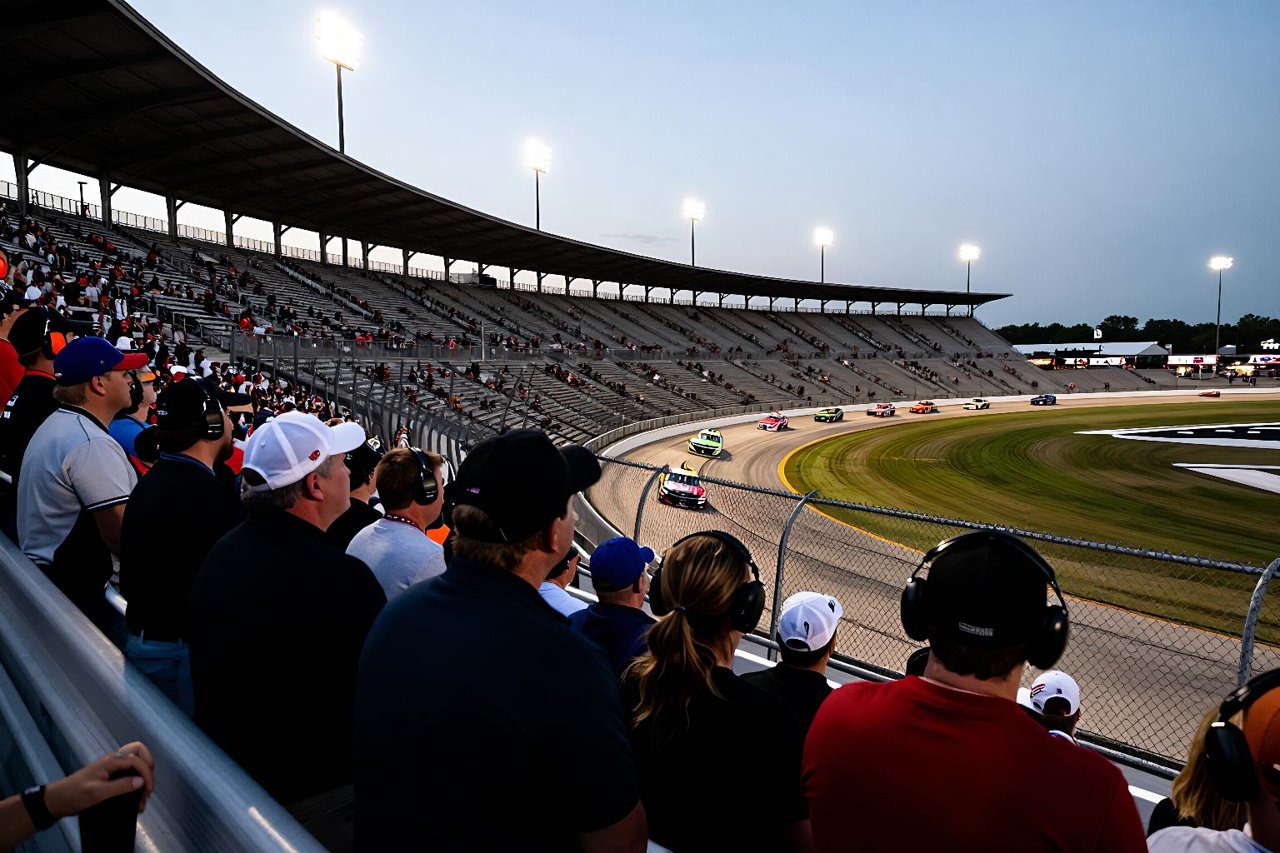
- Ear protection. Non-negotiable, especially with kids in tow. Foam plugs cost a few dollars; over-ear muffs are better for small ears.
- A scanner or headset. Weekend rentals run roughly $40 to $60 and let you hear team radio, which changes how much of the race you actually understand.
- Comfortable shoes. Infield hills are steeper than they look on television, and a full Cup weekend involves a lot of walking.
Step 7: Follow the Cut Lines, Not Just the Dates
The last ten races are where the standings genuinely move. Sixteen drivers start the playoffs, four get eliminated in each of the first three rounds, and a Championship 4 lands at Phoenix.
The elimination weekends are the ones to circle. Bristol closes the Round of 16, the Charlotte Roval closes the Round of 12, and Martinsville closes the Round of 8. Those three produce more desperation, more bump-and-run moves, and more genuine surprises than anything in the regular season. If you’re only picking a handful of live races for the back half of the year, start there.
Step 8: Put It All in One Calendar and Set Two Alerts
Two recurring reminders cover almost everything. The first fires 30 minutes before green flag on the days you’ve flagged as must-watch. The second fires Friday afternoon during playoff weekends, so you know qualifying is happening and can catch the highlights.
Add a shared calendar if more than one person in the house cares. It sounds fussy until the third time somebody schedules a family lunch over an elimination race.
One last dose of realism: the schedule will change on you. Races move for weather, TV windows shift, and next season’s calendar always arrives with a few surprises baked in. Treat your plan as a draft and revisit it after the 600, when you’ll know exactly which buckets you stuck to and which ones you abandoned in week three. The people who get the most out of a 38-race season aren’t the ones who watch everything. They’re the ones who decided in February what mattered and then protected those weekends.


