
Table of Contents
A ten-day trip to Portugal fits comfortably in a 40-litre carry-on. A two-night wedding ninety minutes from home somehow fills a full-size suitcase. The difference isn’t the length of the trip. It’s whether you packed from a system or from anxiety.
Packing is a skill you can learn once and reuse for the rest of your life. It has almost nothing to do with buying clever organizers and everything to do with asking better questions before anything touches the bed.
Start With the Trip, Not the Suitcase
Before you pull a single item out of the wardrobe, answer four things: what’s the weather range, will I have access to laundry, what’s the dressiest thing I’ll do, and how will I move my bags between places?
That last one matters more than people expect. Cobblestones in Lisbon, four flights of stairs in a Paris walk-up, a night train in Vietnam, a budget airline with a 7kg cabin limit. The bag you can’t carry up three flights stops being a bargain fast. Getting the logistics sorted early is the same logic that makes planning a trip from scratch work: decide the constraints first, then build around them.

On weather, check the historical averages for your dates rather than trusting a ten-day forecast. Anything past day five is closer to a rumour than a prediction.
Pack a Capsule, Not a Set of Outfits
The classic overpacking mistake is planning one outfit per day, then adding “options.” Instead, pick two base colours plus one accent. Every top should work with every bottom. If a piece only works in one combination, it stays home.
For a week with laundry access, this usually looks like:
- Four tops in a mix of short and long sleeve
- Two bottoms, one of which can pass at a decent restaurant
- One warm mid-layer, one rain shell
- One dressier item if the trip needs it
- Seven days of underwear and socks, or four if you’re doing a wash
No laundry at all? Add three tops and call it done. Nobody on the trip will remember that you wore the same navy trousers twice.
The three-shoe limit
Shoes are the heaviest thing you’ll pack per use. Cap it at three: a broken-in walking shoe, something presentable for evenings, and a flat packable sandal or slip-on if the climate calls for it. Wear the bulkiest pair on travel day.
Lay Everything Out, Then Remove a Third
Put every item on the bed. Now look at it honestly and take out roughly a third. This sounds dramatic until you’ve done it a few times and realised you never missed anything.
The test for each item is simple: if you hesitate for more than two seconds, it’s a no. Hesitation is the sound of packing for a version of the trip you’re not actually taking, like the gym kit for the workout you’ll skip or the heels for the dinner you’ll cancel.
Then weigh the bag on a bathroom scale. Many carriers cap cabin bags at 7kg, and gate fees for an overweight carry-on can cost more than the flight tax. If you’re flying a budget airline, treat bag rules as part of your budget rather than an afterthought, the same way you’d approach saving money on travel without making the trip worse.
Roll, Cube, and Use the Dead Space
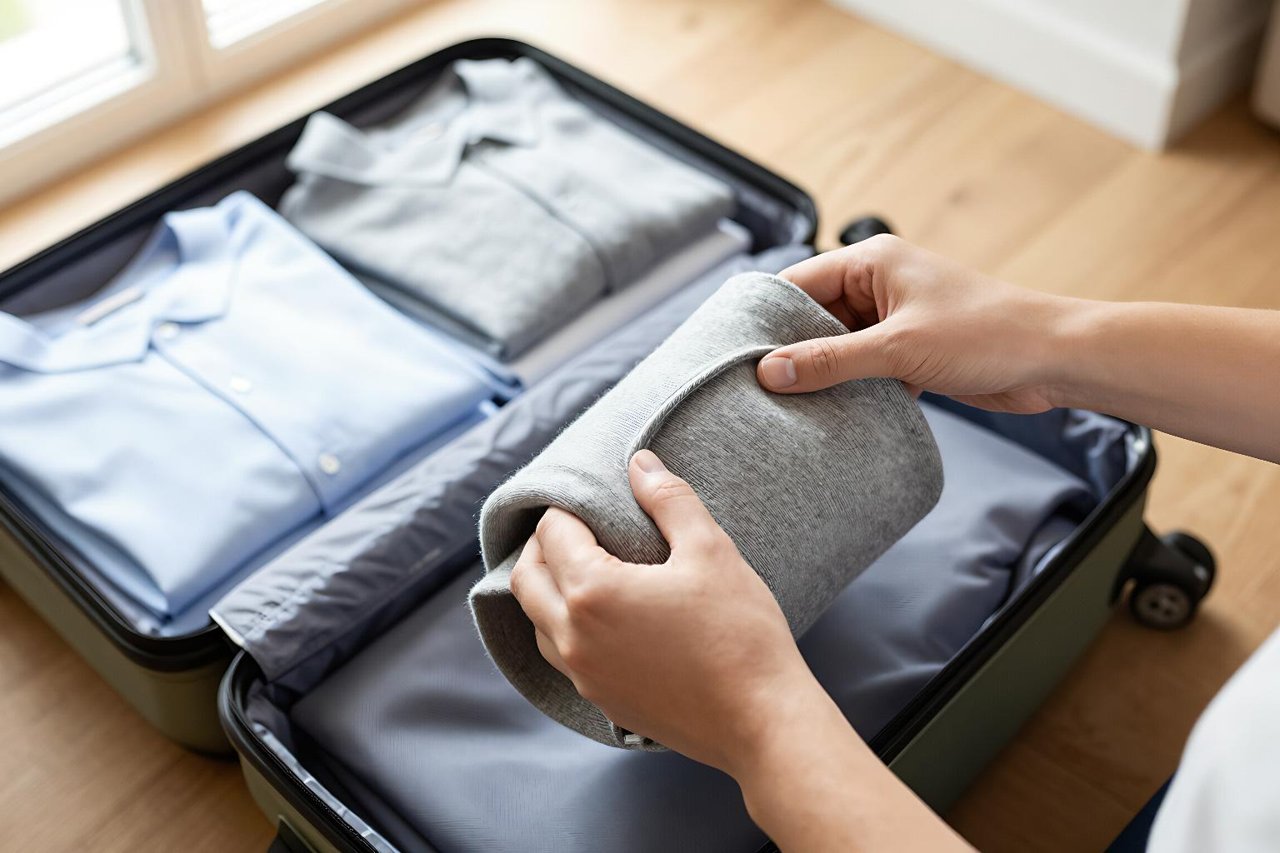
Roll soft items. Fold anything with a collar or a crease flat, ideally on top. Packing cubes work best sorted by category, not by day, so you’re not unpacking three cubes to find a T-shirt.
A few details that buy real space:
- Stuff socks and chargers inside shoes
- Slide belts and cables around the edge of the bag
- Wear your heaviest layer on the plane, even if it’s warm where you land
- Put anything liquid in a sealed bag near the top for security checks
Decant Toiletries, Don’t Duplicate Them
Buy 100ml refillable bottles once and keep them filled. Solid shampoo bars and bar soap save your entire liquid allowance, which matters if you’re travelling carry-on only. Sunscreen, insect repellent, and anything heavy is cheaper and easier to buy at the destination than to fly across an ocean.
The best trick here is a permanently packed toiletry bag. Duplicate your toothbrush, deodorant, razor, and basic meds, and leave them in the bag between trips. You never pack toiletries again, and you never have the 11pm panic about whether you own a spare contact lens case.
Let Your Personal Item Cover the First 24 Hours
Checked bags get delayed. Not often, but often enough that you should plan for it. Your underseat bag should carry one full change of clothes, medications, chargers, your documents, and a snack.
If the airline loses your suitcase and you can shower, change, and sleep comfortably on night one, a stressful situation becomes an inconvenience. That’s the entire goal.
Pack for the Trip You’re Actually Taking
Cold weather
Layers beat bulk. A thin merino base layer, a mid-layer fleece, and one proper coat worn on travel day will handle most European winters. Skip the thick jumper you can only wear once and bring two thin ones you can stack.
Beach and warm climates
Two swimsuits so one can dry while you wear the other. A quick-dry towel. Reef-safe sunscreen if you’re snorkelling. Everything else is optional, including half the clothes you just laid out.
Weddings, work trips, and all-inclusive resorts
For a wedding, wear or carry the jacket and steam the creases out by hanging it in a hot shower. For resorts, check what’s actually provided before you pack towels, a hairdryer, or snorkel gear. That detail is worth checking at booking time, and a good first-timer’s guide to booking vacation packages will tell you what’s typically included. If you’re choosing between an all-inclusive and building the trip yourself, the comparison of all-inclusive, flight-and-hotel, guided tours, and DIY travel changes what belongs in your bag almost entirely.
The Night-Before Routine
Leave the actual packing to the day before, not the hour before. Run through this in fifteen minutes and you’ll sleep properly:
- Passport, visas, and a photo of each on your phone
- Chargers, power adapter, and a battery pack charged to full
- Liquids bag at the top of the cabin bag
- Empty water bottle to fill after security
- Luggage tag with your phone number, not your home address
- Bag weighed one last time
Leave About 20% of the Space Empty
A bag packed to breaking point is harder to close, harder to search at security, and impossible to add to. That spare fifth is for the thing you buy on day four, the dirty laundry you’d rather not mix with clean clothes, and the fact that repacking at 5am in a hostel dorm goes much faster when the zip isn’t fighting you.
Somewhere around your third trip using this approach, something shifts. You stop packing for hypothetical scenarios and start packing for the trip in front of you. The bag gets lighter, the airport becomes less of an obstacle course, and you can take the stairs instead of waiting for the lift with a suitcase that weighs as much as a small child. That’s the real payoff. Not a perfect packing list, but a bag you never resent carrying.


