
Table of Contents
It’s almost never the expensive chew toy you bought. It’s the remote control, the corner of the rug, the leg of a kitchen chair that survived three house moves. If you’re trying to work out how to stop a dog from chewing everything, there’s no single trick that fixes it. You have to manage the house, give the dog something better to do, and understand what the chewing is doing for them in the first place.
Work Out the Reason Before You Do Anything Else
Chewing is normal canine behaviour. Dogs explore with their mouths, relieve tension with their jaws, and get real satisfaction from tearing something apart. A dog chewing is not a dog being spiteful. They are not thinking about your new trainers at all.
That said, the reason behind the habit changes what you should do about it. There are four usual suspects.
Teething, roughly three to seven months
Puppies start losing their baby teeth at around three or four months and have a full adult set by seven or eight. During that window the gums are sore and swollen, and gnawing on something firm genuinely eases the ache. A washcloth soaked in water, twisted into a rope, and frozen works better than most shop-bought puppy chews.

Boredom and unspent energy
Adolescent dogs between eight months and two years are the ones most often blamed for destroyed skirting boards. They need far more physical and mental output than most owners expect. A dog who has been alone in the house for eight hours and had a ten-minute walk around the block will find something to do, and your furniture is conveniently located.
Stress and being left alone
If the damage clusters around doorways, window sills, or crate bars, that’s often not boredom but distress. Dogs with separation-related problems chew to self-soothe, and they usually also drool, pace, and struggle to settle. Look at the timing: does it only happen within the first half hour of you leaving?
Because it works
A sock on the floor is a free toy. If you grab at it, chase the dog, or laugh, the game gets better. Chewing a stolen slipper becomes a reliable way of getting your full attention, even when that attention sounds like shouting.
Anyone who has raised a puppy knows this pattern intimately, and the diary of a first month with Stola captures how quickly a small dog can turn a tidy house into a chew-toy crime scene.
Rule Out Discomfort and Diet Problems
Most chewing is behavioural, but not all of it. Dental pain, a loose tooth, or gum disease can make a dog gnaw constantly, so a vet check is worth it if a settled adult dog suddenly starts chewing. Some dogs also swallow non-food items like fabric, plastic, or stones, which is called pica and deserves a proper conversation with your vet.
Itching is worth mentioning too. A dog who chews their own paws or flanks isn’t usually bored, they’re uncomfortable. If that sounds familiar, read up on the best dog food for allergies and look at what’s in the bowl before you assume it’s purely a behaviour problem.
Make the House Boring Before You Train Anything
Training takes weeks. Blocking access takes an afternoon. Do the second one first.
- Move shoes, slippers, and anything leather into a closed cupboard, not an open rack.
- Run TV and phone cables through rigid plastic conduit. A chewed laptop charger is a fire risk, not just an expense.
- Put a baby gate on the kitchen door. Kitchens have bins, food, and cupboard handles shaped like chew toys.
- Swap open bins for lidded ones with a clip. The kitchen bin is the number one target in most homes.
- Set up a crate or exercise pen in a quiet corner and use it whenever you can’t watch the dog.
- Close off rooms you aren’t using. Full run of the house is something a dog earns over months, not something they get on day one.
If your dog has garden access, watch what they find out there as well. Knowing where they are when they slip behind the shed makes supervision far easier, and this step-by-step guide to setting up a GPS puppy collar walks through the fitting and charging properly.
Give Them Chews That Actually Last
A multipack of cheap plush toys will be in pieces before your coffee goes cold. Match the chew to the jaw doing the work. Frozen stuffed rubber toys, bully sticks, pressed rawhide alternatives, and split antlers all outlast anything soft, though antlers are hard enough to crack a tooth in an enthusiastic chewer, so pick the right size and supervise.
Bully sticks are brilliant but calorific. A six-inch stick can be a serious chunk of a small dog’s daily calories, so don’t hand out three a day. Take away anything worn down to a stub small enough to swallow.
Buying enough chews to keep a determined dog interested gets expensive, which is why a bit of shopping strategy helps. This trick that can save up to 50% on dog essentials covers how to cut that bill without buying junk.
Rotate them so they feel new
Dogs get bored of a toy that’s been on the floor for a month, then go wild for it after two weeks in a cupboard. Split your chews into three piles, keep two out of sight, and swap every few days.
If you have more than one dog, hand out chews in separate spaces. A high-value chew is the most common trigger for squabbles, and the advice on keeping a multi-dog household calm covers this in detail.
Exercise Does More Than Any Chew Toy
Aim for 45 to 60 minutes of real activity a day for most adolescent dogs, split into two sessions. Add 15 minutes of scent work and you’ll tire a dog out more effectively than an extra mile of pavement walking. Scatter their kibble in the grass instead of using a bowl, stuff a rubber toy with wet food and freeze it, or hide treats around the living room and let them hunt.
A mentally tired dog settles. A physically tired dog with nothing to think about starts looking at the sofa legs.
Teach a Trade, Not a Chase
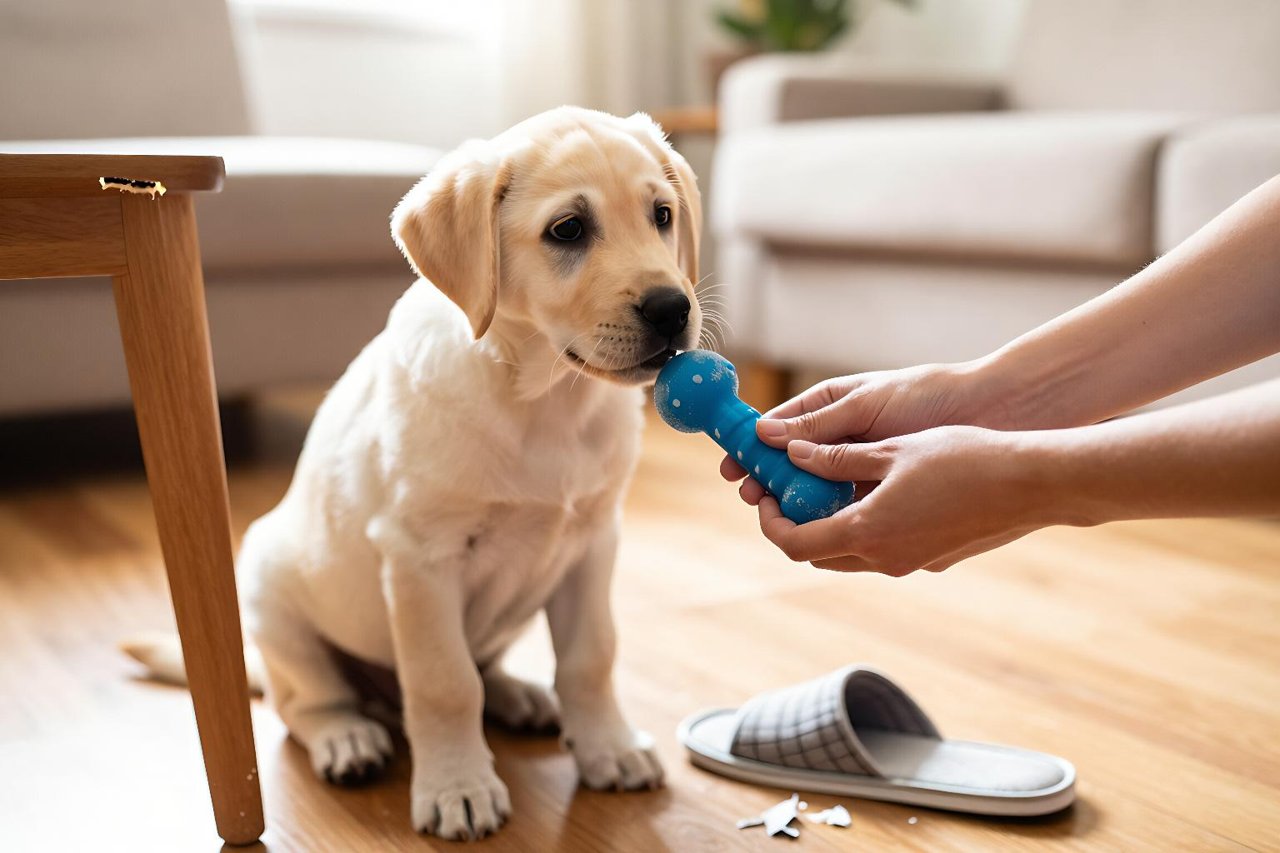
When you catch your dog with something forbidden, resist the urge to grab. Chase is a reward. Instead, say “leave it” in a calm voice, put a genuinely better chew on the floor a metre away, and reward the moment they drop the stolen item.
Practise “leave it” separately with something low value, like a plain biscuit on the floor, and build up. Reward your dog every time they choose one of their own toys without being asked. Chewing the right thing should always pay better than chewing the wrong one.
Habits That Quietly Make Chewing Worse
Punishing after the fact. Dogs can’t connect a telling-off to something they did two hours earlier. They simply learn that you become unpredictable when you walk through the door.
Handing down old shoes. A dog cannot tell the difference between a worn-out trainer and the new pair you bought on Saturday.
Relying on bitter sprays. They deter some dogs from some surfaces, but the chewing usually just moves to a different target, and the spray teaches nothing.
Long crate sessions. A crate used for nine hours a day stops being a safe den and becomes another source of stress.
When It’s Time to Bring In Help
If the damage continues after several weeks of consistent management and enrichment, or your dog is hurting themselves with raw paws, chipped teeth, or bleeding gums, get a vet check first and then a qualified behaviourist. Separation-related distress usually needs a structured desensitisation plan, and in some cases medication alongside training is the difference between progress and months of frustration.
Practical support counts too. A midday dog walker, a neighbour who pops in at lunch, or two days a week at daycare can break up the stretch of alone time that’s driving the behaviour.
Your First Two Weeks: A Practical Plan
Day one is a walk around the house with a bin bag: pick up every shoe, cable, and loose item your dog has ever shown interest in. Set up the crate or pen in the same sweep, and put a bed and a water bowl in it so it looks like somewhere worth being.
Days two and three, buy four durable chews of different textures and start a rotation. Measure your dog’s exercise honestly rather than from memory. Most owners overestimate by about half.
By the end of week one you should be supervising every waking hour, either in the same room as your dog or with them safely in the pen. That sounds exhausting, and it is, but it’s temporary, and it’s what stops the habit forming in the first place.
Week two, start short daily “leave it” sessions and scatter-feed at least one meal. Track the damage on a calendar. A dog that has gone from chewing six things a week to one is winning, and the trend line matters more than any single bad afternoon.


