
Table of Contents
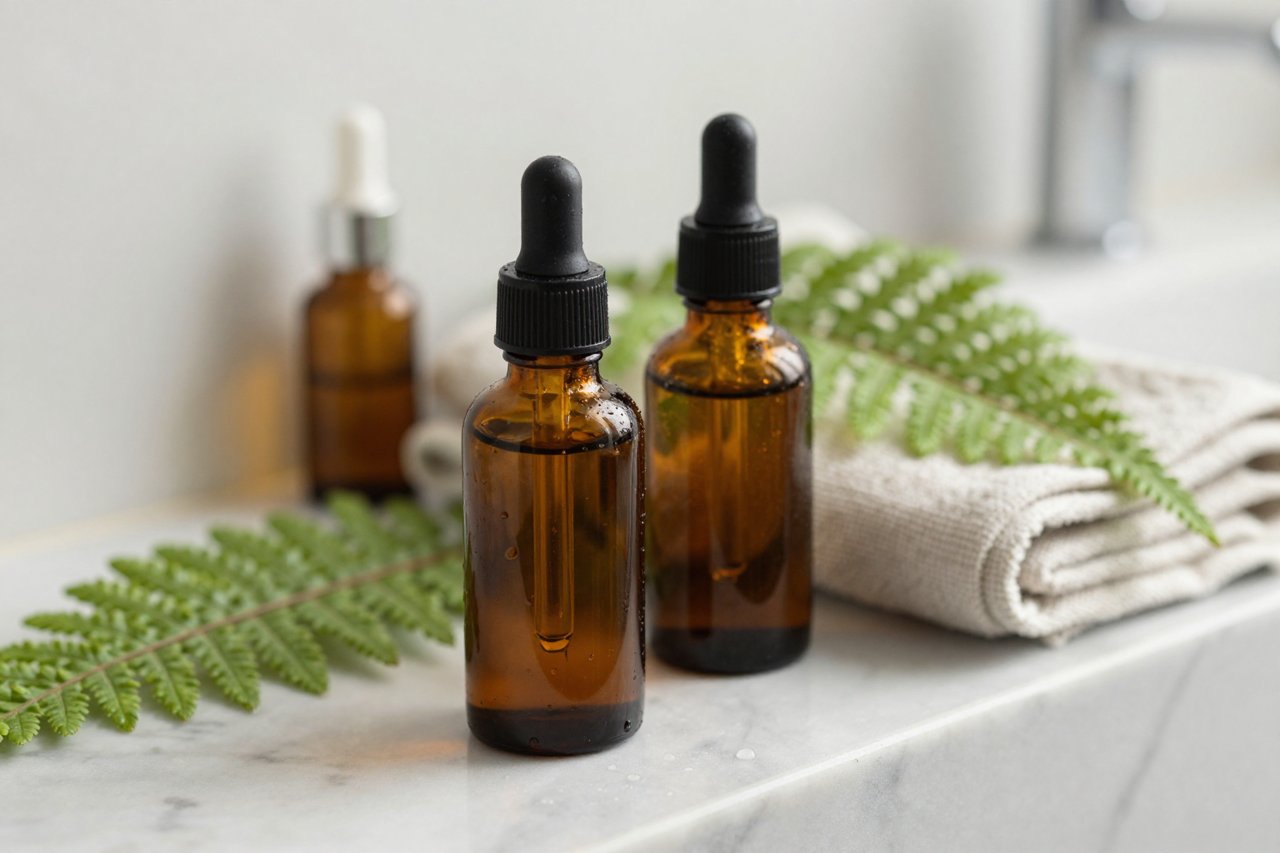
Two amber bottles sit on the bathroom shelf. One says 10% niacinamide, the other 15% vitamin C. Both promise brighter, calmer, more even skin, and both have the clinical studies to back up at least part of that promise. So which one earns the prime spot next to your moisturiser, and which one is quietly doing nothing for you?
The honest answer is that they solve different problems. Niacinamide is the steady, low-drama workhorse; vitamin C is the high-performance ingredient that demands more from you. Here’s how to tell them apart and decide what your face actually needs.
What niacinamide actually does
Niacinamide is a water-soluble form of vitamin B3. It’s stable, it plays nicely with almost every other ingredient, and it works at surprisingly low concentrations. Most of the research sits between 2% and 5%. Going up to 10% doesn’t buy you extra results, but it does increase the odds of stinging or flushing, which is why so many people blame the ingredient when the real culprit was the percentage.
What it does well:

- Oil control. A 2% niacinamide formula measurably reduces sebum output in oily skin, which is why it turns up in so many products aimed at shine and enlarged-looking pores.
- Barrier support. It boosts ceramide production, so skin holds water better. That’s useful if you’ve overdone acids or retinoids and your face feels tight and reactive.
- Fading dark marks. Niacinamide blocks the transfer of pigment from melanocytes to surface skin cells. A 5% formula applied twice daily can visibly soften post-acne marks over eight weeks.
- Inflammation. In one trial, 4% niacinamide gel performed comparably to 1% clindamycin gel for inflammatory acne over eight weeks.
If you want a fuller picture of how it slots into a longer-term plan, this guide to anti-aging skincare that actually works covers the ingredients worth building around.
What vitamin C brings to the table
Vitamin C is an antioxidant first and a brightener second. In its pure form, L-ascorbic acid, it neutralises the free radicals generated by UV exposure and pollution, and it’s a required cofactor for collagen synthesis. That second job is why it appears in so many firmness and fine-line formulas.
The catch is stability. L-ascorbic acid needs a concentration of roughly 10-20% and a pH below 3.5 to penetrate skin, which makes it finicky. Light, heat and air destroy it. A serum that’s turned deep orange or brown in the bottle has oxidised and lost most of its punch.
Derivatives like sodium ascorbyl phosphate and tetrahexyldecyl ascorbate are gentler and more shelf-stable, but the evidence isn’t as strong. If you want to compare formats before spending, this breakdown of vitamin C serum for brighter skin goes into the different types and what each is best at.
Can you use niacinamide and vitamin C together?
You may have read that they cancel each other out. That advice is mostly outdated.
The myth traces back to old lab work where ascorbic acid and niacinamide were heated together, forming nicotinic acid, which can cause flushing. Real serums sitting at room temperature don’t do this. Plenty of modern formulas combine both ingredients in one bottle, and they work fine.
The genuine issue is pH. L-ascorbic acid wants an acidic environment; niacinamide prefers something closer to neutral. Layering a low-pH vitamin C serum directly under a niacinamide product can convert a small amount of the niacinamide into that flushing compound. Most people won’t notice. If you have sensitive skin, the simple fix is a two-minute wait between layers, or splitting them between morning and night.
The split-routine approach
Use vitamin C in the morning, under sunscreen, where its antioxidant effect supports your UV protection. Use niacinamide at night, after cleansing and before moisturiser. You get both benefits, zero conflict, and a routine that’s easy to remember. If you’re starting from scratch, the step-by-step structure in this guide to building a skincare routine that actually works makes the order clear.
Head to head: which one wins for your concern
Neither ingredient is universally better. Match them to what’s bothering you.
- Oily skin and visible pores: niacinamide, comfortably. It reduces sebum without stripping.
- Active breakouts: niacinamide helps with inflammation and oil. For a full comparison of the options, see this breakdown of acne treatments from benzoyl peroxide to azelaic acid, since niacinamide is supportive rather than a standalone cure.
- Post-acne dark marks: both work, through different pathways. Niacinamide stops new pigment forming; vitamin C fades what’s already there. Using one in the morning and one at night is a reasonable strategy.
- Dullness and uneven tone: vitamin C has the edge, and you’ll often see a difference in three to four weeks.
- Fine lines and sun damage: vitamin C, because of the collagen connection and the antioxidant protection.
- Redness and a compromised barrier: niacinamide, every time.
Practical rules for using both
Start with one new product at a time, and give it eight weeks before you judge it. Twelve is better for pigmentation.
Buy vitamin C in opaque, airless packaging and store it away from a sunny windowsill. If the serum in the dropper has gone from pale gold to sherry-coloured, replace it. Niacinamide is far more forgiving: a plain pump bottle will do.
Don’t stack vitamin C with benzoyl peroxide in the same step, since the peroxide oxidises the ascorbic acid and wastes it. And if you’re using retinoids at night, put niacinamide underneath them. It buffers some of the dryness and flaking, which is why so many retinoid formulas now include it.
Which one should you buy first?
If your skin is oily, reactive, or prone to breakouts, start with niacinamide. It’s cheap, it’s hard to misuse, and it delivers within a month. A 5% serum used nightly is plenty.
If your main complaint is dullness, sun spots, or the early creping that shows up in your thirties and forties, vitamin C is the better investment. Pair it with daily SPF or you’re wasting your money, because UV exposure will undo the brightening faster than the serum can deliver it. This guide to a skincare routine and products for aging skin expands on that pairing.
And if you’re in the enviable position of having no particular concern, no ingredient will transform skin that’s already healthy. Sleep, sun protection, and not smoking will out-perform both bottles. Everything else is polish.
Reading the label before you commit
Percentages matter less than formulation. A well-made 5% niacinamide serum beats a badly stabilised 20% one, and a 10% vitamin C product in a clear bottle is likely already degrading on the shelf. Look for a short ingredient list, packaging that blocks light and air, and a brand that states the pH if it’s selling L-ascorbic acid.
Patch test on your inner forearm for three nights before going near your face, especially with vitamin C at 15% or above. Expect a faint tingle. Expect stinging that lingers for minutes and you should step down to a lower strength or a derivative.
One last thing worth knowing: neither ingredient replaces a sunscreen, and neither fixes skin that’s being irritated by something else in the routine. Strip back to a gentle cleanser and a basic moisturiser for two weeks if things feel off, then reintroduce one active at a time. Skin responds to consistency far more than it responds to clever stacking.


