
Table of Contents
The Drake Passage has a reputation. On a good crossing, you get glassy swells and wandering albatross. On a bad one, you learn why sailors call it the Drake Shake. A National Geographic Antarctica cruise doesn’t promise to tame that stretch of ocean. What it promises is that everyone on board, from the captain to the naturalists, knows exactly what to do once you reach the ice.
Why a National Geographic Antarctica Cruise Stands Apart
Many vessels sail to the Antarctic Peninsula. Very few have a science and media brand on the bow. National Geographic isn’t just a logo painted on the hull. The expedition team includes field researchers, photojournalists, and veteran polar guides who treat every sighting as a teachable moment.
The Lindblad-National Geographic Partnership
Lindblad Expeditions pioneered passenger expeditions to Antarctica in the 1960s, long before most operators had ever heard of a Zodiac. In 2004, the company formalized its partnership with National Geographic. Since then, the collaboration has grown into shared programs for citizen science, filmmaking, and expedition leadership. When you travel with Lindblad, you’re effectively traveling with National Geographic’s research arm in the polar regions.
Small Ships, Big Advantages
One of the clearest differences is passenger count. The National Geographic Endurance carries about 126 guests, and the National Geographic Explorer carries around 148. That is small compared with conventional cruise ships. It’s intentional. Smaller vessels can approach landing sites that larger ships can’t, comply with Antarctic tourism restrictions, and allow everyone to go ashore without a logistical marathon.

The Fleet Behind the Name
Current trips are run by a trio of polar-class ships: the National Geographic Endurance, the National Geographic Resolution, and the older but still capable National Geographic Explorer. The Endurance and Resolution were built specifically for polar waters, with ice-strengthened hulls, stabilizers, and dynamic positioning to hold position near shore. The bridge is kept open whenever conditions allow, so you can watch the officers navigate through brash ice.
What Actually Happens On Board
A typical day starts with a wake-up call over the PA system. Weather decides the schedule. There are often two landings a day, one in the morning and one in the afternoon, with breaks for lunch, a briefing from the naturalists, and time to watch whales from the bow.
Daily Landings in Zodiacs
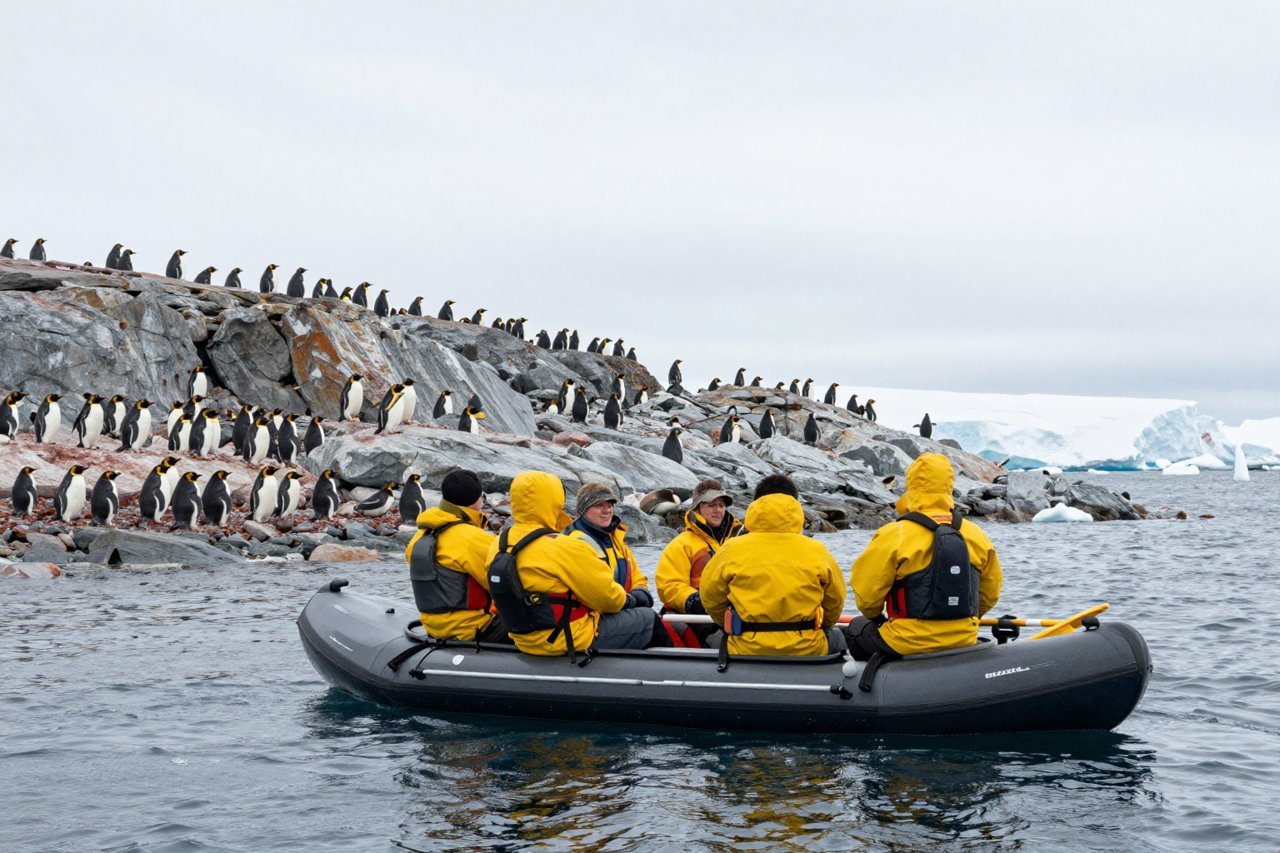
Zodiacs are the real workhorses of an Antarctic expedition. You climb into a rigid-hulled inflatable boat and skim through waters dotted with growlers and icebergs before reaching a penguin colony or a historic hut. Landings are shallow-water beach landings, and the ship’s crew makes sure every passenger gets a turn without feeling rushed. The photographers on board often lead small groups to help you get better wildlife shots.
Kayaking, Camping, and the Polar Plunge
On select departures, you can join a kayak group that paddles through calm bays surrounded by ice. There are also camping excursions where you sleep on the continent in a bivvy bag, with the creak of glaciers as your lullaby. And then there’s the polar plunge. It’s fully optional, but if you watch enough people do it, you’ll probably end up in a swimsuit shuffling toward the gangway in the cold air. Divers stand by; the scream lasts about three seconds.
Citizen Science for the Curious
One thing that separates a National Geographic Antarctica cruise from a standard sightseeing trip is the lab. On board, you can help collect water samples, record whale sightings, and scan the horizon for seabirds. The observations go into real research databases. It’s genuinely useful, and it gives the journey a sense of purpose beyond postcards.
Itineraries and Timing
The Antarctic season runs from late October through March. December and January are the busiest, with the longest daylight hours and more penguin chicks hatching. Late February and March bring bigger icebergs, bolder light, and more whale action.
Classic Antarctic Peninsula Routes
Most first-timers choose a 10 to 12-day trip out of Ushuaia, Argentina. That itinerary includes two days crossing the Drake Passage, roughly four days exploring the South Shetland Islands and the western Antarctic Peninsula, and two days heading back. It’s a solid introduction.
Crossing the Antarctic Circle
If you want to truly say you’ve been to the Antarctic region, look for a 16 or 17-day voyage that crosses the Antarctic Circle at 66°33′S. These expeditions push farther south and often spend extra time in places like the Crystal Sound and the southern Gerlache Strait. Fewer passengers take that route, so the landings feel more private.
South Georgia and the Falklands
For photographers and wildlife lovers, a 20 to 24-day expedition combining the Falkland Islands, South Georgia, and the peninsula is unmatched. South Georgia is home to thousands of king penguins and the final stretch of Shackleton’s famous walk across the island. The Macaronis and busy shorelines stay with you long after the trip ends.
How to Choose a National Geographic Antarctica Cruise
Start by being honest about what you want. The best trip isn’t necessarily the cheapest one, and it’s not necessarily the longest one. It’s the one that fits your travel style and your tolerance for shipboard life.
- Decide on your budget. A porthole cabin costs far less than a balcony, and you’ll spend most of your time outside anyway.
- Think about itinerary length. If you can only get away for 10 days, stick with the classic Antarctic Peninsula route. If you have three weeks, South Georgia is worth the extra money.
- Consider the activity level. Kayaking and camping require no prior experience, but they do require a reasonable level of fitness and flexibility.
- Choose your season. Early season means more snow and less wildlife activity. Late season offers whale watches and dramatic ice, but some penguin chicks have already fledged.
- Don’t dismiss the Drake Passage. You’ll cross it twice no matter what, so pack seasickness patches and accept that seas can be rough.
Life On Board and Practical Details
Cabins, Food, and the Bridge
Life on a National Geographic expedition ship is not formal. There are no gala nights, no dress codes, and no assigned tables. Meals are open seating, and the food is surprisingly good considering it’s prepared in one of the most remote places on Earth. The bridge is usually open to guests, so you can ask the officers about ice navigation, weather patterns, and the seals napping on floes.
Packing for the White Continent
Layers are your friend. You need a base layer, a fleece or down mid-layer, and a waterproof outer shell. Lindblad provides a windproof parka, but you’ll want your own thermal tops, bottoms, and wool socks. They also supply rubber boots for landings, so you don’t need to buy expedition footwear. Bring sunglasses, sunscreen, and a sturdy camera with a spare battery. The cold drains power quickly.
Is a National Geographic Antarctica Cruise Worth It?
Prices start in the five figures, so it’s a significant investment. It includes almost everything except flights, alcohol, laundry, and crew gratuities. You pay for the expedition team, the small ship, the polar equipment, and the fact that you’re traveling with people who have been documenting these landscapes for decades.
For a true once-in-a-lifetime destination, it’s worth comparing the itineraries closely. A cheaper cruise might get you to the same peninsula landings, but it won’t bring a National Geographic photographer into the Zodiac with you, nor will it offer a lab where you can analyze plankton under a microscope. The value isn’t in the brochures. It’s in the quality of guidance at the moment a whale surfaces beside your kayak.


