
Table of Contents
Ask ten people what the best dessert in the world is, and you’ll get ten different answers. One person will argue for a sticky slice of date pudding, another for a perfectly ripened mango with a squeeze of lime. But a handful of sweets have become global icons, the kind you actively seek out when you’re in their hometown. This list of the top 7 best desserts in the world isn’t about ranking them by some impossible standard. It’s about the ones that stop you mid-conversation, the ones you’ll send your friends pictures of, the ones worth a little extra walking for.
Travel is the best way to sample these in their natural habitat. If you’re short on time, even a 6-hour layover in Dubai can become a mini food tour, especially if you’re craving baklava or kunafa.
Here’s what all seven have in common:
- They’re made with simple, good-quality ingredients you can find in most markets.
- Each one tells a story about the place it comes from.
- They’re just sweet enough, with a balance of texture that keeps you coming back.
- And they all taste even better when you’re eating them somewhere special.
Tiramisu – Italy’s Layered Masterpiece
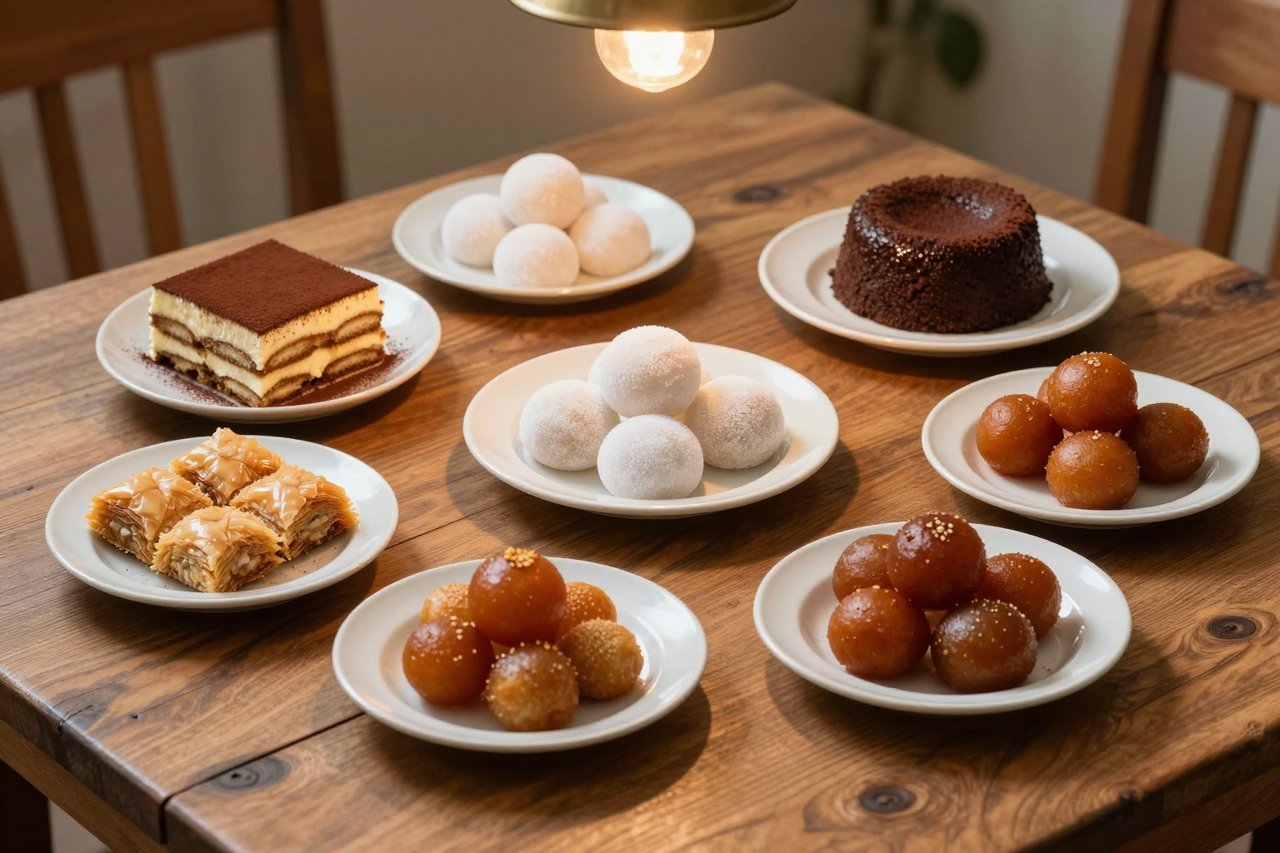
Order it anywhere in the world and you’ll recognise the mascarpone cream, the espresso-soaked ladyfingers, the dusting of cocoa. But a great tiramisu is a thing of subtle magic. The coffee should be strong and freshly brewed, the cream light enough to let the cocoa shine, and the ladyfingers should hold a hint of crunch, not just sigh into a puddle.

The best tiramisu I’ve had was in a small trattoria in Treviso, a short train ride from Venice. It wasn’t even on the menu. The owner brought out a single square dish and cut it with a spoon. That’s when you know it’s good. The dessert was ‘invented’ in the Treviso region in the 1960s, though stories vary. Some say it was created by a pastry chef named Roberto Limentani at the restaurant Le Beccherie. Others argue it started in a brothel, and that’s where the aphrodisiac reputation comes from. Either way, tiramisu is the kind of dessert you can eat for breakfast without shame, especially if you’ve just landed from a red-eye and it’s 9am in Italy.
Crème Brûlée – The Beautiful Crack
The most dramatic moment in dessert happens when your spoon hits the caramelised sugar on a crème brûlée. That clean, glassy crack is pure theatre. The French have been perfecting this baked vanilla custard for centuries, but the version we know today really came into its own at Paris’s great restaurants in the late 19th century.
A proper crème brûlée is delicate. The custard should be just set, creamy, and cool, while the sugar layer is still warm and crisp from a blowtorch. You don’t see it done properly at many places because it has to be finished to order. If you’re making it at home, you’ll need a kitchen torch and patience. It’s one of those desserts that feels complicated, but honestly, the hardest part is the waiting. If you’re thinking about turning your baking into a side hustle, you might be surprised how popular these are at farmers markets and small events. This guide to the 8 best places to sell baked goods will get you started.
Mochi – The Japanese Sweet That’s Made to Be Chewed
Mochi is a whole other experience. These chewy rice cakes are made from glutinous rice that’s pounded into a sticky, elastic dough, then formed into rounds or blocks. You’ll find mochi all over Japan, usually filled with sweet red bean paste or ice cream, and sometimes dusted with kinako (toasted soybean flour) or matcha powder.
The texture is what stops you. It’s soft, springy, and slightly resistant when you bite, almost like a very thick marshmallow. Japanese mochi is also part of a bigger tradition – you see it in tea ceremonies, in the New Year’s rice cake ornament kagami mochi, and in all kinds of local specialties. If you’ve never tried it, start with strawberry daifuku – a mochi ball wrapped around a fresh strawberry and sweetened bean paste. The combination of freshness and creaminess is unreal.
Baklava – A Thousand-Layered Treasure of the Middle East
Istanbul might be the most famous place to eat baklava, and for good reason. The best baklava comes from the southeastern city of Gaziantep, but Istanbul’s pastry shops have perfected the art of pistachio overload. Baklava is made with paper-thin layers of filo pastry, brushed with butter, stacked with crushed pistachios or walnuts, and baked until golden. Then a sweet syrup of honey, lemon, and sometimes rosewater is poured over the top, giving it that glorious sticky sheen.
The secret to great baklava is the lightness of the filo. A good piece shatters gently in your mouth. It’s not heavy, just rich. In Turkey, baklava is usually served in small square pieces with a cold glass of tea, and you eat it with your fingers, letting the syrup drip. If you’re planning a trip to Istanbul to eat your way through the city, you’ll want a base near the old town markets. Check out this guide to where to stay in Istanbul so you’re not too far from the city’s famous pastry shops when the craving hits.
Pastel de Nata – Portugal’s Sunshine in a Tart Case
Pastel de nata tastes like the Portuguese coast on a warm afternoon. The little tarts have a crispy, layered puff pastry shell and a rich, eggy custard filling, baked so the top gets those charred spots you can’t stop staring at. They’re best eaten warm, with a strong coffee, and you can’t walk down a street in Lisbon without passing a bakery with them piled high.
The original version comes from the Jerónimos Monastery in Belém, where the monks apparently invented it using leftover egg yolks from refining egg whites for their habits. The recipe made its way to the famous Pastéis de Belém bakery in 1837, and they’ve been selling them there ever since. You can find pastel de nata all over the world now, but the Portuguese version is just different. The cinnamon and lemon zest in the custard give it a brightness that’s hard to replicate. Find a Portuguese café and order a couple, ideally with a shot of espresso.
Gulab Jamun – The Saffron-Scented Sponge of South Asia
Gulab jamun is the kind of dessert that makes you close your eyes while you chew. These small, golden balls are made from khoya (reduced milk solids), kneaded into a soft dough, rolled into smooth balls, and fried until deep brown. They’re then dropped into a warm syrup scented with cardamom, rose water, and sometimes saffron. The result is a delicate, syrupy sponge that nearly melts in your mouth.
The trick is in the dough – you have to be gentle, because the balls crack and absorb too much oil if you overwork them. There’s no better pairing than with a cup of strong, milky chai. Gulab jamun is everywhere in India, Pakistan, Nepal, and Bangladesh, but it’s especially associated with festivals and weddings. If you’re curious about how other cultures do sweets, Cuba has some surprisingly similar loves for syrup-soaked treats – this guide to the best Cuban food includes strong coffee and classic desserts that you’ll want to try.
Chocolate Lava Cake – The Warm Hug of the West
It took a New York chef to turn the simple chocolate cake into a global phenomenon. Chocolate lava cake, also known as coulant or fondant au chocolat, has a crisp outer shell and a molten centre that spills out like the dessert equivalent of a geyser. The story goes that chef Jean-Georges Vongerichten accidentally underbaked his chocolate cakes in the 1980s, and the molten result was a hit.
Since then, it’s been on menus everywhere from ski lodges to cruise ships. You’ll also find it at countless theme parks and resorts, and it never really gets old. The best way to serve it is with a scoop of vanilla ice cream, so you get the cold/hot contrast. It’s the dessert you make when you want to impress someone without spending all day in the kitchen.


