
Table of Contents
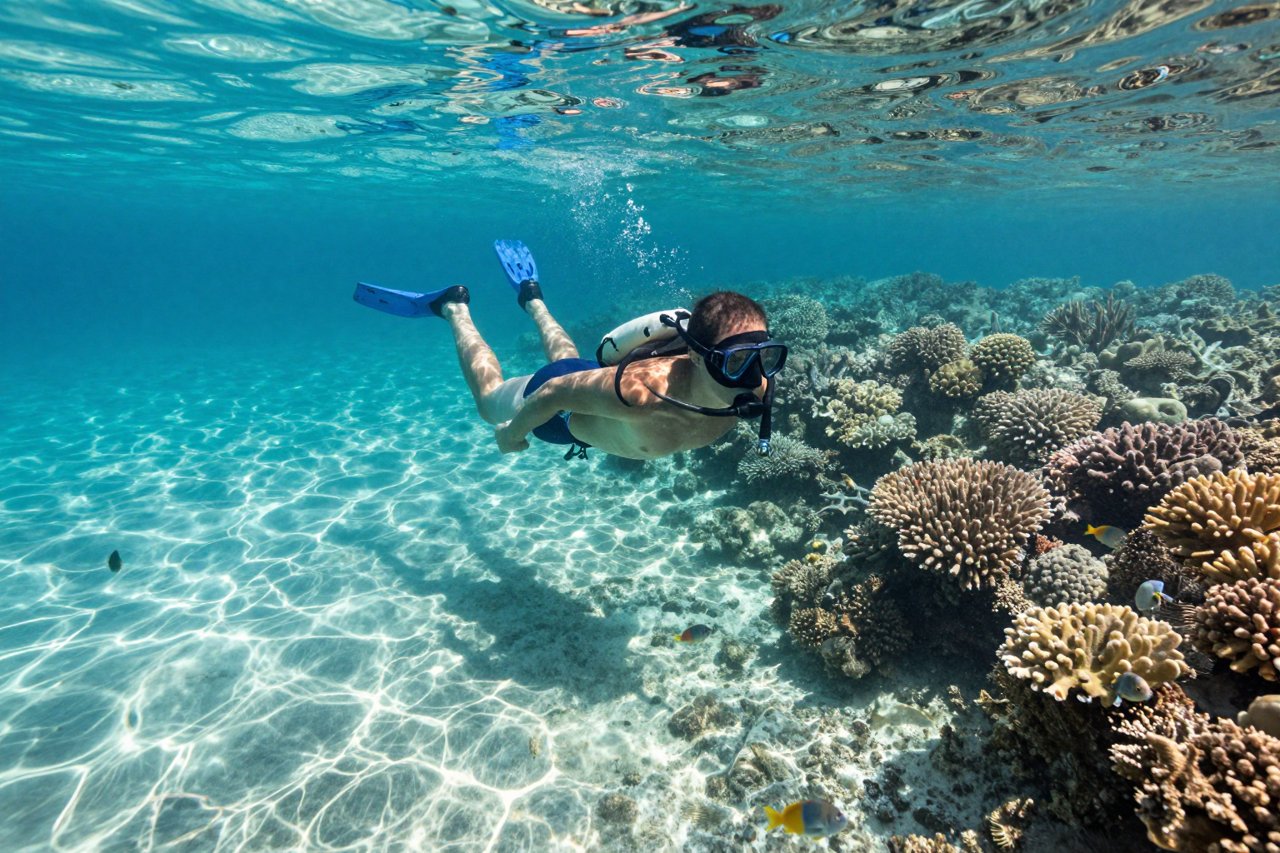
Some beaches earn their reputation from the water itself. You wade in to your knees, drop your face under, and a parrotfish is already nibbling at coral a few metres away. No boat ride, no dive certification, no hour-long commute to the reef. That is the whole appeal of a truly great snorkeling beach: the coral starts roughly where the sand stops.
Plenty of famous shorelines look the part and then deliver seagrass, cloudy water and a single lonely sea cucumber. This list sticks to places where snorkeling is the main event rather than an afterthought, with named entry points, honest caveats, and enough detail to actually plan around.
What separates a good snorkeling beach from a great one
Three things matter more than the postcard view. Calm water tops the list: a protected bay with a gentle slope beats a dramatic surf beach every time, because you need to float, not fight. Second, the reef has to be reachable. If you’re swimming 400 metres before anything interesting appears, that’s a dive site with extra steps. Third, structure. Coral heads, lava fingers, rock ledges and seagrass all hold different species, so a mix of habitats in shallow water is what keeps a spot interesting on your fourth visit.
- Easy entry: sand or smooth rock, no scrambling over urchin-covered limestone in flip-flops.
- Shallow structure: coral and rock within 50 to 100 metres of shore, in 1 to 5 metres of water.
- Visibility: 10 metres is fine, 20 metres is magic. Ask locally, because it changes week to week.
- Low current: protected leeward coasts and bays win. Drift snorkeling is fun once you know what you’re doing.
The best beaches for snorkeling, region by region
Hanauma Bay, Oahu, Hawaii
A drowned volcanic crater that has been a marine life conservation district since 1967, which explains why the fish here are unusually unbothered by humans. Entry runs on timed reservations, the bay closes a couple of days each week, and everyone watches a short briefing video before walking down. Shallow coral heads sit close to the sand, and green sea turtles are a routine sighting. Go at opening. By mid-morning the shallows are crowded enough that you’re dodging fins more than fish.

Trunk Bay, St. John, US Virgin Islands
Inside Virgin Islands National Park, Trunk Bay has a marked underwater snorkel trail with submerged plaques identifying coral and fish along a short loop. It’s a genuinely good introduction for nervous first-timers and kids, and the beach itself is one of the Caribbean’s most photographed. Cruise-ship schedules dictate everything here: arrive before 9am or after 3pm and you’ll have far more of the bay to yourself.
Bonaire’s west coast, Dutch Caribbean
Bonaire practically invented shore snorkeling. Yellow painted stones along the coastal road mark entry points, and the leeward coast is calm enough that most days you can walk in off a coral-rubble beach and drift over healthy reef within a minute. 1,000 Steps, Karpata and Oil Slick Leap are the well-known entries; Klein Bonaire, a short water-taxi ride offshore, has some of the clearest shallows in the region. Bring booties. The entries are not all sand.
Amed and Menjangan Island, Bali
Amed’s black-sand bays, particularly Jemeluk, offer dead-simple entries and a reef that starts almost immediately, which makes them some of the most beginner-friendly water in Indonesia. Further north, the USAT Liberty wreck at Tulamben sits in 3 to 30 metres, so snorkelers can see the top of the hull while divers go deeper. For better coral, take a boat from Labuan Lalang to Menjangan Island in West Bali National Park. Dry-season conditions from April to October are the most reliable, and if you want to combine reef time with sand time, this roundup of the best beaches in Bali for swimming and surfing covers the rest of the coastline.
The Maldives’ house reefs
Every Maldivian island advertises a house reef, and quality varies wildly. The ones worth booking are those where the reef edge sits close enough to swim to, with a visible drop-off where the shallow platform falls into blue. That edge is where the action is: reef sharks cruising, turtles grazing, and eagle rays passing in pairs. Local islands such as Fulidhoo and Maafushi offer the same reef access at a fraction of resort prices, though you’ll need to respect local dress codes on land.
Marsa Alam and Ras Mohammed, Egypt
The Red Sea does visibility like few other places on earth, regularly hitting 20 to 30 metres. At Abu Dabbab, seagrass beds just off the beach bring green turtles in to feed, and dugongs show up often enough that guides keep a casual eye out. Ras Mohammed, at the tip of the Sinai, is best reached on a day boat from Sharm el-Sheikh. Water stays around 22 to 24°C in winter, which makes it a rare warm-water option in January, and it pairs neatly with the kind of trips covered in these December-friendly destinations from winter wonderlands to tropical escapes.
Turquoise Bay, Ningaloo Reef, Western Australia
Ningaloo is unusual because the reef is a few dozen metres offshore, so you swim out from the sand rather than taking a boat. At Turquoise Bay the classic move is a drift: walk south along the beach, enter, and let the current carry you north over coral. It’s superb, but the current is real and there have been rescues. Check conditions with the local surf club first. Between March and August this stretch of coast is also the place to swim alongside whale sharks.
Smith Cove, Grand Cayman
A pocket-sized sandy cove with free access, a shaded picnic area and rock formations that shelter snappers, tarpon and the occasional nurse shark. It’s the low-effort Caribbean option, and the calm, shallow water suits families. Head to Spotts Beach at dawn if turtles are the priority. They graze on the seagrass there most mornings.
Champagne Reef, Dominica
Volcanic vents under the seabed release warm bubbles that stream up through the water, which is where the name comes from. The reef itself is dense with sponges and frogfish, and the entry is off a rocky beach that can be rough when the swell is up. Go on a calm day, ideally with a guide who knows the best line out. It’s one of the few places where the geology is as memorable as the fish.
Silfra Fissure, Iceland
Not a tropical beach, but worth including for the sheer strangeness of it. You snorkel in a drysuit through glacial meltwater filtered by lava for decades, giving visibility of 100 metres or more, in a crack between the North American and Eurasian tectonic plates. Water temperature sits at 2 to 4°C year-round, so this is a guided, suited-up experience rather than a casual dip. Combine it with a winter road trip using these cozy winter escapes and December travel ideas.
Timing, tides and gear that actually matter
Most disappointing snorkeling days come down to logistics rather than luck. Tide matters more than most people expect: a low tide can expose coral and turn a nice swim into a frustrating wade, while a rising tide usually brings clearer, deeper water and more active fish. Morning light is better for spotting things and the wind is typically lighter before 10am. Sunscreen residue kills coral, so wear a long-sleeve rash guard and leggings instead of relying on lotion.
- Mask fit: press it to your face without the strap. If it stays put, it seals. If not, try another.
- Fins: short travel fins are enough. They save your legs when there’s any current at all.
- Booties: essential on lava and coral rubble entries.
- A float or noodle: lets you rest without touching anything, and keeps you visible to boats.
- Reef-safe sun protection: UPF clothing beats any bottle.
Snorkeling etiquette that keeps reefs alive
Coral looks like rock and is not. A single fin kick can shatter decades of growth, and the damage doesn’t recover within your lifetime. Stay horizontal, keep your hands to yourself, and leave a full body length between you and any structure. Don’t chase turtles, don’t feed fish, and don’t stand up in the shallows to adjust your mask; roll onto your back and float instead. If a guide tells you to back off from a particular patch, there’s usually a reason, sometimes a nesting one.
Matching the beach to the trip you’re actually taking
A dedicated snorkeling trip and a family beach holiday need different things. Dedicated trips want a coast with multiple entry points, a local dive shop for tank refills and advice, and enough reef to justify five days of swimming the same stretch. Family trips want a shallow, sheltered bay with lifeguards, a beach that holds up when the kids get bored of the water, and somewhere to buy lunch within walking distance. Hanauma, Trunk Bay and Smith Cove all fit the second brief comfortably.
If the snorkeling is one part of a longer itinerary, it helps to think about the whole route rather than building everything around a single bay. These vacation ideas spanning beach paradises and cultural gems are a useful starting point for pairing a reef stop with cities, ruins or mountains, and this guide to vacation spots matched to different types of traveler covers what works when you’re travelling with someone who’d rather read on the sand than get their hair wet.
Pick one coast. Learn its tides, its entry points and its resident turtles. The best snorkeling is rarely the checklist version, where you tick off ten beaches in ten days. It’s the spot you walk into at 7am on your third morning, when the water is glassy, the reef is empty of people, and you know exactly which coral head the octopus lives under.


