
Table of Contents
My friend bought her hiking boots the night before a three-day trip in the White Mountains. They looked right. By mile six on day one, both heels were open, and she spent the next two days walking in camp sandals with wool socks pulled up to her calves.
The boots weren’t bad. They had simply been picked for a photo rather than a trail. Most gear mistakes follow that same pattern: bought late, sized by the number on the box instead of the shape of your foot, chosen for the trip you imagined rather than the one on the calendar. Getting it right comes down to order of operations, not budget size.
Start With the Trip, Then Work Backwards
Before you open a single product page, write down four answers: the terrain, the weather window, the number of nights out, and the heaviest weight you’ll carry. Those four lines cut the market in half.
A two-night summer loop in the Appalachians and a five-day traverse above treeline are not the same problem. The first is a 9 kg pack and trail runners. The second is a 15 kg pack, a hard shell you trust, and boots with real ankle support. Choosing gear before you’ve defined the objective is how people end up with a 65-litre pack for a day hike, or a 20-litre pack and a week of food. The same discipline behind planning an adventure trip you’ll actually finish applies here: decide the shape of the trip first, then buy for it.

Season deserves its own line. A trail can be a mild walk in July and a serious mountain objective in October. Anyone weighing off-season versus peak-season conditions on Mount Fuji already knows the kit list changes completely between the two, and the same holds for almost every mountain on earth.
Fit Comes Before Features
Every specification on a boot box is negotiable except fit. Waterproof membranes, shanks, rand height, the colour. None of it matters if your heel lifts or your toes touch the front on a descent.
The boot test that actually works
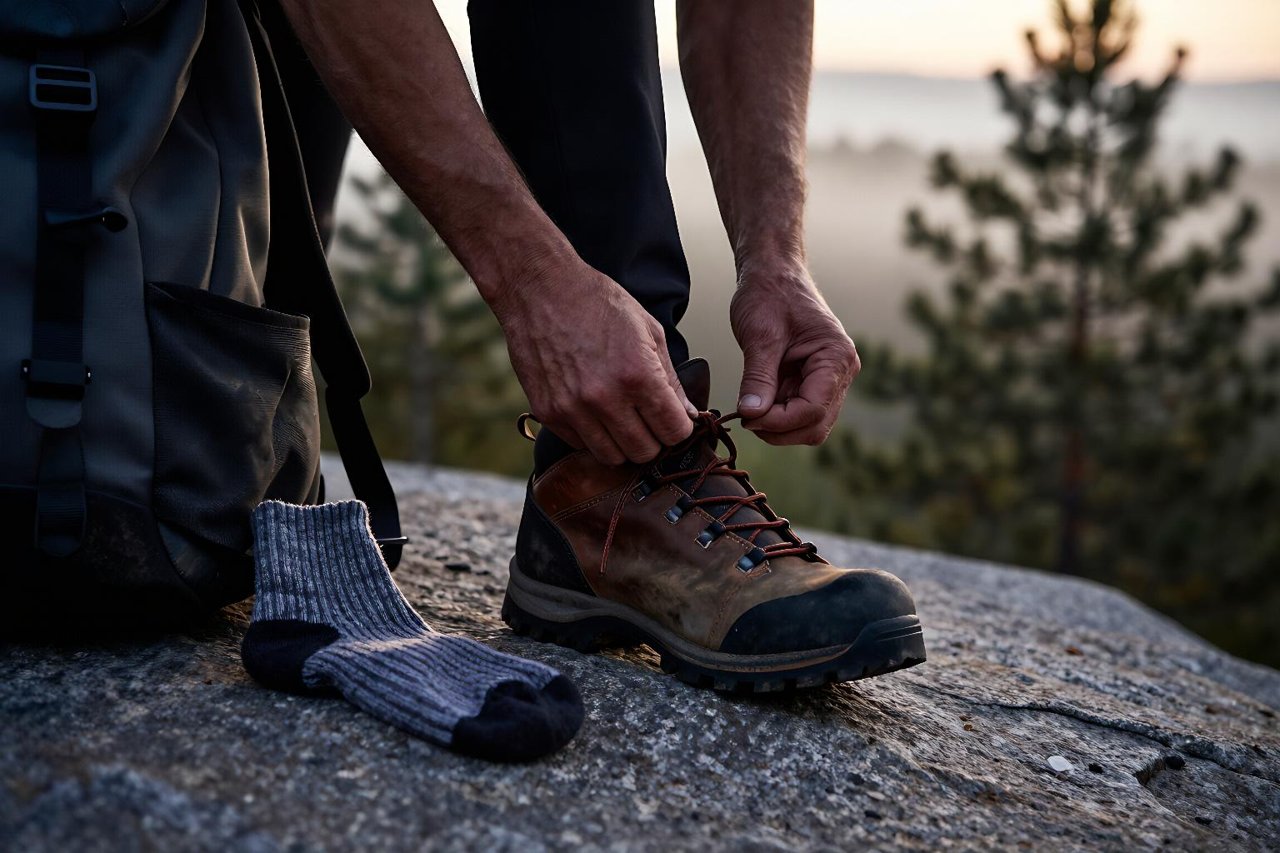
- Try boots at the end of the day, when feet are swollen, and wear the socks you’ll hike in.
- Leave a thumb’s width between your longest toe and the front of the boot.
- Kick a hard step downhill on a ramp. If your heel lifts more than a few millimetres, size down or change model.
- Walk the shop for 20 minutes. Pressure points don’t disappear on the trail; they get worse.
- Never trust a boot that “just needs breaking in” around the heel.
Packs work the same way. Torso length matters far more than litre capacity. A correctly fitted hip belt should carry roughly 80% of the load, with the shoulder straps mostly keeping the pack against your back. Load 12 kg into a candidate pack in the shop. If your shoulders burn after ten minutes, the pack is wrong for you, whatever the reviews say.
Think in Layers, Not Garments
Three layers do the work: a thin base layer that moves sweat, a mid layer that traps warmth, and a shell that blocks wind and rain. Everything else is optional.
- Base: merino around 150 gsm for warm weather, 200 gsm for cold. One spare, no more.
- Mid: a grid fleece or a lightweight synthetic puffy. Pick one, not both, unless you’re heading below freezing.
- Shell: a waterproof jacket with taped seams and pit zips. This is the one piece where cheap gets wet.
Cotton is the layer to leave at home. It holds water against your skin and takes hours to dry, which is a genuine safety problem on a cold, windy ridge.
Match the Gear to Ground You’ll Actually Walk
Trail runners are the better choice for most three-season hiking on maintained paths: lighter, faster drying, cheaper. Boots earn their weight on scree, snow, and long days with a heavy pack.
Some terrain demands specialist kit, and no amount of general gear shopping covers it. On ice, you need crampons fitted to your specific boots, an axe you’ve practised with, and usually a guide. If that’s the plan, it’s worth reading about the best destinations for glacier hiking before you spend money on equipment you’ll use once. Ropes, harnesses, and avalanche gear are rental items for most people.
Spend Where It Touches You
Gear budgets go wrong when they’re spread evenly. Four categories deserve the money: boots, pack, sleeping system, and rain shell. These are the items that fail loudly at the worst possible moment.
Everything else can be cheap. Stuff sacks, a camp mug, a plastic trowel, trekking poles, a headlamp. Budget versions work fine. Secondhand is excellent for shells, fleeces, and hard-sided items that don’t wear out. Avoid used boots unless you can inspect the midsole; foam that’s sat in a garage for six years is dead foam.
Renting makes sense for one-off trips. Nobody needs to own crampons, a bear canister, or a four-season tent for a single week. The same logic applies to mixed-activity travel. If you’re combining hiking with riding, read up on how to choose a bike tour rather than guessing at equipment you’ll never touch again.
Do a Shakedown Before the Real Trip
Nothing you buy should meet the mountain before it meets a Saturday. Pack your bag with the actual weight, walk 10 km in the actual boots, cook a meal on the actual stove, and sleep a night in the sleeping bag in the garden. Two hours of testing saves a ruined week.
Watch the boring details on that walk: where the pack rubs at the hip, whether the shoulder straps create a hot spot after an hour, if the jacket’s hood blocks your peripheral vision. Note them, then fix them at home while it’s still easy.
The Small Items That Decide How the Day Goes
Socks and blister care outperform almost every expensive purchase on the market. Two pairs of wool socks rotated daily, plus a small kit of tape, blister plasters, and a bit of lubricant, will save your trip more reliably than a lighter tent will.
Water capacity is the other frequent oversight. Most people need 2 to 3 litres of carrying capacity for a full day, more in heat or on exposed ridges with no source. A headlamp with fresh batteries belongs in every pack, day hike included. So does a paper map and compass if the route leaves marked trails, because phone batteries die in the cold, usually right around the point where you need them.
Replace Gear When It Fails, Not When It Looks Tired
Retire boots when the midsole flexes like a wet noodle or the tread is smooth across the forefoot. Replace a sleeping bag when it no longer lofts after a wash and a tumble with dryer balls. Reproof a rain shell twice a season instead of buying a new one, since the water-repellent coating wears out long before the fabric does.
Most people replace gear too early and test it too late. Buy for the trip on your calendar, fit it to your body, and spend money where you meet the ground and the weather. Let everything else be ordinary. The best gear list is short, boring, and already broken in by the time you reach the trailhead.


