
Table of Contents
Protein is having a moment. Walk through any grocery store and you’ll see protein bars, protein pancakes, even protein water. But the truth is, most people don’t need to buy anything special. The best foods high in protein are sitting in the refrigerator and pantry aisles, often for a fraction of the cost of a trendy shake.
Your body uses protein to build and repair tissue, make enzymes and hormones, and keep your immune system working. It’s also the most satiating macronutrient, which is why a high-protein meal can keep you full for hours. That single fact explains a lot of the hype.
So what should you actually eat? Here’s a no-nonsense list of high-protein foods, broken down by category, with exact numbers to help you plan meals.
Animal-Based Protein: The Gold Standard
Animal proteins are often called complete because they contain all nine essential amino acids in the amounts your body needs. If you eat meat, fish, eggs, or dairy, you’re covering most of your bases without thinking too hard.

Chicken and Turkey
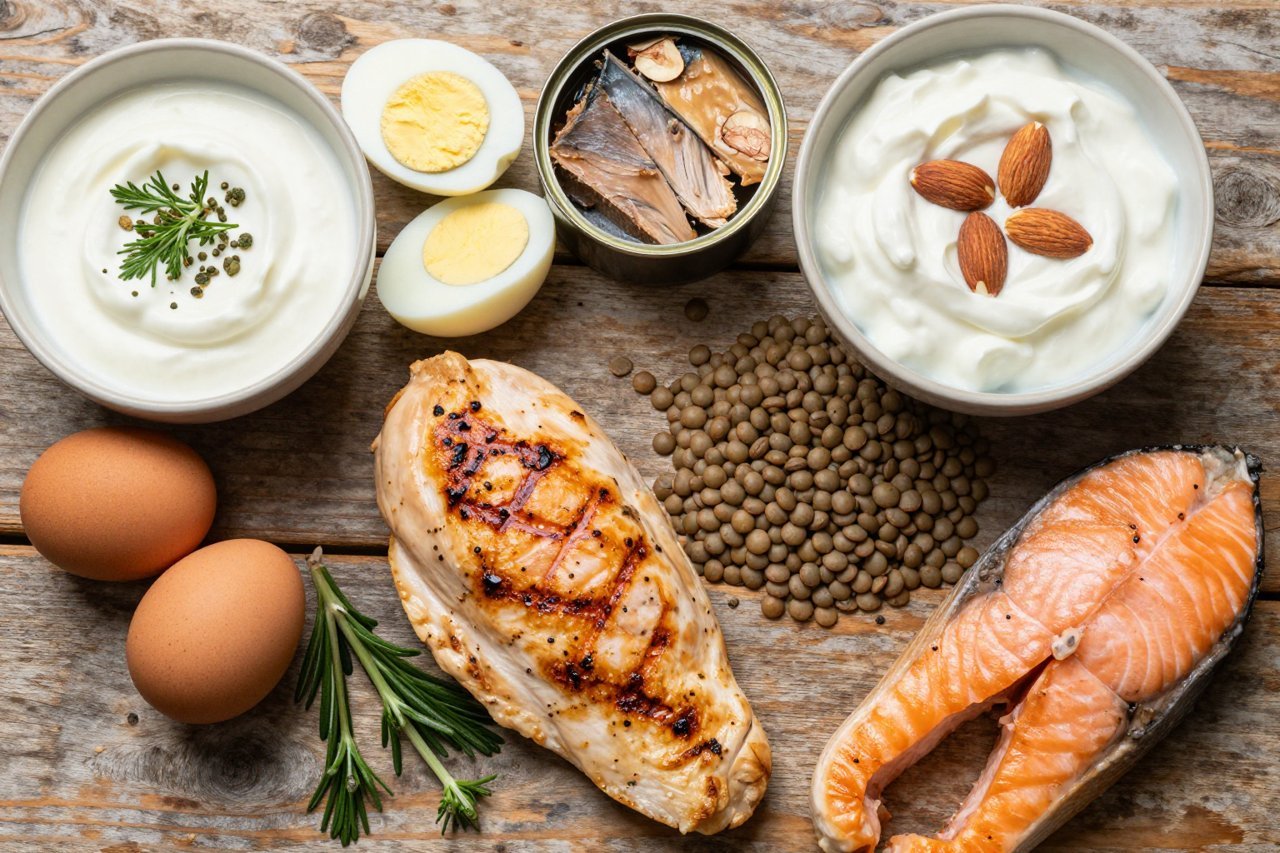
Chicken breast is the classic for a reason. A 100-gram serving of cooked, skinless chicken breast packs roughly 31 grams of protein and only about 165 calories. Turkey breast is similar, coming in around 30 grams per 100 grams. Thigh meat has a bit more fat but still delivers about 26 grams. If you buy a rotisserie chicken, you’re getting a cheap, convenient protein source with no cooking skills required.
Eggs and Dairy
Eggs are small but mighty. One large egg has about 6 grams of protein, and that’s still one of the cheapest per-gram costs you can find. Eat the whites, eat the yolk, eat the whole thing. The idea that yolks are unhealthy has been largely debunked. Greek yogurt deserves a special mention. Unlike regular yogurt, it’s strained to remove whey, so a single 170-gram serving easily contains 15 to 20 grams of protein. Cottage cheese is another underrated option, with about 11 grams per half-cup.
Fish and Seafood
Canned tuna is a pantry workhorse. A single 100-gram can has around 25 grams of protein. Salmon is higher in fat, but those omega-3s are worth it. A 100-gram piece of cooked salmon gives you about 22 grams. White fish like cod or tilapia are leaner, around 20 grams, and easy to cook quickly.
Plant-Based Protein: More Than Just Beans
Plant proteins tend to get dismissed because they’re usually incomplete, meaning they don’t have all nine essential amino acids in one food. But that’s a weak argument. If you eat a varied diet, the amino acids complement each other. Rice and beans is the classic example. Together, they form a complete protein. Your body doesn’t care if the amino acids come from one meal or three.
Legumes and Lentils
Lentils are a powerhouse. A half-cup of cooked lentils has about 9 grams of protein, plus 8 grams of fiber. Chickpeas give you about 7.5 grams per half-cup. Black beans and pinto beans are similar. Tofu, made from soy, is technically a legume product, and it delivers a solid 10 to 12 grams per half-cup, depending on firmness. Edamame, which is just young soybeans, has about 9 grams per half-cup.
Nuts and Seeds
Nuts are higher in calories because of their fat, but they’re still a useful protein source. Almonds have about 6 grams per ounce, peanuts about 7. Pumpkin seeds are a quiet champion, with about 8.5 grams per ounce. Hemp seeds are even better, around 10 grams in three tablespoons. Sprinkle them on oatmeal or salads and you’re getting protein without much effort.
Whole Grains and Soy
Whole grains aren’t usually considered high-protein, but they add up. Quinoa has about 4 grams per cooked half-cup, and it’s one of the few plant foods that’s a complete protein. It’s no surprise quinoa gets labeled a superfood, and the science backs up that reputation. Whole wheat pasta has 7 to 8 grams per serving. Oats have about 5 grams in a half-cup of dry oats. These are supporting players, not the main event, but they still count toward your daily total.
How Much Protein Do You Actually Need?
The minimum recommended dietary allowance is 0.8 grams per kilogram of body weight. That’s about 54 grams for a 150-pound person. But that number is the floor, not the ceiling. If you’re active, trying to lose weight, or over 60, you’ll likely benefit from more.
Many nutrition experts suggest 1.2 to 2.0 grams per kilogram for athletes and active people. That’s roughly 80 to 135 grams for someone who weighs 68 kilograms. If you’re curious about the details, our guide to a high-protein diet breaks down the science and the practical setup.
If your goal is weight loss, protein becomes even more important. It increases satiety, which means you eat fewer calories without feeling like you’re dieting. It also helps preserve lean muscle mass, which keeps your metabolism humming. The best foods for weight loss almost all have one thing in common: they’re high in protein and fiber.
Adding More Protein Without Overthinking It
You don’t need to overhaul your entire diet. Small swaps make a big difference. Here are some simple, realistic ways to increase protein:
- Swap regular yogurt for Greek yogurt. You’ll roughly double the protein for the same serving size.
- Add a scoop of collagen or whey protein to your coffee or oatmeal. It’s one of the easiest ways to get an extra 20 grams.
- Use cottage cheese as a base for dips, spreads, or even pancake batter.
- Keep hard-boiled eggs in the fridge for snacks. They’ll hold for a week.
- Add beans or lentils to soups, stews, and ground meat dishes. You’ll stretch the meal and boost protein without changing flavor much.
- Eat fish at least twice a week. Canned sardines and mackerel are cheap and require zero cooking.
Quality Matters More Than You Think
Not all protein is created equal. The same 20 grams from a chicken breast and a glass of milk are absorbed differently than 20 grams from processed meats like hot dogs or sausages. Ultraprocessed foods often have protein added in the form of isolates, which your body digests quickly but which are usually accompanied by sodium and preservatives. Research has linked ultraprocessed foods to measurable drops in attention span, and regular processed meat consumption isn’t great for your health. Stick to whole or minimally processed protein sources most of the time, and let your taste buds and your energy levels be the guide.
A Sample Day of High-Protein Eating
If you’re stuck on how to fit these foods into a normal day, try this loose template.
Breakfast: Three-egg omelet with spinach and feta. That’s around 25 grams of protein.
Lunch: A bowl of quinoa, black beans, roasted chicken, and salsa. That’s about 35 grams.
Snack: A Greek yogurt cup with a handful of almonds. That’s another 20 grams.
Dinner: Baked salmon with a side of lentils and roasted broccoli. That’s around 40 grams.
Total: roughly 120 grams. That’s enough for most active adults, and it doesn’t require a single protein shake.
If you’re adjusting to a lower-carb lifestyle, protein foods naturally take center stage. The complete low-carb diet guide on this site covers how to build meals that work long-term. For most people, the real challenge isn’t finding protein, it’s remembering to eat it consistently. That’s where meal prep and simple habits like keeping canned beans and frozen chicken breast on hand come in.


