
Table of Contents
Most people choose a martial art the way they choose a gym in January: they drive past one, like the look of the sign, and commit to a twelve-month contract. Six weeks later they’re bored, sore in places they didn’t know existed, and quietly never going back.
Picking a starting point isn’t complicated, as long as you’re honest about why you want to train. A 19-year-old who wants to compete will be miserable in the same class as a 42-year-old office worker who just wants to feel less helpless walking to their car at night. Both reasons are legitimate. They simply point at different arts.
Here’s what the main options actually feel like in month one, plus the things nobody mentions on the gym’s glossy website.
Start With the Goal, Not the Art
Before you open a single timetable, decide what you’re optimising for: fitness, self-defence, competition, discipline, or something to do with your kid on a Tuesday. That answer narrows the list fast.

If self-defence is the priority, get specific about it. Standing striking and ground grappling solve very different problems, and plenty of traditional styles spend years on forms before you pressure-test anything against a resisting opponent. There’s a solid breakdown of the martial arts that genuinely work for self-defence if that’s your main driver.
For fitness, almost anything works if you turn up three times a week. The best one is the one you’ll still be doing once the novelty wears off.
Boxing: The Fastest Route to Feeling Competent
Nothing else teaches usable skill as quickly. A beginner boxer can learn a jab, a cross, a basic guard and enough footwork to move without tripping over themselves in roughly eight weeks of twice-weekly training. Compare that to the two years most grappling arts need before things start clicking.
Boxing is also brutally simple to understand and brutally hard to do. No belts to chase, no choreography to memorise, no grading politics. You get fitter than you’ve probably ever been, your shoulders and core take a proper beating, and hitting a heavy bag after a bad day at work is genuinely therapeutic.
The costs: it’s hard on hands and wrists if you rush into sparring, and gym culture varies enormously. A good coach keeps you on footwork drills and bag work for months before letting you spar. A bad one throws you in during week three and calls it toughness. Ask about their sparring policy before you sign anything.
Brazilian Jiu-Jitsu: Slow, Grindy, Weirdly Addictive
BJJ is ground fighting built on a simple premise: technique can beat size and strength. That isn’t marketing fluff. A 60kg blue belt can control a 95kg untrained newcomer on the mat, which is a humbling and oddly motivating thing to experience.
Progress feels glacial early on. Most people take between 18 months and three years to reach blue belt, and the first few months involve being pinned a great deal. Then something clicks and you start seeing the game rather than just surviving it.
Two things worth knowing before you walk in: you will tap, repeatedly, and you’ll be in close physical contact with strangers within ten minutes of arriving. Some people love that immediately. Others need a few weeks to settle. There’s more on the reality of a first class in what nobody tells you before your first session, and it applies whether you pick BJJ or anything else on this list.
Muay Thai: Striking With a Steeper Learning Curve
Muay Thai uses punches, kicks, knees, elbows and clinching. The curve is steeper than boxing simply because there’s more to coordinate, and kicking properly is a whole-body skill that takes months to stop looking awkward.
It’s also a superb workout. Three-minute pad rounds are exhausting in a way running can’t replicate. The sparring culture in decent gyms tends to be controlled and technical, more so than boxing’s in many cases. Look for a place where beginners get paired with experienced partners and shin pads are non-negotiable.
Judo: The Most Underrated Option Here
Judo is an Olympic sport, which means quality control is usually high, coaching is standardised, and many clubs are cheap or free. You learn throws, trips and pins, plus a skill most martial artists never develop: how to fall without hurting yourself.
Breakfalling is genuinely life-improving. Learning to land safely transfers to ice, stairs, bicycles and the general business of being a clumsy human. The trade-off is that judo is hard on the body. Knees, shoulders and lower back take a hammering, and randori can feel like being inside a washing machine for the first month. Watch a session before joining.
Karate and Taekwondo: Structure, Discipline and Kids
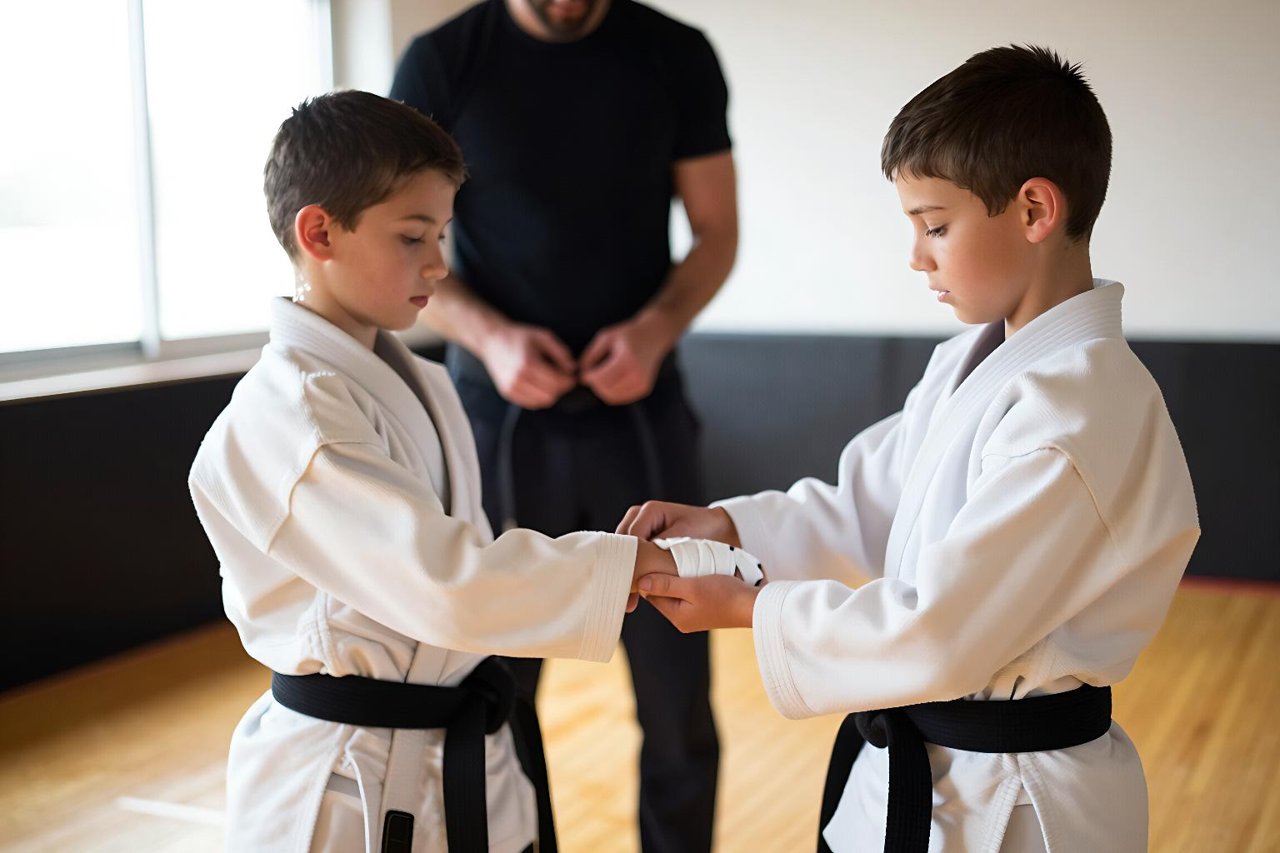
Both offer a clear curriculum, a belt system that rewards consistency, and a strong emphasis on focus and respect. For a child who needs structure, that framework can be worth more than raw fighting effectiveness. If you’re choosing for someone under twelve rather than yourself, this piece on picking a sport your kid will actually stick with covers the decision-making side properly.
For adults, be clear about what you’re buying. Traditional karate training often leans on kata and controlled point sparring rather than full-contact pressure testing. That isn’t a flaw so much as a different product. But if you want to handle a messy, unpredictable situation, a competition-focused school or a combat sports gym will serve you better.
What About MMA Gyms?
MMA gyms combine boxing, Muay Thai, wrestling and BJJ under one roof, and many run beginner programmes separate from the fight team. The upside is variety and good coaching across disciplines. The risk is that a gym with MMA in the name and no competitive record is often a fitness class with punching bags.
Look for coaches with a verifiable competitive background, ask how beginners are separated from experienced students, and check that the mats are clean and class sizes are manageable.
The Gym Matters More Than the Style
A great boxing coach in a converted warehouse will give you a better first year than a mediocre BJJ academy with a slick website. When you visit, watch three things: whether the coach corrects beginners by name, whether senior students are welcoming or cliquey, and whether the warm-up leaves everyone wrecked before any technique work begins. That last one is a sign of lazy programming.
Take the free trial most places offer. Take three, at three different gyms, before deciding. Then check the commute. A brilliant gym 45 minutes away loses to a decent gym ten minutes from your front door almost every time.
What Your First Month Actually Looks Like
Set expectations now, because weeks one to six are when most people quit.
- You’ll be sore in odd places. Grappling punishes your neck and grip; kicking loads your hips and calves. It fades after two or three weeks.
- You’ll forget everything. Technique retention in month one is genuinely poor. Drilling the same move 40 times is normal and necessary.
- You’ll feel uncoordinated. Everyone does. The people who look smooth have been turning up for years.
- You barely need gear. Shorts, a t-shirt, water and a mouthguard cover your first classes. Buy gloves or a gi only once you’ve decided to stay.
- Twice a week beats five. Consistency matters far more than volume, and burning out in month one is the classic beginner mistake.
The Beginner’s Advantage Nobody Mentions
Being new is an asset for exactly one reason: nobody expects anything from you. You can ask obvious questions, move slowly through drills, and tap to a submission twenty times in a row without anyone thinking less of you. Six months from now that freedom disappears, so use it while it’s there.
Pick a gym close to home. Pick a style that matches what you actually want out of it. Then give it three months before you judge whether it’s working, because that’s roughly how long it takes for the awkward phase to pass. Almost every martial art on this list rewards the person who simply keeps showing up.


