
Table of Contents
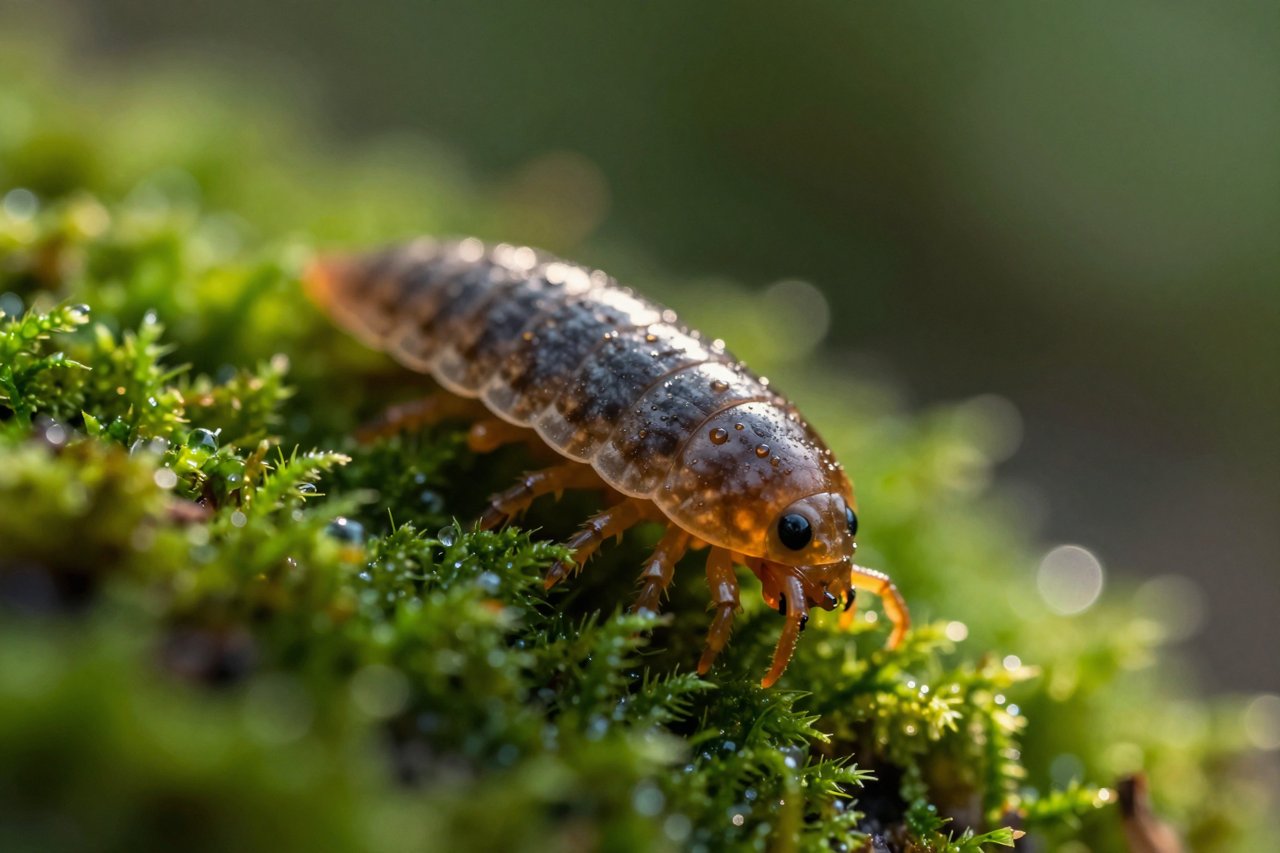
A tardigrade the size of a dust speck can be dried until it holds almost no water, chilled to within a degree of absolute zero, dosed with thousands of times the radiation that would kill a person, then dropped back into a puddle. Twenty minutes later, it walks away. None of that should work. It does anyway, and it’s far from the only creature pulling off tricks that sound like bad science fiction.
Here are seven animals whose abilities still make researchers check their instruments twice.
1. Tardigrades Shrug Off the Vacuum of Space
Tardigrades, also called water bears, live in moss, lichen, Antarctic ice, deep-sea sediment and the gutter outside your building. There are more than 1,000 known species, and most are under half a millimetre long. What makes them remarkable isn’t their size but what happens when conditions turn lethal.
In 2007, researchers attached dehydrated tardigrades to the outside of the FOTON-M3 spacecraft and left them in hard vacuum and unfiltered solar radiation for ten days. Back on Earth, rehydrated, some of them laid eggs that hatched.

What a tardigrade can survive
- Temperatures from roughly -272°C up to well over 100°C
- The vacuum of space, plus UV radiation that shreds unprotected DNA
- Gamma radiation doses of 5,000 to 6,000 grays. A fatal human dose is around 5
- Decades of complete dehydration, then a full return to normal activity
The mechanism is a state called the “tun.” As water disappears, the animal’s cells fill with special proteins that lock the contents into a glass-like solid. Nothing can move, nothing can rot, and DNA breaks get repaired on rehydration. It is closer to suspended animation than to toughness.
2. Mantis Shrimp Punch Harder Than a Rifle Round
The peacock mantis shrimp is about 18 centimetres of aggressive curiosity, and its club-like front appendages accelerate faster than a .22 calibre bullet. Peak speeds hit around 23 metres per second. The strike is so quick that the water around the club vaporises, forming a cavitation bubble that collapses with enough force to stun prey even when the punch misses.
That collapse briefly produces temperatures approaching 4,400°C, hot enough to melt tungsten, along with a faint flash of light. Some species generate strike forces comparable to a small car hitting a wall, and they do it repeatedly without cracking their own shells, thanks to layered structures that researchers are still trying to copy for body armour.
Then there are the eyes. Humans have three types of colour photoreceptor. Mantis shrimp have up to sixteen, plus the ability to see polarised light. Oddly, they appear to be worse than us at discriminating similar hues; they seem to scan colours quickly rather than blend them, which is a very different way of seeing the world.
3. Axolotls Regrow Limbs, Spinal Cord and Parts of the Brain
Cut a salamander’s leg off and it grows another one. The axolotl goes further: it can regenerate its tail, jaw, spinal cord, parts of its heart and even sections of its brain, with no scar tissue left behind. A severed limb closes over within hours, and a blastema forms at the stump, a cluster of cells that behave like stem cells and rebuild the entire structure, bones, nerves, muscle and skin, in a matter of weeks.
These animals are native to the canals of Xochimilco in Mexico City, and fewer than a thousand remain in the wild. Their genome is enormous, roughly 32 billion base pairs against our 3 billion, which makes them awkward to study. Still, the regeneration question is one of the biggest prizes in medicine, and the axolotl is the closest thing to a working answer.
4. Sea Turtles Read Earth’s Magnetic Field Like a Compass
Loggerhead hatchlings scramble down a beach they have never seen, hit the surf, and swim for the open ocean. Years later, adults return to that same stretch of coast to nest. The cue they use is magnetism. Each patch of coastline has a distinct magnetic signature, defined by field intensity and the angle at which the field lines meet the surface, and turtles appear to memorise it.
In laboratory experiments, researchers wrapped hatchlings in magnetic coils and simulated fields from different points along the Atlantic coast. The turtles responded by swimming in the direction that would take them there. Nobody has found the receptor responsible, though magnetite crystals in tissue and a protein called cryptochrome are both suspects.
Tracking these journeys has become a data-heavy business, with satellite tags, crowdsourced sightings and machine learning models mapping migration routes. That shift is part of a broader change in how conservation works, and it raises its own questions about how AI is reshaping animal advocacy, from poaching prediction to the way campaigns choose their battles.
5. Electric Eels Discharge 860 Volts Into Water
In 2019, a study in Science Advances recorded a Volta’s electric eel producing 860 volts, the highest voltage ever measured from a living animal. For context, a European wall socket runs at 230 volts. The eels stack thousands of specialised cells called electrocytes in three separate organs, each cell contributing a small potential, and discharge them in synchrony like batteries wired in series.
The hunting technique is stranger than the voltage. Electric eels have been filmed sending pairs of high-voltage pulses into murky water to force hidden prey to twitch, then detecting the movement. They essentially hijack the nervous system of another fish and use it as a remote sensor.
Juveniles use lower voltages, around 100, and adult eels vary their output depending on the task, which suggests the discharge is a flexible tool rather than a single blunt weapon.
6. One Jellyfish Can Reverse Its Own Life Cycle
Turritopsis dohrnii is a jellyfish the size of a fingernail, and it has a trick no vertebrate can match. When stressed, injured or starving, it can revert from the adult medusa stage back into a juvenile polyp, effectively restarting its development. Cells transform into other cell types, a process called transdifferentiation, and the animal settles back onto the seabed as if it had never grown up.
Repeat that cycle indefinitely and, barring being eaten or infected, the jellyfish doesn’t appear to age. That has earned it the nickname “the immortal jellyfish,” which oversells things slightly. It dies constantly in the wild. It just doesn’t seem to die of old age.
7. Cuttlefish Match Colours They Cannot See
Cuttlefish are colourblind. They have one type of photoreceptor, so the rich reds, greens and blues of a coral reef should be a blur of grey. Yet within roughly 300 milliseconds they can match the pattern, brightness and texture of a gravel bed, a sponge or a strip of seaweed.
The machinery behind it is extraordinary. Millions of pigment sacs called chromatophores sit in the skin, each controlled by muscles that a cuttlefish can fire individually. Add reflective iridophores and white leucophores beneath them and the skin becomes a low-resolution display the animal operates with its nervous system.
How they match colour without seeing it is still unsettled. One leading idea is that they sample the overall brightness of the background rather than its hue, which would be enough to fool most predators. These are also animals with complex brains, and cephalopod sentience is now recognised in law in several countries, which puts keepers and eaters in awkward territory. If that line of thinking keeps you awake, there’s a useful distinction between caring about animals and turning ethical concern into a punishing loop.
What These Abilities Are Teaching Engineers
None of this is just trivia. The mantis shrimp’s club has inspired layered composite materials for armour and cutting tools. Axolotl blastema cells are studied by labs working on scar-free wound repair in mammals. Electric eel electrocytes have been adapted into soft, flexible power sources for medical implants, and the eel’s pulse-and-sense hunting method has shaped research into underwater sensing.
Tardigrade proteins are now used to stabilise fragile vaccines at room temperature, which matters enormously for shipping medicine to places without reliable refrigeration. Sea turtle navigation guides the design of autonomous robots that don’t rely on GPS.
The pattern is consistent. An ability that looks impossible usually turns out to be a clever workaround built from ordinary physics, executed with precision. The animal isn’t breaking the rules. It has simply found an angle nobody else bothered to look for, and the longer researchers study these seven, the more of those angles turn up in human technology. That’s the real reason to pay attention: the impossible is usually just a design problem someone hasn’t solved yet.


