
Table of Contents
Search for ‘highest protein foods’ and you’ll see the same list over and over: chicken breast, turkey breast, lean beef, eggs, Greek yogurt. The advice looks simple. Then you actually start eating those foods, and things get complicated. You weigh a piece of chicken and wonder if it’s raw or cooked. You cook a filet until it tastes like a dry sponge. You eat a protein bar you convinced yourself is ‘whole food’. The list wasn’t wrong—but how you use it often is. Here are the most common mistakes people make with the 7 highest protein foods, and how to dodge each one.
Why “Highest” Rankings Are Deceptive
Food rankings usually compare protein per 100 grams. That’s fine in a lab, but in the kitchen, the numbers change. Raw chicken breast has about 22 grams of protein per 100 grams. Cooked, it has 31 grams per 100 grams, because water escapes. Steak follows the same pattern. If you’re comparing a raw piece of fish to a cooked piece of beef, you’re not comparing the same thing.
Even worse, some foods with a high protein number are also high in calories. Nuts and nut butters pack about 25 grams of protein per 100 grams, but also around 600 calories. You’d eat a day’s worth of calories to get the same protein as a 200-gram chicken breast. That’s why the ‘highest’ list is a starting point, not a straight jacket.
Mistake #1: Sticking to Chicken Breast Only
Chicken breast is the poster child for high-protein foods, but it’s far from the only one. Turkey breast is slightly leaner and has a hair more protein per gram. Pork tenderloin comes in almost as high, and it’s cheaper. Fatty fish like salmon give you a little less protein but add omega-3 fats that chicken can’t provide. If you only eat chicken, you’re missing nutrients and you’ll probably get bored. We put together a detailed comparison of the usual high-protein foods, and variety wins every time.

Mistake #2: Relying on Protein Powders
Supplements have their place, but protein powder is not a food. When you replace a meal with a shake, you miss the zinc in beef, the iron in poultry, the calcium in yogurt. Whole foods also keep you fuller, because they’re not just protein—they have water, fiber, and fat. A bowl of Greek yogurt with a few berries will hold you over for hours, while a shake may leave you hungry in 45 minutes. Use powder to fill a gap, not to starve your diet of real food.
Mistake #3: Ignoring Protein Quality and Leucine
All protein isn’t equal. Your body needs nine essential amino acids, and one of the most important is leucine, which acts like a light switch for muscle protein synthesis. Animal foods like chicken, beef, and eggs are rich in leucine. Many plant proteins are lower, which means you need to eat more of them or combine them strategically. That doesn’t mean plants are inferior. It means you should pay attention to quality, not just the total grams in a nutrition app.
Mistake #4: Cooking the Life Out of Your Food
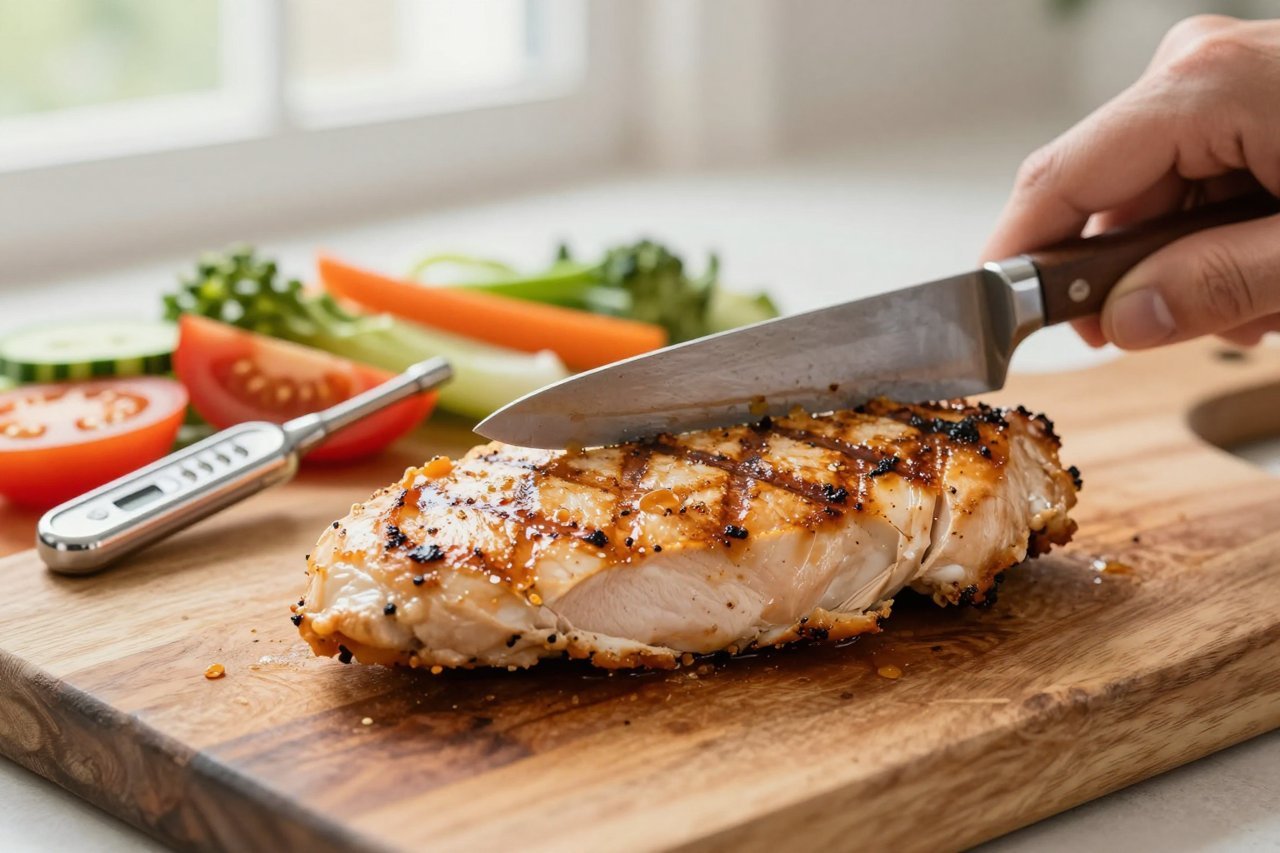
Overcooking is the silent killer. A chicken breast grilled past 170°F becomes dry, stringy, and miserable to chew. It still has the same protein, but you’re not going to want it again. Use a meat thermometer: pull chicken at 165°F, steak at 135-145°F, salmon at 145°F. Brine your poultry for 30 minutes and you’ll wonder why you ever cooked it plain. Food that tastes good is food you’ll actually stick with.
Mistake #5: Eating All Protein at One Meal
Your body likes a steady supply of amino acids. A giant 80-gram steak dinner doesn’t give you the same muscle-building benefit as spreading 30-40 grams across three or four meals. In fact, research consistently shows that multiple doses of protein beat a single mega-dose for appetite control and recovery. If you’re not sure how to split high-protein foods across your day, check out our step-by-step guide that shows exactly what meals might look like.
Mistake #6: Neglecting Plant Protein Sources
It’s easy to think of tofu or seitan as ‘diet foods’ or second-class proteins. That’s a mistake. Seitan provides nearly 25 grams of protein per 100 grams—more than a chicken egg. Soy is a complete protein, meaning it has all the essential amino acids. Tempeh is a fermented soybean cake with about 19 grams per 100 grams. If you’re vegetarian, or just trying to add variety, these are worth learning to cook. Start with simple recipes and you’ll see how easy they are to include. And if you want a balanced lineup, take a look at our list of the 7 highest protein foods to add to your plate.
Mistake #7: Copying Someone Else’s Protein Targets
The recommended intake for an average sedentary person is 0.8 grams per kilogram of body weight. For someone training regularly, it’s typically 1.6 to 2.2 grams. A 60-kg woman and a 90-kg man have very different needs. If you blindly follow a meal plan from a 200-pound male athlete, you’ll either undereat or overeat. Weigh yourself, multiply your weight in kilograms by your target range, and then divide that across your meals. Your list of high-protein foods isn’t a one-size-fits-all prescription.
So, Which 7 Really Are the Highest?
Okay, you came for the list. Based on cooked weight per 100 grams, these are the highest common whole foods:
- Boneless, skinless chicken breast: 31g
- Turkey breast: 30g
- Lean pork tenderloin: 29g
- Yellowfin tuna: 29g
- Sirloin steak (lean): 27g
- Salmon: 25g
- Shrimp: 24g
Eggs and Greek yogurt are high per serving but lower per 100g, so they don’t make this particular list. That’s one reason ranking matters less than your actual eating habits. The best protein food for you is the one you enjoy, cook well, and eat consistently. If you’re wondering which ones keep you full the longest, or which fit your macros best, check out our article on the top 7 highest protein foods to keep you full and fueled.


